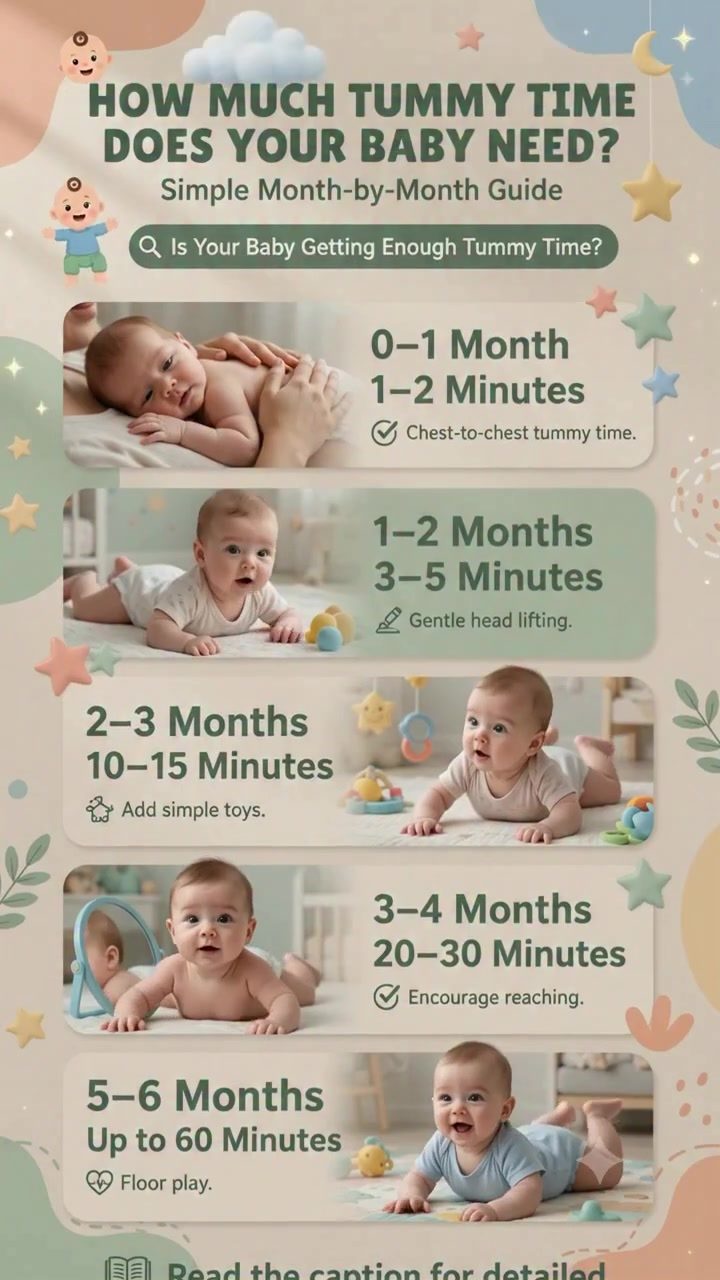
Baby Tummy Time Guide: Age-Specific Recommendations
Tummy time is a crucial activity for a baby's early development. It strengthens essential muscles, including the neck, shoulders, arms, back, and core, preparing babies for significant milestones like rolling, sitting, crawling, and walking. Understanding the appropriate duration and activities for tummy time at different ages can greatly benefit both babies and parents.
Why This Matters
Tummy time is more than just a playtime activity; it's a vital component of a baby's physical development. Regular tummy time helps babies develop the strength and control needed to reach these milestones. Additionally, it can help prevent issues like flat head syndrome (plagiocephaly) by providing varied head positions.
Main Discussion
Understanding Tummy Time
Tummy time refers to the time a baby spends on their stomach while awake and supervised. It helps babies build the strength and coordination needed for motor skills development. During tummy time, babies learn to push up on their forearms, lift their heads, and eventually crawl. This activity also aids in the development of sensory and motor skills.
0-1 Month: Establishing the Basics
For newborns, tummy time should be introduced gradually. Aim for 1-2 minutes at a time, 2-3 times a day. Chest-to-chest tummy time is an excellent way to start. This position allows the baby to feel secure and supported while getting used to the new sensation of being on their tummy.
Tips for Success:
- Begin with short sessions to avoid overstimulation.
- Use chest-to-chest contact to provide comfort and security.
1-2 Months: Building Strength
At this stage, increase tummy time to 3-5 minutes per session. Encourage gentle head lifting by placing your baby on a firm, comfortable surface. This will help strengthen their neck and shoulder muscles, preparing them for more complex movements.
Tips for Success:
- Use colorful toys or a mirror to encourage head lifting.
- Adjust the surface to different angles to stimulate different muscles.
2-3 Months: Introducing Play
By 2-3 months, babies should be comfortable with 10-15 minutes of tummy time each day. Introduce colorful toys and simple play activities to encourage reaching and grasping. This not only makes tummy time more enjoyable but also promotes motor skill development.
Tips for Success:
- Place toys just out of reach to encourage stretching and reaching.
- Use varied textures and colors to keep the baby engaged.
3-4 Months: Exploring and Reaching
Around 3-4 months, aim for 20-30 minutes of tummy time daily. At this age, babies may begin to push up on their arms and explore with their hands. Encourage this behavior by placing toys in front of them and allowing them to reach and grasp.
Tips for Success:
- Create a safe, comfortable play area with a variety of toys.
- Use tummy time as an opportunity for bonding and interaction.
4-5 Months: Engaging Activities
By 4-5 months, aim for 30-40 minutes of tummy time throughout the day. Mirror play and age-appropriate toys can make tummy time more engaging. This stage is about increasing the baby's range of motion and motor skills.
Tips for Success:
- Place a baby-safe mirror in front of the baby to encourage reaching and crawling.
- Use colorful, textured toys to keep the baby interested.
5-6 Months: Building Strength
By 5-6 months, aim for up to 60 minutes of tummy time total per day, spread across multiple short sessions. This helps build the strength needed for rolling, sitting, and crawling. Include a variety of activities and surfaces to keep the baby engaged and motivated.
Tips for Success:
- Use different surfaces like soft blankets, play mats, and stepping stones to create an engaging environment.
- Encourage the baby to reach for toys placed at different heights and distances.
Practical Tips
-
Start Early: Introduce tummy time as early as possible, even during the first few weeks. Start with brief sessions and gradually increase the duration.
-
Create a Comfortable Environment: Ensure the surface is firm and safe. Avoid soft surfaces like beds or sofas, which can pose a risk to the baby.
-
Supervise: Always supervise tummy time to ensure safety. Never leave the baby unattended during tummy time.
-
Incorporate Variety: Use different toys, blankets, and activities to keep tummy time interesting and engaging.
-
Be Patient: Remember that every baby develops at their own pace. Some babies may take longer to enjoy tummy time, so be patient and persistent.
-
Encourage Reaching and Grasping: Use toys and objects to encourage the baby to reach and grasp, promoting motor skill development.
-
Avoid Overstimulation: If the baby becomes overly tired or distressed, end the session and try again later.
-
Use Tummy Time for Bonding: Make tummy time a bonding experience. Engage with the baby, sing songs, and interact to make it a positive experience.
Important Takeaways
- Tummy time is essential for a baby's early physical development.
- Gradually increase the duration and complexity of tummy time activities as the baby grows.
- Use a variety of toys, surfaces, and activities to keep tummy time engaging and fun.
- Always supervise tummy time to ensure safety.
- Be patient and adapt tummy time to the baby's individual needs and pace of development.
Conclusion
Tummy time is a foundational activity for a baby's physical development. By following these age-specific guidelines and tips, parents can ensure their babies get the necessary strength and coordination to reach important motor skill milestones. Make tummy time a positive and engaging experience for both the baby and the parent.
Watch the Reel
Questions readers ask
Why is tummy time important for my baby?
Tummy time is essential for babies as it helps to strengthen vital muscles in the neck, shoulders, arms, back, and core. This strength helps babies to reach important milestones such as rolling over, sitting up, crawling, and eventually walking. Additionally, it aids in preventing flat head syndrome by encouraging babies to move their heads and change positions.
How much tummy time should my baby have each day?
The amount of tummy time should increase as your baby grows. For newborns, aim for short periods of 2–3 minutes, 2–3 times a day. As your baby reaches 1 month, gradually increase the duration to 5-10 minutes, 3-5 times a day. Always supervise your baby and ensure they are comfortable and safe during tummy time.
What if my baby doesn't like tummy time?
It's common for babies to be resistant to tummy time, especially at first. Make tummy time more enjoyable by using toys, songs, or mirrors to engage your baby. If your baby continues to resist, try placing them on their tummy on your chest while you lie down. Short breaks and patience will help them get used to it over time.
What are some beneficial tummy time exercises for different ages?
For newborns, very brief tummy time sessions are sufficient. As they grow, you can introduce exercises like placing toys slightly out of reach to encourage stretching and movement. For 3-month-olds, try placing them on a soft surface and gently moving their legs in a cycling motion. By 6 months, encourage reaching and rolling by placing toys nearby and giving them space to move.
What kind of toys are suitable for tummy time?
Toys that are colorful, textured, and make sounds can keep your baby engaged during tummy time. Mirrors are also great as babies enjoy looking at their reflections. Ensure the toys are safe, age-appropriate, and placed within your baby's reach to encourage movement and exploration.
When should I start tummy time with my newborn?
You can begin tummy time as early as the first day you come home from the hospital. Start with short periods of 2-3 minutes, 2-3 times a day. You can gradually increase the duration as your baby grows stronger. Always ensure your baby is supervised and comfortable during tummy time.
Recent articles
Fresh deep dives from the latest Reels we unpacked.




Comments
Be the first to comment.