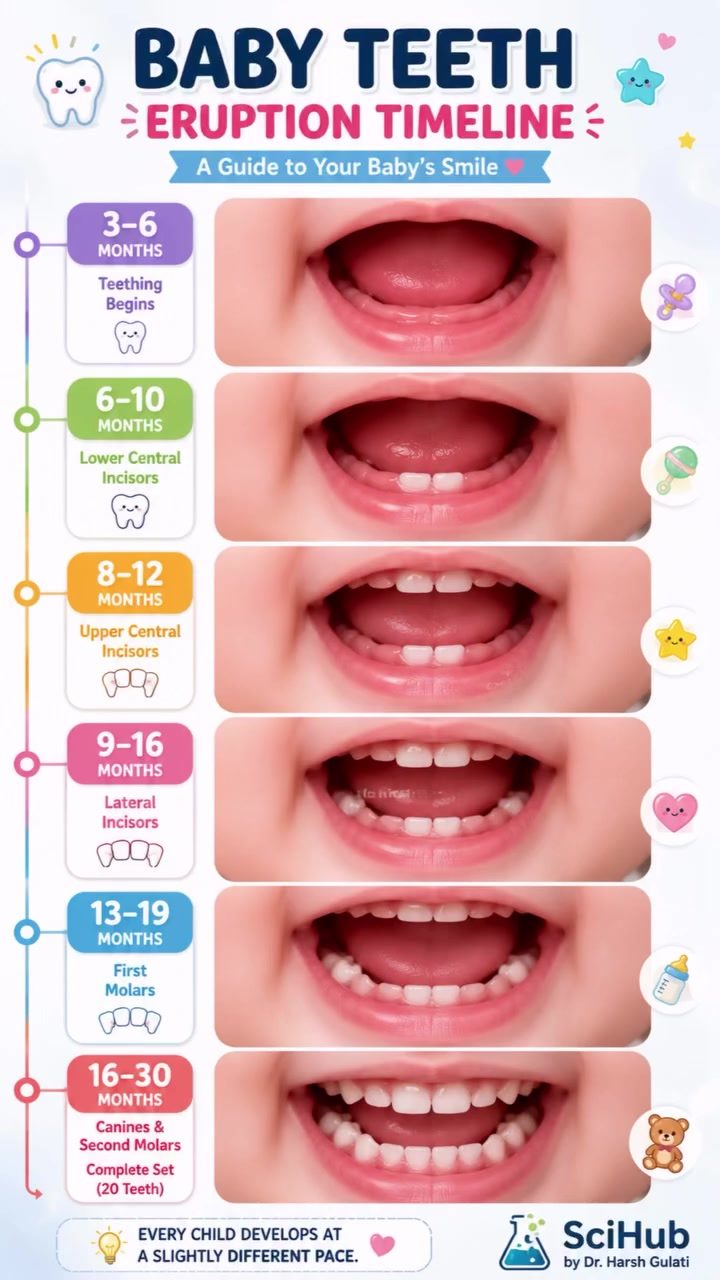
Baby Teething Timeline
Understanding the timeline of a baby's teeth eruption is crucial for parents and caregivers. This process marks significant milestones in a child's growth and development. From the first tiny tooth to a complete set of 20 primary teeth, each stage brings changes to a baby's smile and overall health.
Why This Matters
Tracking a baby's teeth eruption helps parents anticipate and manage teething symptoms, ensure proper oral hygiene, and support overall health. Recognizing the normal sequence and timing of tooth emergence can alleviate anxiety and provide reassurance that a child's development is on track.
Baby Teeth Eruption Timeline
The First Tooth
Teething typically begins around 3 to 6 months. This is when parents start noticing changes in their baby's gums and behavior. The first teeth to emerge are usually the lower central incisors, which appear between 6 and 10 months. These are the two bottom front teeth that make their debut, marking the start of a baby's oral development.
Front Teeth Eruption
Following the lower central incisors, the upper central incisors erupt around 8 to 12 months. These are the two top front teeth, completing the set of four front teeth. Next, the lateral incisors, both upper and lower, appear between 9 and 16 months. These are the teeth next to the central incisors, adding to the baby's growing smile.
Molars and Canines
The first molars, which are the flat teeth at the back of the mouth, typically erupt between 13 and 19 months. These teeth are crucial for chewing and grinding food. Around 16 to 30 months, the canines and second molars complete the set of 20 primary teeth. Canines are the pointed teeth next to the incisors, and second molars are the larger, flat teeth at the very back of the mouth.
Teething Symptoms and Management
Teething can cause various symptoms in babies, including drooling, irritability, and discomfort. Some babies may experience fever, rash, or increased ear pulling. To manage teething symptoms, parents can use gentle teething rings, cold treats, and gentle gums massages. Comforting techniques and distraction methods can also help soothe a teething baby.
When to Be Concerned
While teething is a natural process, it's important to recognize when to seek medical advice. If a baby experiences high fever, severe diarrhea, or persistent pain, a healthcare provider should be consulted. Additionally, if a baby's teeth do not follow the typical eruption timeline or if there are concerns about the condition of the teeth, a pediatric dentist should be involved.
Developmental Variations
Every child develops at a slightly different pace. Some babies may start teething earlier or later than the average timeline. Variations in teething order and timing are completely normal and do not necessarily indicate a problem. If there are concerns about a baby's dental development, consulting a pediatric dentist can provide reassurance and guidance.
Supporting Healthy Smile Habits
Maintaining good oral hygiene from the start is essential for a child's long-term dental health. Even before the first tooth appears, wiping a baby's gums with a clean cloth after feedings can help prevent bacteria buildup. Once the first tooth erupts, using a soft, baby-sized toothbrush and a small amount of water (or a smear of fluoride toothpaste for children under 3) can help keep teeth clean.
First Dental Visit
The American Dental Association recommends scheduling a child's first dental visit by their first birthday or within six months of the first tooth's eruption. Regular dental check-ups can help monitor a child's oral health, provide preventive care, and address any concerns early on.
Important Takeaways
Understanding the baby teeth eruption timeline is a valuable tool for parents and caregivers. Recognizing the stages and managing teething symptoms can support a baby's overall health and development. By staying informed and proactive, parents can ensure their child's dental journey is smooth and healthy.
Conclusion
The journey of a baby's teeth eruption is a fascinating and essential part of childhood development. From the first tooth to a complete set, each stage brings new challenges and joys. By following the timeline and staying informed, parents can support their child's dental health and overall well-being. Tracking a baby’s teeth eruption and recognizing the milestones can help parents navigate this exciting phase with confidence and ease.
Watch the Reel
Questions readers ask
When should I expect my baby's first tooth to appear?
Most babies get their first tooth between 6 to 10 months. If your baby hasn't shown signs of teething by 10 months, there's usually no cause for concern, as some babies may take up to a year to develop their first tooth.
What are the first teeth to erupt in a baby's mouth?
The first teeth to erupt are typically the lower central incisors, which are the two front teeth on the bottom. These are usually followed by the upper central incisors, which appear shortly after.
How many teeth should my baby have by their first birthday?
By their first birthday, most babies have between 2 and 8 teeth. In the most common teething timeline, the first two teeth to erupt are the bottom front teeth, and the next two are the top front ones.
What are some common symptoms of teething in babies?
Common symptoms of teething include excessive drooling, biting or chewing on objects, irritability, swollen gums, and sometimes even a slight fever. It’s essential to consult a pediatrician if symptoms are severe or accompanied by a high fever, diarrhea, and other signs of illness.
Should I be concerned if my baby's teeth erupt in a different order?
Not necessarily. While the lower central incisors usually erupt first, every baby is unique, and the timing and order can vary. If you have concerns about the sequence or timing of your baby's tooth eruption, consult your pediatrician.
What can I do to soothe my baby during teething?
Offer your baby a clean teething ring or a cold, damp washcloth to chew on. Gently massaging their gums with a clean finger or using a teething gel recommended by your pediatrician can also provide relief. Avoid using teething tablets and benzocaine products.
Recent articles
Fresh deep dives from the latest Reels we unpacked.




Comments
Be the first to comment.