Baby Motor Development Milestones
Watching your baby reach motor development milestones is an exciting journey. Every baby progresses at their own pace, but understanding the general timeline can help parents track their child's growth and celebrate each achievement. This guide covers the key milestones from birth to three years, offering insights into what to expect and how to support your baby's development.
Why This Matters
Motor development is crucial for a baby's overall growth and independence. It encompasses both gross motor skills (large movements like crawling and walking) and fine motor skills (smaller movements like grasping and manipulating objects). Recognizing and encouraging these milestones helps build a strong foundation for future physical and cognitive abilities.
Main Discussion
The First Year
1-3 Months
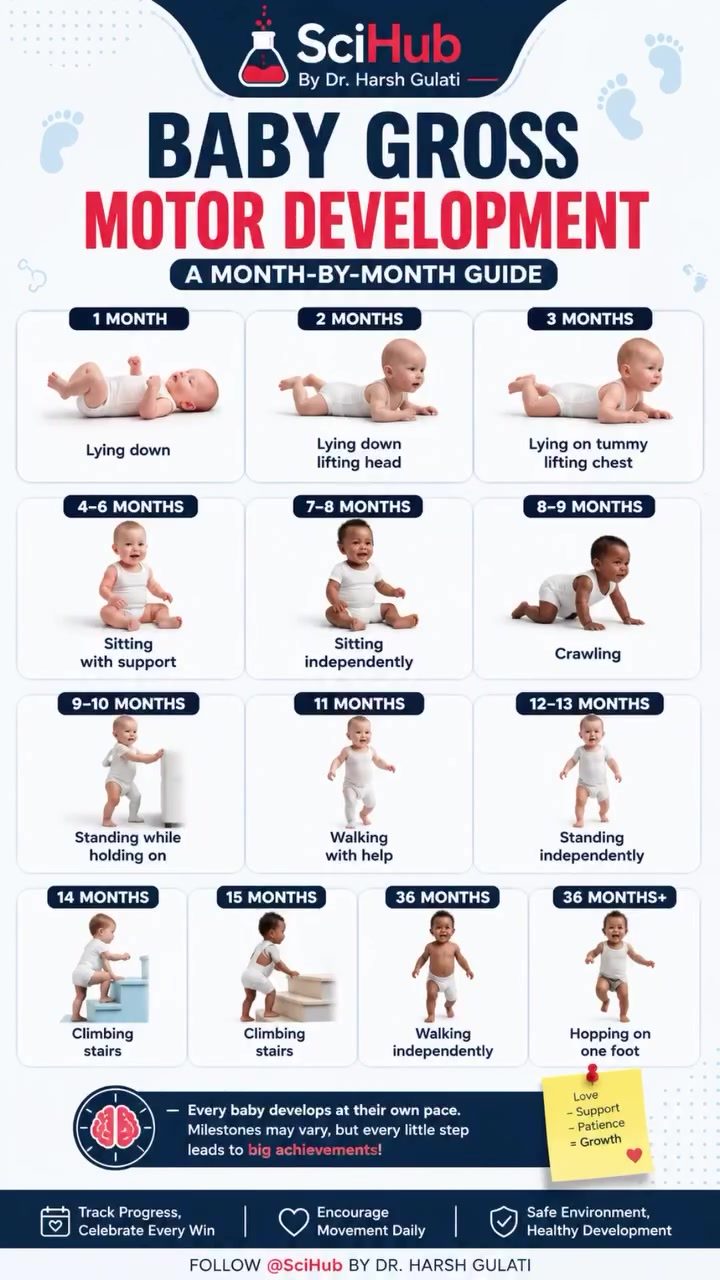
The first few months are about building basic strength and control. By one month, babies typically lie down with their arms and legs extended. Around 2-3 months, they start lifting their heads and chests when lying on their tummies, a crucial step toward eventual mobility.
4-8 Months
During this period, babies begin to sit with support and gradually gain the strength to sit independently. Around 4-6 months, they might start sitting with assistance, and by 7-8 months, many can sit without support. This phase is also when babies begin to reach for toys and explore their surroundings more actively.
9-12 Months
The second half of the first year is marked by significant motor advancements. Around 8-9 months, babies often start crawling, which is a thrilling milestone for parents. By 9-10 months, babies may stand while holding onto furniture for support. Around 11 months, they might take their first steps with help, and by 12-13 months, many can stand independently.
The Second Year
12-18 Months
The second year brings even more exciting developments. By 15 months, many babies can walk independently, although some may take a bit longer. This period is also when babies begin to experiment with different walking styles, from walking sideways to trying to run.
18-24 Months
As babies approach their second birthday, they become more adept at walking and may start to climb stairs with assistance. They also begin to manipulate toys and objects with more precision, refining their fine motor skills.
The Third Year
24-36 Months
By the age of three, babies begin to master more complex movements. They can climb stairs independently, walk backwards, and even hop on one foot. These skills are essential for their growing independence and confidence.
Beyond 36 Months
As children grow older, their motor skills become more refined. They can perform more intricate tasks, like building with blocks, drawing, and playing with small toys. These advancements are crucial for school readiness and overall development.
Practical Tips
Creating a Safe Environment
Ensure your baby has a safe and stimulating environment to practice their motor skills. Baby-proof your home by covering sharp edges, securing furniture, and keeping dangerous objects out of reach. This creates a secure space for your baby to explore and learn.
Encouraging Movement
Encourage daily movement by providing toys that promote reaching, grasping, and crawling. Tummy time is especially important for developing the neck and shoulder muscles. Place your baby on their tummy for short periods throughout the day to help them build strength.
Tracking Progress
Keep a record of your baby's milestones to track their progress. Note when they first lift their head, crawl, walk, and perform other significant movements. Celebrate each achievement, no matter how small, to build their confidence and encourage further development.
Important Takeaways
Every baby develops at their own pace, and it's essential to celebrate each milestone, no matter when it occurs. While the timeline provided is a general guide, remember that individual variations are normal. If you notice significant delays or have concerns, consult a pediatrician for personalized advice.
Conclusion
Watching your baby grow and reach motor development milestones is a rewarding experience. Understanding the key milestones and providing a supportive environment can help your baby thrive. By celebrating every little step, you encourage their development and build a strong foundation for future growth. Enjoy this incredible journey and cherish each moment as your baby explores the world around them.
Watch the Reel
Questions readers ask
When should my baby start to lift their head?
Babies typically begin to lift their head briefly during tummy time around 1-3 months. This is an early sign of head control, and you can support this milestone by providing plenty of supervised tummy time each day.
What are some signs of gross motor skills development in a 6-month-old?
By 6 months, babies often exhibit gross motor skills such as sitting without support, rolling over in both directions, and reaching for toys. They may even begin to bear weight on their legs while being held upright.
How can I help my baby develop fine motor skills?
To support fine motor skills, offer your baby a variety of safe and age-appropriate toys to grasp and manipulate. Activities like finger painting, stacking blocks, and playing with playdough can also encourage the development of these skills.
What is the typical timeline for babies to start walking independently?
Most babies take their first independent steps between 9 and 18 months. However, some may start as early as 8 months or as late as 20 months, so it's important to remember that every baby develops at their own pace.
What are some 3-year-old motor skills milestones to look out for?
By 3 years, children usually walk up and down stairs independently, run easily, and can stand on one foot for a few seconds. They may also show proficiency in fine motor skills such as turning book pages, building towers, and using utensils.
How can I track my baby's motor milestones?
Keep a journal or use a motor milestones chart to record when your baby reaches specific milestones. Regular check-ups with a pediatrician can also provide professional insights into your baby's motor skills development.
Recent articles
Fresh deep dives from the latest Reels we unpacked.




Comments
Be the first to comment.