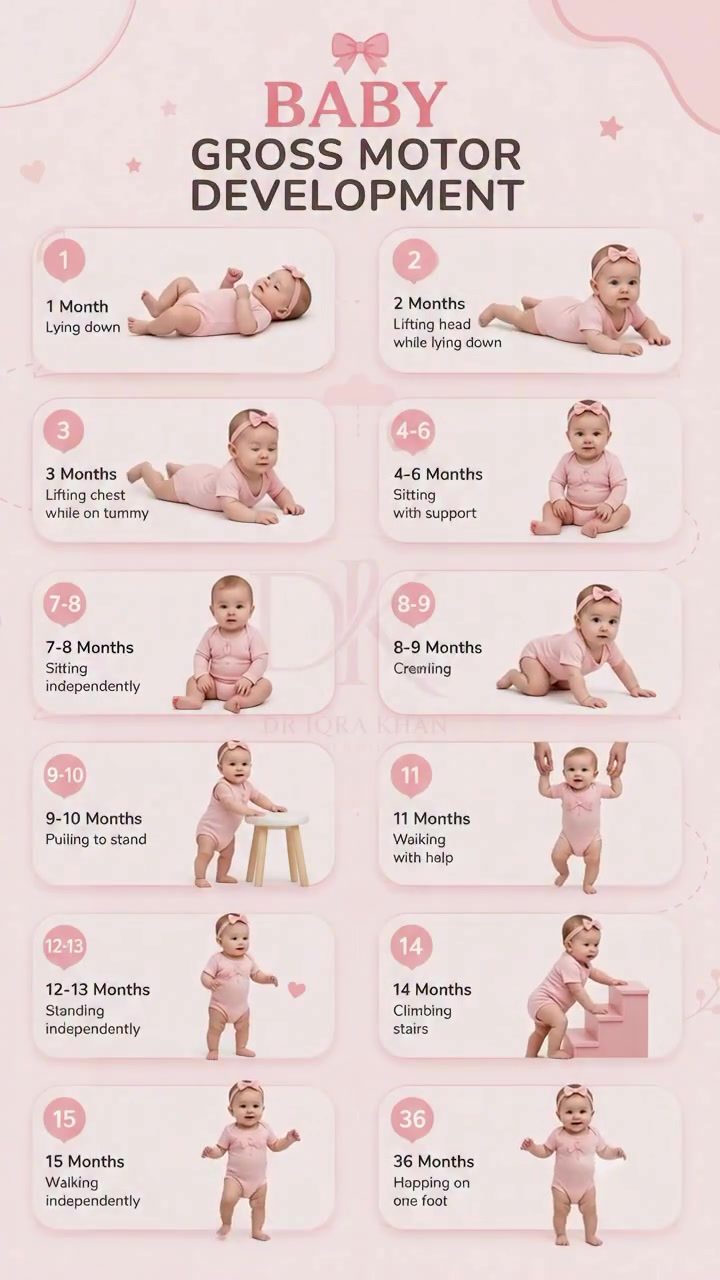
Baby Gross Motor Development: Tracking Your Child's Physical Milestones
Babies develop gross motor skills at their own pace, but understanding the typical milestones can help parents monitor their child’s growth and identify when extra support may be needed. Gross motor skills involve the larger muscles of the body and are crucial for a child's physical development. Let's dive into the key gross motor milestones from birth to 36 months.
Why This Matters
Tracking a baby's gross motor development is essential for ensuring healthy physical growth. Recognizing and supporting these milestones can help build a strong foundation for future motor skills, coordination, and overall physical competence.
Main Discussion
Early Milestones (1-6 Months)
During the first six months, babies achieve several foundational gross motor skills. At 1 month, infants typically lie down and can lift their head briefly while lying on their tummy. By 2 months, they can lift their head and shoulders while lying down. By 3 months, they develop enough strength to lift their chest while on their tummy, a crucial step toward crawling. By 4-6 months, babies begin to sit with support, building the core strength needed for independent sitting.
Building Independence (7-10 Months)
From 7 to 10 months, babies make significant strides toward independence. Around 7-8 months, they can sit independently, which requires a lot of practice and muscle control. By 8-9 months, some babies start to creep or crawl. Crawling is a complex skill that involves coordinating the arms, legs, and core muscles. By 9-10 months, babies begin to pull themselves up to a standing position, using furniture or other support.
Walking and Beyond (11-36 Months)
Between 11 and 15 months, babies progress from walking with help to walking independently. By 12-13 months, they can stand independently, which is a significant achievement. Around 14 months, they start to climb stairs, demonstrating increased balance and coordination. By 15 months, most babies can walk independently, although some may take a little longer. At 36 months, some children can even hop on one foot, showing advanced motor control and balance.
Variations and Support
It's important to note that while these milestones provide a general timeline, every baby develops at their own pace. Small variations in timing are normal, but significant delays or the loss of previously achieved skills should be evaluated by a pediatric physiotherapist. If you notice that your child is not meeting these milestones or is regressing, it's crucial to seek professional advice.
Practical Tips
Encouraging Gross Motor Development
Provide a Safe Environment: Ensure your home is baby-proofed and safe for exploration. This includes removing any hazards and providing a soft surface for play.
Tummy Time: Place your baby on their tummy for short periods to strengthen neck, shoulder, and back muscles.
Support Independent Sitting: Use pillows or special seats to help your baby sit independently, which encourages core strength and stability.
Encourage Crawling: Place toys just out of reach to motivate your baby to move and explore. Engage in play and interaction to keep your baby interested.
Walking Assistance: Hold your baby's hands and walk with them to build confidence and strength. Use a sturdy walker or push toy to help them practice walking.
Play and Interaction: Engage in activities that promote physical development, such as dancing, playing with balls, or climbing small steps.
Important Takeaways
- Every baby is unique and develops at their own pace, but knowing the expected milestones helps track progress.
- Small variations in timing are normal, but significant delays or loss of skills require professional evaluation.
- Encouraging and supporting your baby's motor development through play and interaction is essential.
- A safe, stimulating environment helps your baby achieve gross motor milestones.
Conclusion
Tracking your baby's gross motor development is a rewarding journey that ensures healthy physical growth. From lifting the head to hopping on one foot, each milestone is a testament to your child’s progress. By understanding and supporting these milestones, you can help your baby build a strong foundation for future motor skills and overall physical competence.
Watch the Reel
Questions readers ask
What are gross motor skills and why are they important for babies?
Gross motor skills involve the use of large muscle groups for movements like sitting, crawling, and walking. They are important for babies because they lay the foundation for future physical activities, coordination, and independence. Tracking these skills helps parents understand their baby's physical development and ensure they are meeting key milestones.
What are the first gross motor milestones a baby should reach?
The earliest gross motor milestones include lifting the head during tummy time, which typically occurs around 1-3 months, and rolling over, which usually happens between 4-6 months. These milestones are signs that the baby is developing the strength and control needed for more complex movements.
When should a baby start sitting independently?
Most babies begin to sit independently between 4-7 months. This skill is a crucial milestone as it indicates that the baby has developed enough trunk and neck control. If a baby is not sitting independently by 7 months, it may be a good idea to consult with a healthcare provider.
What are some signs that a baby is ready to walk?
Before taking their first steps, babies typically exhibit signs such as pulling themselves up to stand, cruising along furniture, and attempting to walk with support. These signs usually appear between 9-12 months, and walking independently often follows around 12-18 months. Each baby develops at their own pace, so these are just general guidelines.
How can parents support their baby's gross motor development?
Parents can support their baby's gross motor development by providing plenty of tummy time, encouraging exploration in a safe environment, and offering opportunities for practice, such as placing toys just out of reach to motivate movement. Regular playtime and interaction also stimulate physical development.
What should parents do if their baby is not meeting typical gross motor milestones?
If a baby is not meeting typical gross motor milestones, parents should first consult with their pediatrician. The doctor can assess the baby's development and provide guidance or referrals to specialists if needed. Early intervention can often help babies catch up and reach their full potential.
How can parents track their baby's gross motor milestones?
Parents can track their baby's gross motor milestones using a variety of resources, such as milestone charts provided by healthcare professionals or reliable online sources. Regular check-ups with a pediatrician also offer opportunities to discuss a baby's progress and address any concerns. Keeping a record of when the baby achieves key milestones can help identify any delays or areas needing extra support.
Recent articles
Fresh deep dives from the latest Reels we unpacked.




Comments
Be the first to comment.