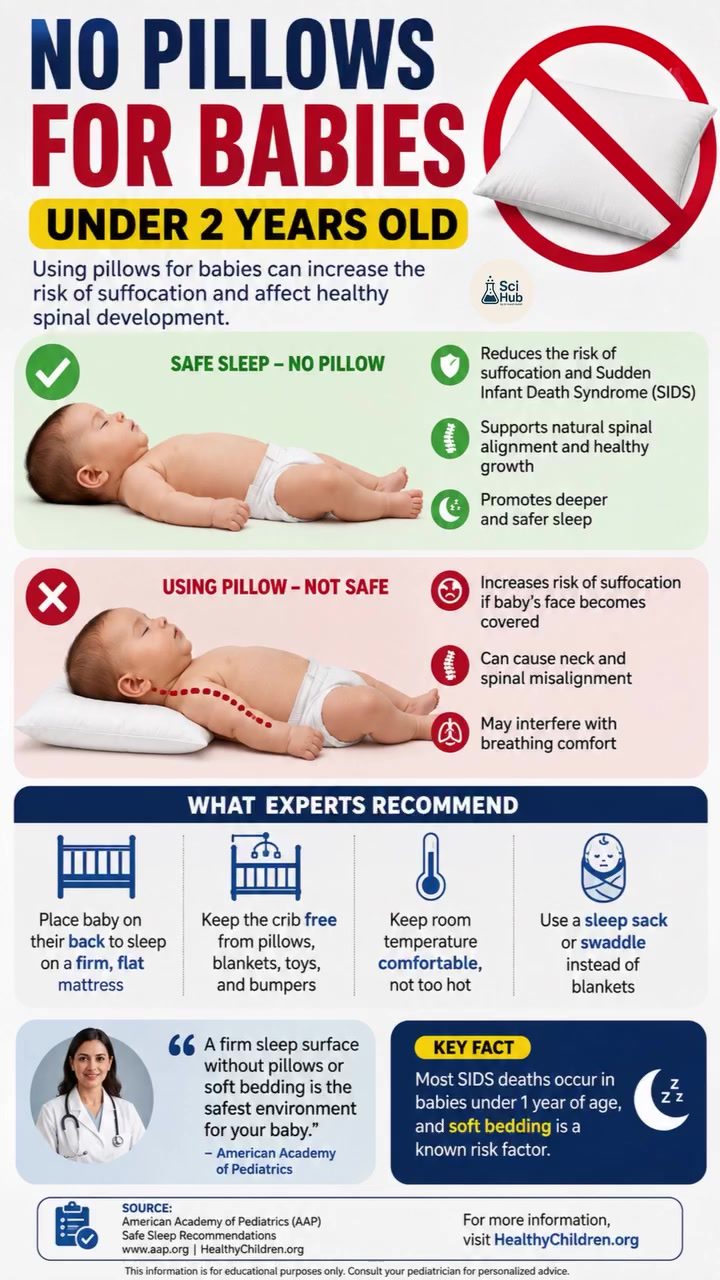
No Pillows for Babies Under 2 Years
Safe sleep practices are crucial for the well-being and development of infants. One of the most important recommendations from pediatric experts is to avoid using pillows for babies under two years old. While pillows might seem comfortable, they can pose significant risks to young babies.
Why This Matters
The primary concern with pillows is the increased risk of suffocation and airway obstruction. Babies, especially those under two years old, have weaker neck muscles and limited ability to move their heads if their face becomes pressed against a pillow. This can lead to unsafe sleep conditions and potentially fatal outcomes. Additionally, pillows can affect a baby's spinal development and cause misalignment, which can have long-term health implications.
Safe Sleep Environment
Creating a safe sleep environment is paramount for the health and safety of babies. Here are some critical recommendations from the American Academy of Pediatrics (AAP):
Sleep Position and Surface
Place your baby on their back on a firm, flat mattress. This position is recommended because it significantly reduces the risk of Sudden Infant Death Syndrome (SIDS). A firm sleep surface ensures that the baby's airway remains clear and reduces the risk of suffocation.
Keeping the Crib Clear
Avoid placing any soft items in the crib, including pillows, blankets, bumpers, and stuffed toys. These items can increase the risk of suffocation and other sleep-related issues. Instead, use a sleep sack or swaddle to keep your baby warm and comfortable without the risks associated with loose bedding.
Room Temperature
Maintain a comfortable room temperature, not too hot and not too cold. Overheating can increase the risk of SIDS, while a room that is too cold can make your baby uncomfortable and disrupt their sleep. Aim for a room temperature between 68°F and 72°F (20°C and 22°C).
Supplies to Avoid
Alongside pillows, there are other items that should be kept out of the baby's sleep environment:
- Blankets: While they may seem cozy, blankets can pose a suffocation risk. Opt for a sleep sack or swaddle designed for safe sleep.
- Bumpers: Crib bumpers are often considered unsafe as they can trap a baby's head, leading to suffocation.
- Stuffed Toys: Soft toys and plushies can obstruct the baby's airway and should be kept out of the crib.
Benefits of a Safe Sleep Environment
By following these recommendations, you can create an environment that supports natural spinal alignment and healthy growth. This promotes deeper, safer sleep and reduces the risk of sleep-related infant deaths. Here are some specific benefits:
Spinal Alignment
Using a firm, flat mattress without pillows helps support the baby's natural spinal alignment. Proper spinal development is crucial for a baby's overall growth and motor skills.
Safer Sleep
Avoiding soft bedding and keeping the room temperature comfortable can significantly reduce the risk of sleep-related issues, including SIDS. This ensures a safer and more restful sleep for your baby.
Reduced Risk of Suffocation
By keeping the crib free of pillows, blankets, and other soft items, you eliminate the risk of suffocation. This is particularly important for babies under two years old, who have weaker neck muscles and limited ability to move if their face becomes covered.
Practical Tips
Share the Room, Not the Bed
The American Academy of Pediatrics recommends sharing the room with your baby, but not the bed, for at least the first six months. This helps in monitoring your baby's sleep and ensures immediate response in case of any issues. Room-sharing reduces the risk of SIDS by up to 50%.
Use a Sleep Sack or Swaddle
A sleep sack or swaddle is a safe alternative to traditional blankets. These are designed to keep your baby warm while allowing for proper breathing and movement. This is especially important for babies who can't yet regulate their body temperature effectively.
Monitor Room Temperature
Use a thermometer to monitor the room temperature. Aim for a range between 68°F and 72°F (20°C and 22°C). Avoid over-bundling your baby, as this can cause overheating, which is a known risk factor for SIDS.
Important Takeaways
The primary takeaway is that avoiding pillows and soft bedding in your baby's sleep environment is crucial for their safety. Soft items can increase the risk of suffocation and airway obstruction, which are significant risks for young babies. Always place your baby on their back on a firm, flat mattress, and keep the crib free of soft items. Room-sharing for the first six months is also highly recommended to ensure a safer sleep environment.
Conclusion
Creating a safe sleep environment is essential for the well-being and development of babies under two years old. By following the recommendations outlined by the American Academy of Pediatrics, you can significantly reduce the risk of sleep-related issues. Always place your baby on their back on a firm, flat mattress, keep the crib free of pillows, blankets, and other soft items, and monitor the room temperature to ensure a comfortable and safe sleep environment.
Watch the Reel
Questions readers ask
Why is it dangerous for babies under 2 to sleep with pillows?
Babies under 2 have weaker neck muscles and limited mobility, making it hard for them to move their heads if they become pressed against a pillow. This can lead to suffocation and airway obstruction, posing significant health risks.
What are the risks associated with using pillows for babies under 2?
Pillows can increase the risk of suffocation and airway obstruction. Additionally, they can affect a baby's spinal development and cause misalignment, potentially leading to long-term health issues.
What do pediatric experts recommend for baby sleep environments?
Pediatric experts strongly advise against using pillows in the sleep environment of babies under 2. They recommend a firm, flat surface with no soft objects or bedding that could pose a risk.
How should babies under 2 be positioned for sleep?
According to safe sleep guidelines, babies under 2 should be placed on their backs for every sleep. This position is associated with a significantly lower risk of sudden infant death syndrome (SIDS).
Can using a pillow prevent a baby from rolling over?
No, a pillow should not be used to prevent a baby from rolling over. Instead, create a safe sleep environment by removing all soft objects and bedding from the crib. Additionally, ensure that the crib meets current safety standards.
What should parents do if their baby seems uncomfortable without a pillow?
If a baby seems uncomfortable without a pillow, parents should consider other safe alternatives, such as swaddling or using a wearable blanket. Always clear any concerns with a pediatrician before making changes to your baby's sleep environment.
Where can parents find more information on safe sleep practices for babies?
Parents can find comprehensive guidelines on safe sleep practices from reliable sources such as the American Academy of Pediatrics (AAP). These guidelines provide detailed recommendations for creating a safe sleep environment for babies.
Recent articles
Fresh deep dives from the latest Reels we unpacked.




Comments
Be the first to comment.