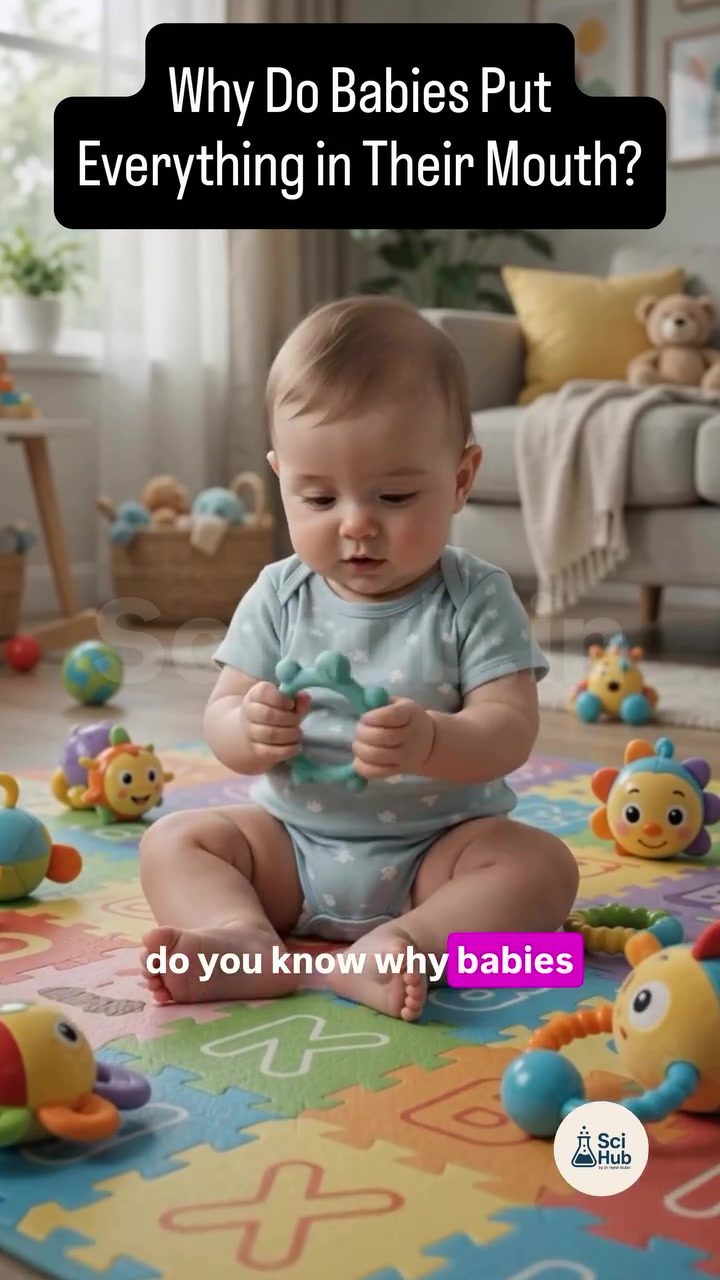
Why Babies Put Everything in Their Mouths
Understanding why babies put everything in their mouths can be both fascinating and reassuring for parents. This behavior, known as oral exploration, is a crucial part of a baby's developmental journey. Babies' lips and tongues are packed with sensory receptors that help them explore an object's shape, texture, temperature, and firmness. This sensory feedback is essential for their cognitive and motor development.
Why This Matters
Oral exploration is not just a quirk; it is a fundamental aspect of a baby's learning process. By putting objects in their mouths, babies gather vital information about their environment. This sensory input helps them understand the world around them and develops their motor skills. Understanding this behavior can help parents provide the right tools and environments for their babies to thrive.
Main Discussion
Sensory Receptors and Brain Development
Babies' mouths are incredibly sensitive, containing thousands of sensory nerve endings. When a baby puts an object in their mouth, these tiny sensors send messages to the brain, helping the baby learn about the object's characteristics. This process is not just about taste; it involves a complex interplay of sensory information that aids in brain development.
The Role of Teething
While teething is often cited as a reason for babies putting things in their mouths, it is not the only factor. Teething can increase this behavior because the gentle pressure on the gums can be soothing. However, babies begin exploring with their mouths even before their first teeth appear. Some parents may notice that babies even taste their fingers or hands to get a better feel for an object.
Safety and Health
As babies explore the world with their mouths, it is crucial for parents to ensure that the objects they put in their mouths are clean and safe. Parents should always provide age-appropriate, non-toxic toys and keep small items out of reach to prevent choking hazards. Safe, clean teething toys are essential during this phase.
Practical Tips
Providing Safe Toys
When selecting toys for your baby, opt for those that are designed to be safely mouthable. Avoid toys with small parts that could detach and pose a choking hazard. Always ensure that toys are clean and free from harmful chemicals.
Cleanliness and Hygiene
Regularly clean and sterilize your baby's toys to prevent the spread of germs. This is especially important during the early stages of development when babies are more susceptible to infections.
Encouraging Exploration
Encourage your baby's natural curiosity by providing a variety of safe and interesting objects to explore. This can include soft, chewable toys, textured surfaces, and even safe household items like wooden spoons or rubber spatulas.
Monitoring Behavior
Keep a close eye on your baby's mouthing behavior. If you notice any unusual patterns or if your baby shows signs of discomfort, consult a healthcare provider. While oral exploration is normal, it is essential to rule out any underlying issues.
Important Takeaways
Oral Exploration is Normal
Oral exploration is a natural and important part of a baby's development. It helps babies understand their environment and develop critical cognitive and motor skills.
Safety is Key
Always prioritize the safety of your baby by providing clean, age-appropriate toys and keeping small items out of reach.
Teething and Beyond
While teething can increase mouthing behavior, babies begin exploring with their mouths long before their first teeth appear.
Conclusion
Understanding why babies put everything in their mouths can provide valuable insights into their development. By recognizing this behavior as a normal and essential part of their growth, parents can better support their babies' sensory and cognitive development. Providing safe, clean, and age-appropriate toys and monitoring their behavior can ensure a healthy and enriching exploration phase for your baby.
Watch the Reel
Questions readers ask
At what age do babies typically start exploring objects with their mouths?
Babies usually begin oral exploration around 3 to 4 months old. This behavior can increase during teething, which typically starts around 6 months, and can last until around 12 to 18 months. During this time, babies use their mouths to understand and interact with their surroundings.
What kind of sensory information do babies gather through oral exploration?
Through oral exploration, babies learn about an object's shape, texture, temperature, and firmness. This sensory information is crucial for their cognitive growth and motor skill development, as it helps them understand and navigate their environment.
How does oral exploration aid in a baby's cognitive development?
Oral exploration activates the sensory receptors in a baby's mouth, sending signals to the brain that help form neural connections. This process aids in cognitive development by providing a direct way for babies to understand and process different aspects of their environment.
What safe objects can babies explore with their mouths?
Offer age-appropriate, non-toxic, and clean objects for babies to explore. Teething toys, soft fabrics, and textured books are good options. Always supervise oral exploration to ensure the baby's safety and prevent choking hazards.
Does oral exploration help in baby's teething process?
Oral exploration can indeed help during teething. The pressure and sensation of objects in their mouth can provide relief from gum discomfort. It also helps babies familiarize themselves with the sensations associated with their emerging teeth and learn to cope with the discomfort.
Related deep dives
Similar reads based on topic and creator.

Recent articles
Fresh deep dives from the latest Reels we unpacked.




Comments
Be the first to comment.