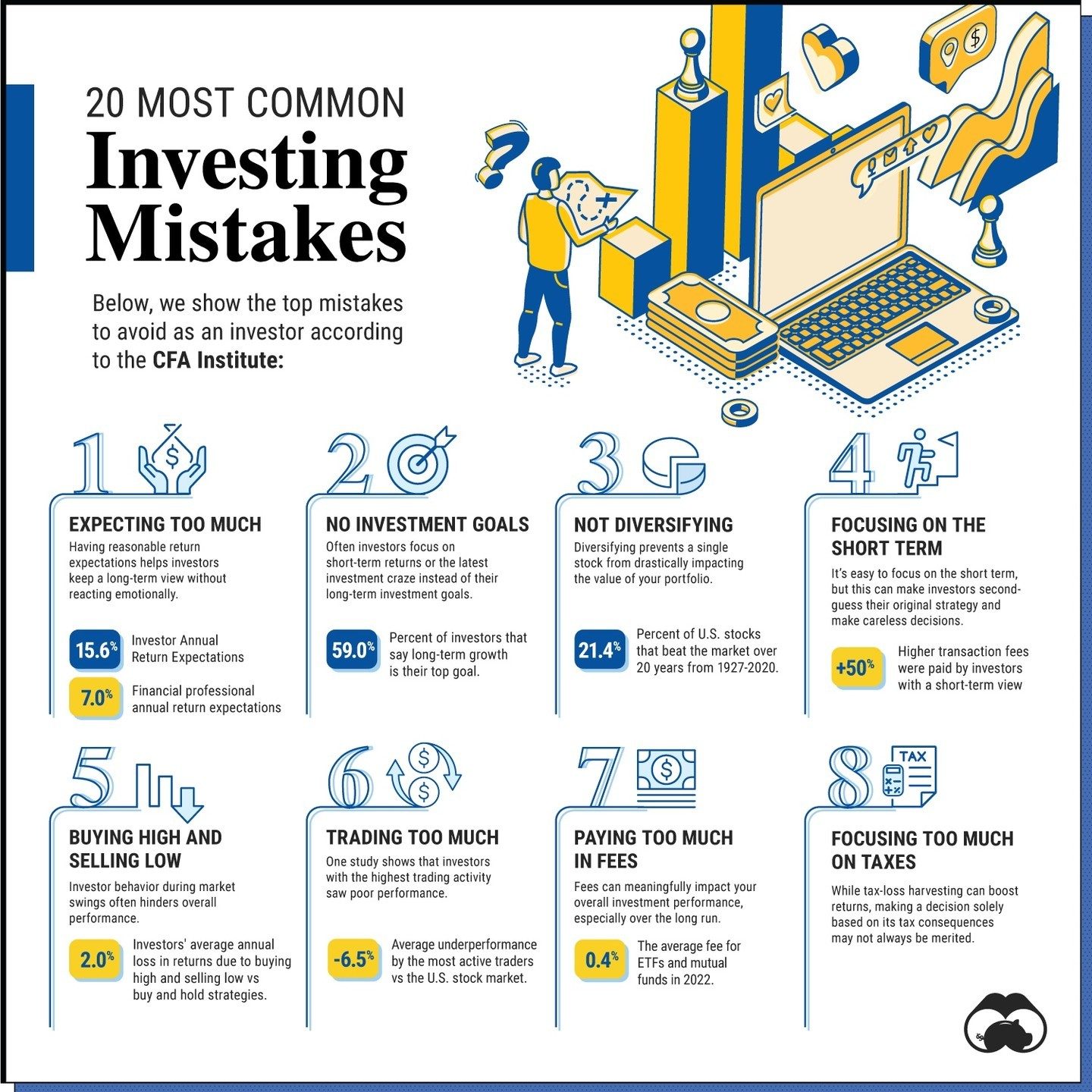
Investing Mistakes
Investing is a complex endeavor, and even the most seasoned investors are not immune to making mistakes. Recognizing and learning from these errors can provide valuable insights and help build more resilient portfolios. The CFA Institute has identified the top 20 most common investing mistakes that investors should be aware of.
Why This Matters
Understanding these mistakes is crucial for any investor. Whether you are a novice or an experienced investor, avoiding these pitfalls can significantly improve your investment outcomes. By learning from the mistakes of others, you can enhance your investment strategies and mitigate potential risks.
Common Investing Mistakes
The following are the top 20 investing mistakes according to the CFA Institute, each with a brief explanation and supporting context.
Expecting Too Much
One of the most common mistakes is expecting unrealistic returns from your investments. While it's natural to hope for high returns, setting overly ambitious goals can lead to disappointment and poor decision-making. It's essential to have realistic expectations based on historical data and market conditions.
Buying High and Selling Low
This mistake often occurs when investors follow emotional impulses rather than a disciplined investment strategy. Buying high and selling low can result in significant losses. To avoid this, consider setting predetermined price targets and stop-loss levels to manage your investments more effectively.
Trading Too Much
Frequent trading can lead to higher fees and taxes, eroding your investment returns. Many investors fall into the trap of trying to time the market, which is notoriously difficult. Instead, focus on a long-term investment strategy and avoid the temptation to trade excessively.
Paying Too Much in Fees
High investment fees can significantly impact your returns over time. Whether it's management fees, brokerage commissions, or hidden costs, these expenses add up. Always be mindful of the fees associated with your investments and seek low-cost options where possible.
Focusing on the Short Term
Investors who focus too much on short-term gains often miss out on the benefits of a long-term investment horizon. Short-term market fluctuations are common, but they rarely indicate the broader trend. By keeping a long-term perspective, you can better weather market volatility and achieve your investment goals.
Not Reviewing Regularly
Regularly reviewing your investment portfolio is essential for staying on track. Many investors neglect this critical step, leading to mismanagement and suboptimal performance. Schedule regular reviews to assess your portfolio's performance, rebalance as needed, and adjust your strategy to align with your financial goals.
Misunderstanding Risk
Risk is a fundamental aspect of investing, and misunderstanding it can lead to poor decisions. It's important to understand the different types of risk, such as market risk, credit risk, and liquidity risk, and how they apply to your investments. By accurately assessing and managing risk, you can make more informed investment choices.
Not Knowing Your Performance
Many investors fail to track their investment performance, which makes it difficult to measure success and identify areas for improvement. Use performance metrics like the Sharpe ratio, Sortino ratio, and return on investment (ROI) to evaluate your portfolio's performance and make data-driven decisions.
Reacting to the Media
In a world full of financial news and media hype, it's easy to get swayed by short-term market sentiments and media noise. Instead of reacting impulsively to media headlines, stick to your investment plan and focus on long-term trends and fundamentals.
Forgetting About Inflation
Inflation erodes the purchasing power of your money over time, making it a crucial factor to consider in your investment strategy. Invest in assets that have the potential to outpace inflation, such as stocks, real estate, and inflation-protected securities, to preserve and grow your wealth.
Trying to Time the Market
Market timing is challenging, even for professional investors. Attempting to predict market highs and lows can lead to missed opportunities and increased risk. Instead, consider a dollar-cost averaging strategy, which involves investing a fixed amount regularly, regardless of market conditions.
Not Doing Due Diligence
Thorough research and due diligence are essential before making any investment. Many investors overlook this step, leading to poor choices and potential losses. Conduct comprehensive research on potential investments, including analyzing financial statements, understanding market trends, and evaluating the company's management.
Working with the Wrong Advisor
Choosing the right financial advisor can significantly impact your investment success. Unfortunately, many investors overlook the importance of this decision. Do your due diligence when selecting an advisor, and ensure they have the necessary qualifications, experience, and alignment with your financial goals.
Investing with Emotions
Emotional investing often leads to poor decisions, such as panic selling during market downturns or chasing hot stocks. Develop a disciplined investment strategy and stick to it, regardless of market conditions or emotional impulses.
Chasing Yield
Chasing high-yield investments without considering the underlying risks can be dangerous. Investors should focus on achieving a balanced portfolio that aligns with their risk tolerance and financial goals, rather than solely chasing high returns.
Neglecting to Start What You Can
Many investors overlook the power of compounding, often starting their investments too late. The earlier you start investing, the more time your money has to grow. Even small, regular contributions can accumulate significantly over time, thanks to the power of compounding.
Not Controlling What You Can
Ultimately, investors should focus on what they can control, such as asset allocation, diversification, and fees, rather than trying to predict unpredictable market movements. By controlling these factors, you can create a more resilient and successful investment portfolio.
Practical Tips
To avoid these common investing mistakes, consider the following practical tips:
- Set Realistic Goals: Understand the historical returns of your chosen investment vehicles and set achievable goals.
- Develop a Long-Term Strategy: Focus on a long-term investment horizon and resist the urge to react to short-term market fluctuations.
- Diversify Your Portfolio: Spread your investments across different asset classes, sectors, and geographies to mitigate risk.
- Regularly Review and Rebalance: Periodically assess your portfolio's performance and rebalance to maintain your desired asset allocation.
- Stay Informed, Not Reactive: Educate yourself on market trends, but avoid making impulsive decisions based on media noise.
- Consider Inflation: Invest in assets that can outpace inflation to preserve your wealth.
- Focus on What You Can Control: Concentrate on managing fees, asset allocation, and diversification, rather than trying to time the market.
Important Takeaways
- Investing Mistakes are Common: Even experienced investors make mistakes, but learning from these blunders can lead to better long-term success.
- Understand Risk: Knowing and managing risk is crucial for any investment strategy.
- Avoid Emotional Decisions: Stick to a disciplined plan and avoid making impulsive decisions.
- Focus on Long-Term Growth: Short-term volatility is a natural part of investing, but maintaining a long-term perspective can lead to better outcomes.
Conclusion
Investing is a journey filled with opportunities and challenges. By being aware of common mistakes and taking proactive steps to avoid them, you can enhance your investment strategies and achieve long-term success. Always remember that investing is a marathon, not a sprint, and that patience and discipline are key to building a resilient portfolio.
Explore more insights and resources, such as those from the CFA Institute, to deepen your understanding and refine your investment strategies.
Watch the Reel
Questions readers ask
What are some of the most common investing mistakes identified by the CFA Institute?
The CFA Institute has pinpointed 20 frequent investing errors, ranging from emotional decision-making to ignoring fees. These mistakes can lead to poor investment outcomes and are crucial for investors to recognize and avoid. The list includes failures in setting realistic goals, controlling emotions, and minimizing fees, among other pitfalls.
How can setting realistic investment goals improve my strategies?
Establishing realistic investment goals helps align your expectations with achievable outcomes. This prevents impulsive decisions driven by frustration or greed. It also allows for a more structured, long-term strategy, which can help mitigate risks and enhance overall performance.
What are some common mistakes that investors make in the short term?
Short-term investing mistakes often involve emotional responses to market volatility. Common errors include panic selling during market downturns and chasing performance by frequently buying and selling based on short-term trends. These actions can lead to increased transaction costs, higher fees, and suboptimal returns.
Why is controlling emotions crucial in investing?
Controlling emotions is vital because emotional decisions often lead to poor investment choices. For example, fear can cause investors to sell assets at a loss, while greed can push them into risky investments. By maintaining a disciplined and rational approach, investors can avoid these emotional pitfalls and stick to their long-term strategies.
What steps can I take to minimize investment fees?
To minimize investment fees, consider using low-cost investment options such as index funds or exchange-traded funds (ETFs). Additionally, be mindful of transaction costs, account maintenance fees, and advisory fees. Regularly review your portfolio to ensure you are not overpaying for services and investments. Reducing fees can significantly improve your overall returns over time.
How can understanding the CFA Institute's top 20 investing mistakes benefit my investing journey?
By recognizing and learning from the CFA Institute's top 20 investing mistakes, you can avoid common pitfalls that may jeopardize your investment journey. This awareness allows you to set more realistic goals, control your emotions, and minimize fees, leading to more informed decisions and potentially better investment outcomes.
Recent articles
Fresh deep dives from the latest Reels we unpacked.




Comments
Be the first to comment.