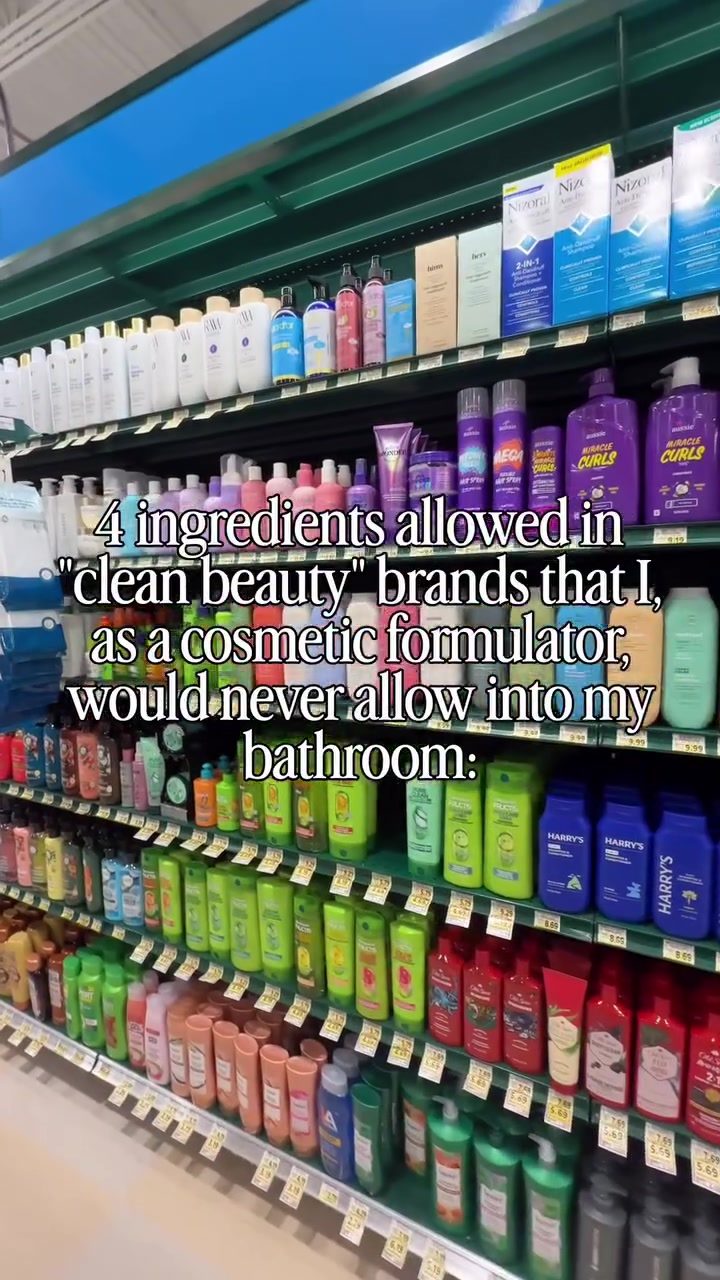
Ingredients to Avoid in "Clean Beauty" Hair Care Products
Hair care products, especially those labeled as "clean beauty", are often marketed as safe and non-toxic alternatives to conventional products. However, navigating the world of "clean beauty" can be challenging, as some ingredients commonly found in these products may not be as harmless as they seem. As a cosmetic formulator, there are several ingredients that raise concerns, even if they are allowed in some "clean beauty" brands.
Why This Matters
Understanding what goes into your hair care products is crucial for making informed choices. Many consumers assume that products labeled as "clean" are free from potentially harmful ingredients. However, the term "clean beauty" can be misleading, as it is not tightly regulated. By knowing which ingredients to avoid, you can make more informed decisions about the products you use on your hair and scalp.
Ingredients in "Clean Beauty" Brands to Watch Out For
Fragrance (Parfum)
Fragrance, often listed as "Parfum" on ingredient labels, is a catch-all term that can represent a blend of undisclosed ingredients. While fragrance can make a product smell pleasant, some mixtures have been found to contain phthalates. Phthalates are chemicals that have been studied for their potential effects on the endocrine system. Endocrine-disrupting chemicals can interfere with the body's hormone systems, potentially leading to various health issues.
Phenoxyethanol
Phenoxyethanol is a widely used preservative in hair care products. While it is effective at preventing bacterial growth, it can cause skin or eye irritation in some individuals. This ingredient is particularly concerning for products used frequently or on young children, as their skin may be more sensitive. Some consumers prefer to avoid phenoxyethanol to minimize the risk of irritation.
Quaternium-15
Quaternium-15 is a formaldehyde-releasing preservative. Formaldehyde is classified as a human carcinogen under certain exposure conditions. While the levels of formaldehyde released from Quaternium-15 in hair care products are typically low, some consumers choose to avoid ingredients that release formaldehyde to minimize potential health risks.
Methylisothiazolinone (MIT)
Methylisothiazolinone, often abbreviated as MIT, is a preservative well known for its potential to cause allergic contact dermatitis. Due to sensitization concerns, MIT is restricted or prohibited in leave-on cosmetics in many regions. However, it can still be found in some "clean beauty" hair care products. If you have sensitive skin or a history of allergic reactions, it's best to avoid products containing MIT.
Practical Tips for Reading Hair Care Labels
To ensure that you are making informed choices about your hair care products, follow these practical tips:
Check the Ingredient List
Always read the ingredient list on the product label. Ingredients are listed in descending order of prominence, so those at the top are present in higher concentrations. Look for the ingredients mentioned above and consider avoiding products that contain them.
Look for Transparent Branding
Choose brands that are transparent about their ingredient sourcing and manufacturing processes. Brands that clearly list all ingredients and avoid vague terms like "fragrance" are more likely to be committed to clean and safe products.
Consider Certifications
Look for certifications from reputable organizations that verify the safety and efficacy of the product. Certifications such as the Environmental Working Group (EWG) Verified or the Leaping Bunny can provide additional assurance that the product meets certain safety standards.
Opt for Simpler Formulas
Simpler formulas with fewer ingredients are generally safer. Products with long ingredient lists may contain more potential irritants or allergens.
Important Takeaways
Understand the Label
Understanding what's on the back of the label is as important as what's on the front. Knowing the ingredients and their potential effects can help you make more informed decisions about the products you use.
Clean Beauty Isn't Always Clean
The term "clean beauty" can be misleading. Just because a product is marketed as "clean" doesn't mean it's free from potentially harmful ingredients. It's essential to do your research and read labels carefully.
Make Informed Choices
By being aware of the ingredients to avoid and taking the time to read labels, you can make more informed choices about the hair care products you use. This can help ensure that you are using products that are safe and suitable for your hair and scalp.
Conclusion
Navigating the world of "clean beauty" hair care products requires careful consideration and research. By being aware of the ingredients to avoid and understanding how to read labels, you can make more informed choices about the products you use. Opt for transparent brands, consider certifications, and look for simpler formulas to ensure that you are using products that are safe and effective for your hair and scalp.
Watch the Reel
Questions readers ask
What does 'clean beauty' mean and why should I be cautious about it?
'Clean beauty' is a term used to describe products that are marketed as safe, non-toxic, and free from potentially harmful ingredients. However, the term is not tightly regulated, so it's crucial to be cautious and read labels carefully. Just because a product is labeled as 'clean' does not guarantee that it is free from ingredients that could potentially harm your scalp or disrupt your body’s hormone systems.
Why is fragrance an ingredient to avoid in clean beauty hair products?
Fragrance is often a catch-all term for a mix of chemicals that can cause allergic reactions and irritate the scalp. Many fragrance mixes can contain phthalates, which are known to disrupt hormones. Opt for products that are labeled 'fragrance-free' or use essential oils for scent.
What is phenoxyethanol and why should I be concerned about it in hair products?
Phenoxyethanol is a common preservative used in cosmetics, including hair care products. While it is generally considered safe in small amounts, it can cause skin irritation and allergic reactions in some individuals. It is also classified as a hormone disruptor, which is why it is important to be mindful of it, especially in 'clean beauty' products.
How does formaldehyde in hair products affect my scalp health?
Formaldehyde and formaldehyde-releasing preservatives can cause scalp irritation, itching, and even burns. They can also act as a carcinogen in certain concentrations. Since these chemicals are often found in hair products, it is important to avoid them to maintain scalp health.
What are some hormone disrupting preservatives found in clean beauty hair products?
Some hormone disrupting preservatives to look out for in hair products include parabens (methylparaben, propylparaben, etc.), phenoxyethanol, and formaldehyde-releasing preservatives like DMDM hydantoin and imidazolidinyl urea. These ingredients can interfere with your body’s natural hormone systems, so it's best to avoid them.
How can I make sure I'm choosing safe hair care products?
To choose safe hair care products, start by checking the ingredient list. Look for products that are transparent about their ingredients and avoid those with vague terms like 'fragrance'. Additionally, consider using resources like an ingredient checklist and looking for products that are certified by reputable organizations that have strict standards for ingredient safety.
Are 'clean beauty' brands always safer than conventional brands?
Not always. The term 'clean beauty' is not tightly regulated, so some brands may use it as a marketing tactic without meeting strict safety standards. It's essential to read labels, understand ingredients, and do your own research to ensure you are choosing safe and non-toxic products.
Related deep dives
Similar reads based on topic and creator.


Recent articles
Fresh deep dives from the latest Reels we unpacked.




Comments
Be the first to comment.