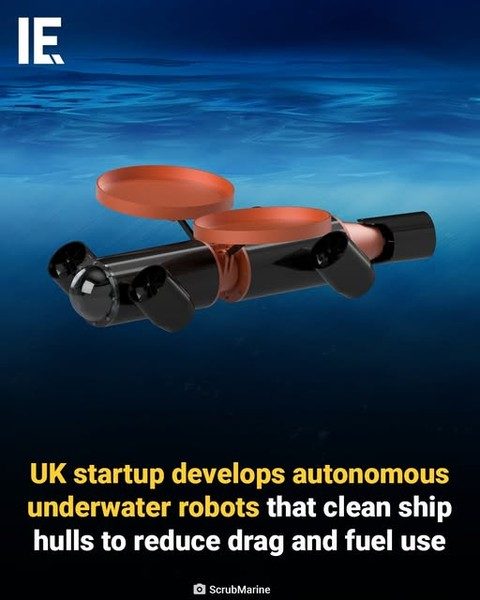
Underwater Robotics and Hull Cleaning in Marine Technology
Autonomous underwater robots, such as those developed by the UK startup ScrubMarine, are revolutionizing the maritime industry by addressing a critical problem: biofouling. Biofouling, the accumulation of algae, barnacles, and other marine organisms on ship hulls, increases drag and fuel consumption, making it a significant cost driver in global shipping. By automating the hull cleaning process, ScrubMarine's innovative robots aim to reduce fuel use, emissions, and maintenance costs, while enhancing vessel efficiency and safety.
Context / Why this matters
The maritime industry is under increasing pressure to reduce its environmental impact. Shipping accounts for approximately 2.2% of global greenhouse gas emissions, and this figure is expected to rise as trade volumes increase. Biofouling exacerbates this problem by increasing drag, which in turn boosts fuel consumption and emissions. Regular hull cleaning is essential to mitigate these issues, but traditional methods, such as divers or dry dock maintenance, are time-consuming, costly, and pose safety risks. This is where autonomous underwater robots come into play, offering a more efficient, safer, and cost-effective solution.
Main discussion
The Problem of Biofouling
Biofouling is a persistent challenge in the maritime industry. It occurs when marine organisms, such as algae and barnacles, attach to the hulls of ships, creating an uneven surface that increases drag. This added drag forces ships to burn more fuel to maintain speed, leading to higher operational costs and increased emissions. Additionally, biofouling can cause corrosion and other forms of hull degradation, further compromising the vessel's efficiency and safety.
Environmental and Economic Impacts
The environmental impact of biofouling is significant. Increased fuel consumption translates to higher greenhouse gas emissions, contributing to climate change. From an economic standpoint, biofouling drives up operational costs, which can be a substantial burden, especially for smaller shipping companies. Regular hull cleaning is crucial to mitigate these issues, but traditional methods are far from ideal.
The Role of Autonomous Underwater Robots
Autonomous underwater robots, like those developed by ScrubMarine, offer a promising solution to the biofouling problem. These robots are designed to clean ship hulls autonomously, removing algae, barnacles, and other marine organisms that cause drag and increase fuel consumption. By automating this process, ScrubMarine aims to make hull cleaning more efficient, safer, and cost-effective.
Benefits of Autonomous Hull Cleaning
The use of autonomous underwater robots for hull cleaning offers several benefits. First and foremost, it reduces the need for human intervention, minimizing the risks associated with diver-based cleaning and dry dock maintenance. By automating the process, ScrubMarine's robots can operate continuously, ensuring that ship hulls remain clean and efficient.
Additionally, autonomous hull cleaning can lead to significant cost savings. Regular hull cleaning reduces drag, which in turn lowers fuel consumption and emissions. This not only benefits the environment but also reduces operational costs for shipping companies. By eliminating the need for divers or dry dock maintenance, ScrubMarine's robots can further cut costs and improve vessel efficiency.
How It Works
ScrubMarine's autonomous underwater robots are equipped with advanced sensors and cleaning mechanisms that allow them to operate independently. The robots use advanced algorithms to navigate the hull, identify areas of biofouling, and remove the accumulated marine organisms. This targeted approach ensures that the hull is thoroughly cleaned, minimizing drag and improving the vessel's overall efficiency.
The Future of Marine Robotics
As the pressure to reduce emissions and operational costs grows, the demand for innovative solutions like ScrubMarine's autonomous underwater robots is likely to increase. The potential of marine robotics to revolutionize the shipping industry and contribute to sustainability goals is immense. By automating the hull cleaning process, ScrubMarine is paving the way for a cleaner, safer, and more cost-effective maritime industry.
Practical tips
For Shipping Companies
-
Invest in Technology: Consider investing in autonomous underwater robots for regular hull cleaning. The long-term cost savings and environmental benefits make it a worthwhile investment.
-
Regular Maintenance: Establish a regular hull cleaning schedule to prevent excessive biofouling. Even if traditional methods are used, maintaining a clean hull is crucial for efficiency.
-
Monitor Fuel Consumption: Keep track of fuel consumption to identify when biofouling is affecting vessel performance. Early intervention can prevent significant drag and fuel use increases.
For Maritime Professionals
-
Stay Updated: Keep up with the latest developments in marine robotics and autonomous technologies. New innovations can significantly improve efficiency and safety.
-
Training and Education: Ensure that your team is well-versed in the use of advanced technologies. Training and education are essential for leveraging the full potential of tools like autonomous underwater robots.
-
Collaboration and Partnerships: Engage with startups and technology providers to explore new solutions and partnerships. Collaboration can drive innovation and improve industry practices.
Important takeaways
-
Biofouling Impacts: Biofouling increases drag and fuel consumption, significantly impacting both operational costs and emissions in the maritime industry.
-
Autonomous Solutions: Autonomous underwater robots offer an efficient, safer, and cost-effective solution to hull cleaning, reducing the need for divers or dry dock maintenance.
-
Environmental Benefits: By removing biofouling, autonomous robots can significantly reduce fuel consumption and emissions, contributing to sustainability goals in the maritime sector.
-
Economic Advantages: Regular hull cleaning using automation not only improves vessel efficiency but also leads to substantial cost savings for shipping companies.
Conclusion
The development of autonomous underwater robots by startups like ScrubMarine represents a major leap forward in addressing the challenges of biofouling and improving the efficiency of the maritime industry. By automating the hull cleaning process, these robots offer a cleaner, safer, and more cost-effective solution to a long-standing problem. As the demand for sustainable and efficient shipping grows, the role of marine robotics is poised to become increasingly important. Shipping companies and maritime professionals alike should embrace these innovative technologies to stay competitive and environmentally responsible.
Watch the Reel
Questions readers ask
How do autonomous underwater robots address biofouling on ship hulls?
Autonomous underwater robots, like those from ScrubMarine, remove marine organisms such as algae and barnacles. This prevents the buildup of biofouling, which significantly increases drag and fuel consumption on ships. By keeping hulls clean, these robots enhance vessel efficiency and help maintain optimal performance. Regular cleaning also extends the interval between dry-dock visits, reducing maintenance costs and downtime.
What are the key benefits of using autonomous robots for ship hull cleaning?
Autonomous robots offer multiple benefits. They reduce fuel consumption by minimizing hull drag, leading to lower emissions. This not only decreases operating costs but also helps the maritime industry meet environmental regulations. Additionally, these robots improve safety by removing the need for human divers to clean hulls in hazardous underwater conditions, and enhance overall vessel efficiency.
How do autonomous hull cleaning robots contribute to reducing the environmental impact of shipping?
By regularly cleaning ship hulls, autonomous robots reduce the drag caused by biofouling. This results in lower fuel consumption and, consequently, fewer greenhouse gas emissions. With shipping contributing around 2.2% of global emissions, these robots play a crucial role in helping the industry meet its sustainability goals and reduce its carbon footprint.
How often do autonomous underwater robots need to clean a ship's hull to maintain efficiency?
The frequency of hull cleaning depends on factors such as the ship's operating conditions and the specific marine environment. However, autonomous robots can be programmed to clean hulls at regular intervals, ensuring optimal performance. Some advanced robots, like those from ScrubMarine, can even adapt their cleaning schedules based on real-time data and the hull's condition.
Can autonomous robots clean the hulls of all types of ships, regardless of size or shape?
Many autonomous hull cleaning robots are designed to be adaptable and can clean a wide range of ship sizes and hull shapes. For example, the robots have been used on cargo ships, tankers, and even larger vessels. By utilizing advanced sensors and navigation systems, these robots can effectively clean complex hull geometries, ensuring thorough biofouling removal and optimal performance.
What kind of technology do autonomous hull cleaning robots use to navigate and clean effectively?
Autonomous hull cleaning robots typically use a combination of advanced sensors, cameras, and navigation systems to map and clean the hull. These technologies are used to detect biofouling, navigate the hull's surface, and apply the appropriate cleaning methods. For example, some robots use rotating brushes or high-pressure water jets to remove marine organisms effectively, ensuring a thorough clean.
Related deep dives
Similar reads based on topic and creator.

Recent articles
Fresh deep dives from the latest Reels we unpacked.




Comments
Be the first to comment.