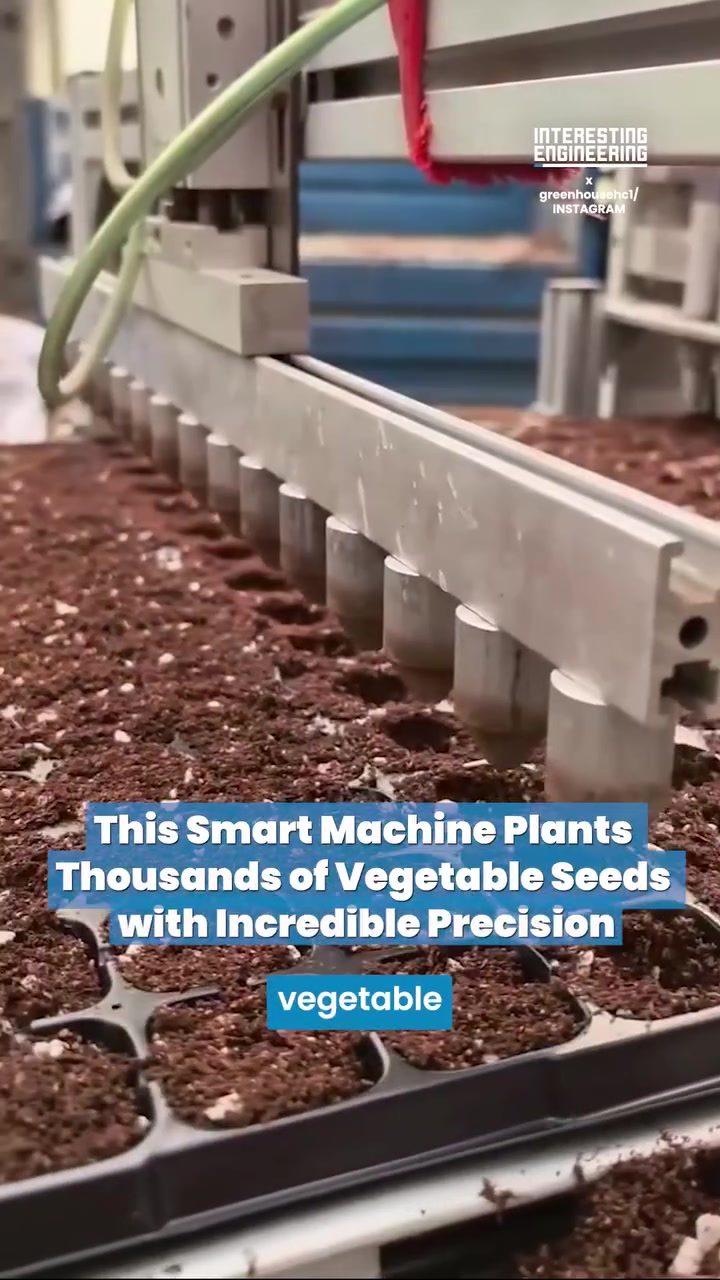
Automated Seed Planting
Automated seed planting machines are revolutionizing large-scale farming by streamlining the labour-intensive process of preparing plug trays for seedling production. These machines handle soil filling, seeding, and spacing in one continuous, automated cycle, significantly enhancing the efficiency and consistency of seedling production.
Why This Matters
For large-scale farming operations, the initial stages of seedling production can be incredibly time-consuming and labor-intensive. Traditional methods often result in inconsistent germination rates and higher seed waste. By automating these processes, farming operations can achieve higher yields, reduced waste, and more consistent results.
Main Discussion
The Process of Automated Seed Planting
Automated seed planting machines excel in the following tasks:
- Soil Preparation: The machine fills each cell of a seedling tray with a growing medium. It then levels and compresses the substrate to ensure even distribution and optimal conditions for germination.
- Planting Precisely: The machine creates uniform planting holes and precisely places seeds in each cell. This precision is crucial for consistent germination and healthy seedling development.
- Efficiency: The automated process can handle thousands of seeds in a single pass, significantly reducing the time and labor required for large-scale production.
Benefits of Automated Seed Planting
Improved Germination Consistency
One of the standout benefits of using an automated seed planting machine is the improved germination consistency. By ensuring that each seed is planted in uniform conditions, the machine helps to minimize variations in germination rates. This consistency is essential for large-scale farming operations, where uniform growth is critical for efficient harvesting and higher yields.
Reduced Seed Waste
Traditional manual planting methods often result in seed waste due to inconsistencies in planting depth and spacing. Automated machines reduce this waste by precisely placing seeds, ensuring that each seed has the optimal conditions for germination.
Labour Efficiency
Automated seed planting machines drastically reduce the need for manual labor. They can handle soil filling, seeding, and spacing in one continuous cycle, freeing up labor for other essential tasks. This increased efficiency is particularly beneficial for large-scale farming operations, where labor costs can be a significant expense.
The Role of Technology in Modern Farming
The introduction of automated seed planting machines is part of a broader trend in modern farming, where technology is increasingly being used to enhance productivity and sustainability. These machines not only improve efficiency but also reduce the environmental impact of farming by minimizing waste and optimizing resource use.
Practical Tips
Choosing the Right Machine
When considering an automated seed planting machine, it’s essential to evaluate your specific needs. Factors to consider include the scale of your operation, the types of seeds you are planting, and the available budget. Look for machines that offer flexibility in seed types and planting configurations to maximize their utility.
Maintenance and Upkeep
Regular maintenance is crucial for ensuring the longevity and efficiency of your seed planting machine. This includes:
- Cleaning: Regularly clean the machine to prevent the buildup of soil and debris, which can affect its performance.
- Calibration: Periodically calibrate the machine to ensure it maintains precision in planting depth and spacing.
- Inspections: Conduct routine inspections to identify and address any potential issues before they become significant problems.
Training and Support
Invest in training for your staff to ensure they are familiar with the operation and maintenance of the machine. Many manufacturers offer training programs and ongoing support, which can be invaluable in maximizing the machine’s performance and longevity.
Important Takeaways
Automated seed planting machines represent a significant advancement in agricultural technology. They streamline the labour-intensive process of seedling production, improving germination consistency, reducing seed waste, and enabling growers to produce thousands of healthy seedlings with minimal labor. By investing in these machines, large-scale farming operations can achieve higher yields, reduce costs, and enhance sustainability.
Conclusion
The adoption of automated seed planting machines is a transformative step for modern farming. By leveraging technology to optimize seedling production, farmers can achieve greater efficiency, reduce waste, and enhance sustainability. Whether you are a large-scale farmer or a small-scale grower, investing in an automated seed planting machine can significantly improve your operational efficiency and productivity.
Watch the Reel
Questions readers ask
How do automated seed planting machines improve farming efficiency?
Automated seed planting machines enhance farming efficiency by automating the process of soil filling, seeding, and spacing. This reduces the need for manual labour, allowing large-scale farms to produce seedlings more quickly and consistently, ultimately leading to higher yields.
What are the benefits of using automated seed planting machines for large-scale farming?
These machines offer several benefits, including reduced waste, higher germination rates, and improved consistency in seedling production. They also help farms manage labour more effectively, as they minimize the manual work required in the early stages of seedling growth.
Can automated seed planting machines be used for different types of seeds?
Yes, automated seed planting machines are versatile and can be used for a variety of seeds, including vegetable seeds. Many machines offer adjustable settings to accommodate different seed sizes and types, making them a valuable tool for diverse farming operations.
How do automated seed planting machines contribute to precision farming?
These machines support precision farming by ensuring consistent spacing and depth for each seed, which promotes uniform growth and optimized use of resources. This precision helps to maximize the efficiency of large-scale seed planting operations.
What are the key processes involved in automated seed planting?
Automated seed planting typically involves three main processes: soil filling, where the machine fills trays with the appropriate soil mix; seeding, where seeds are precisely placed; and spacing, where seeds are evenly distributed to ensure optimal growth conditions.
How do automated seed planting machines reduce farming labour?
Automated seed planting machines reduce the amount of manual work required for seedling production by handling soil filling, seeding, and spacing automatically. This allows farmers to allocate their labour to other important tasks, improving overall farm productivity.
What impacts do automated seed planting machines have on seed waste and yield?
By ensuring precise placement and spacing of seeds, automated seed planting machines help to reduce seed waste and promote higher germination rates. This leads to improved yield, as more seeds successfully develop into seedlings that can be transplanted or sold.
Recent articles
Fresh deep dives from the latest Reels we unpacked.




Comments
Be the first to comment.