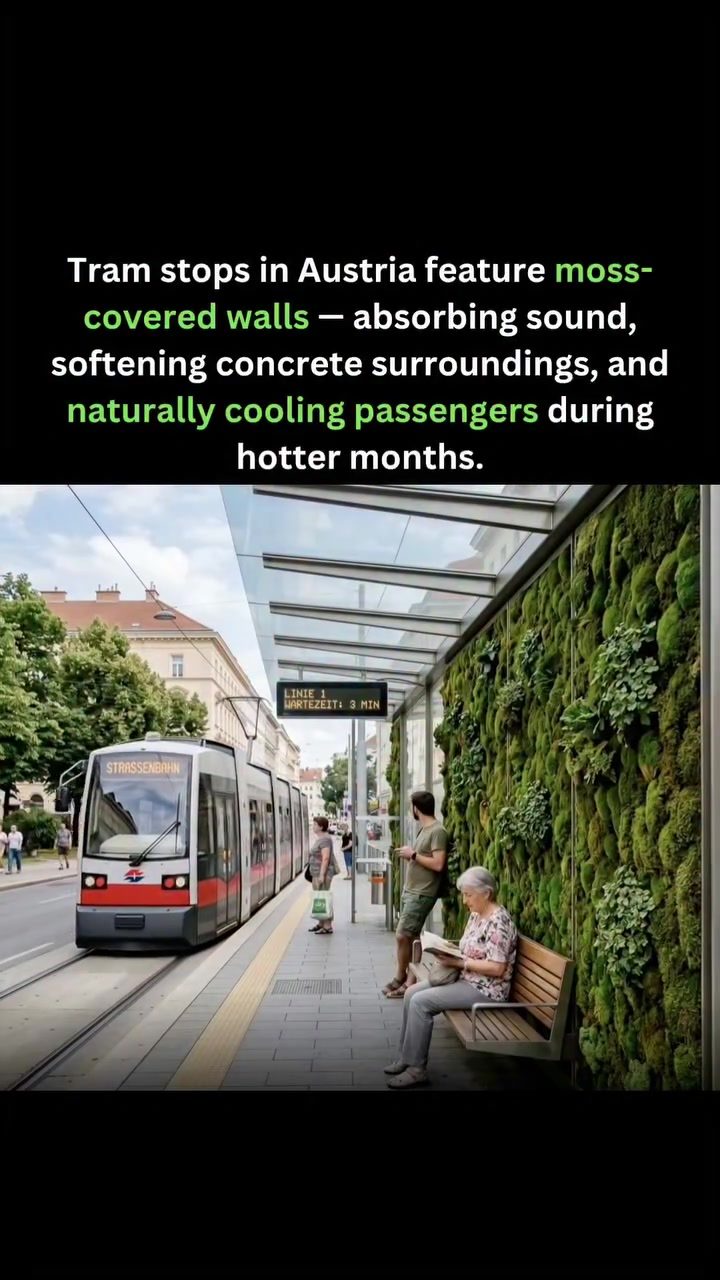
Tram Stop Design in Austria: Integrating Nature for Urban Comfort
Modern tram stops in Austria are designed with a unique focus on integrating nature into urban environments. These stops feature living moss-covered walls that serve multiple purposes, enhancing the overall experience for passengers.
Why This Matters
The design of public transportation infrastructure plays a crucial role in urban planning. It directly impacts the daily lives of commuters, influencing their comfort and satisfaction. In Austria, the innovative approach to tram stop design not only addresses functional needs but also contributes to a more pleasant and sustainable urban environment.
Main Discussion
Moss-Covered Walls: Aesthetics and Functionality
The moss-covered walls at Austrian tram stops are more than just an aesthetic choice; they are a functional element designed to improve the urban experience. These walls help absorb sound, which is particularly beneficial in mitigating the noise pollution from busy city streets and the harshness of concrete surroundings. This feature creates a quieter, more peaceful environment for waiting passengers.
Natural Cooling
During the hotter months, the moss walls naturally cool the air, providing shelter from the heat for waiting passengers. This natural cooling effect is a significant advantage, as it reduces the need for artificial cooling systems. This bio-climatic design not only benefits the passengers but also aligns with sustainable urban planning principles, reducing energy consumption and environmental impact.
Urban Greenery and Sound Absorption
The integration of greenery into urban infrastructure is a growing trend in modern city planning. Moss-covered walls are a prime example of how natural elements can be seamlessly incorporated into urban settings. These walls not only absorb sound but also soften the concrete surroundings, making the environment more inviting and less sterile.
Practical Tips
For those interested in implementing similar designs in their own urban environments, here are some practical tips:
Choose the Right Greenery
Moss is an excellent choice for urban greenery due to its low maintenance requirements and ability to thrive in various conditions. It can grow on vertical surfaces and requires minimal care, making it ideal for urban environments.
Consider the Location
When planning to integrate moss-covered walls, consider the location and exposure to sunlight. Moss thrives in shaded areas, so choosing the right spot can ensure the greenery remains healthy and vibrant.
Incorporate Sound Absorption
When designing or renovating public spaces, consider materials that can absorb sound. Moss-covered walls are a natural solution, but other materials like perforated panels or acoustic tiles can also be effective.
Important Takeaways
Integrating natural elements into urban infrastructure can greatly enhance the quality of life for city dwellers. Moss-covered walls at tram stops in Austria serve as a prime example of how nature can be used to improve urban environments. These walls not only provide a more pleasant visual experience but also offer functional benefits such as sound absorption and natural cooling.
Conclusion
Modern tram stop design in Austria offers a unique blend of functionality and aesthetics by incorporating moss-covered walls. This design not only enhances the passenger experience but also contributes to a more sustainable and environmentally friendly urban landscape. Whether through moss-covered walls or other natural elements, integrating nature into urban infrastructure can significantly improve the quality of life for city dwellers.
Watch the Reel
Questions readers ask
What are the benefits of moss-covered walls at Austrian tram stops?
Moss-covered walls at Austrian tram stops serve multiple benefits. They absorb sound, reducing noise pollution in urban areas. They also contribute to a more pleasant atmosphere for passengers by creating a calming, green aesthetic. Plus, they improve air quality by absorbing carbon dioxide and releasing oxygen.
How do Austrian tram stops integrate nature into urban design?
Austrian tram stops integrate nature through the use of living moss-covered walls. This design choice not only enhances the visual appeal of the stops but also promotes sustainability by creating green spaces in urban environments. It reflects a commitment to blending natural elements with modern infrastructure.
What impact do these tram stops have on passenger comfort?
The innovative design of Austrian tram stops significantly enhances passenger comfort. The moss-covered walls create a more relaxing and visually appealing waiting environment. Additionally, the sound-absorbing properties of the moss reduce ambient noise, making the waiting experience quieter and more enjoyable.
Are there other eco-friendly features in Austrian tram stop design?
While the moss-covered walls are a prominent feature, Austrian tram stops may also incorporate other eco-friendly elements such as rainwater harvesting systems, solar panels, and energy-efficient lighting. These features collectively contribute to a more sustainable urban infrastructure.
How do these tram stops contribute to a more sustainable urban environment?
Austrian tram stops contribute to sustainability by reducing carbon emissions and promoting biodiversity. The moss-covered walls act as natural air purifiers, improving air quality. Additionally, the integration of green spaces in urban areas helps to mitigate the heat island effect, making cities more livable.
What is the significance of sound-absorbing walls in tram stops?
Sound-absorbing walls, such as those covered in moss, are crucial in tram stops as they help to dampen noise from passing trams and urban traffic. This creates a quieter and more peaceful environment for passengers, enhancing their overall waiting experience and reducing stress levels.
Can other cities adopt similar designs for their public transportation infrastructure?
Yes, other cities can certainly adopt similar designs. The use of moss-covered walls and other nature-inspired elements in public transportation infrastructure can be replicated in various urban settings. This approach not only enhances the aesthetics of public spaces but also contributes to environmental sustainability and passenger comfort.
Recent articles
Fresh deep dives from the latest Reels we unpacked.




Comments
Be the first to comment.