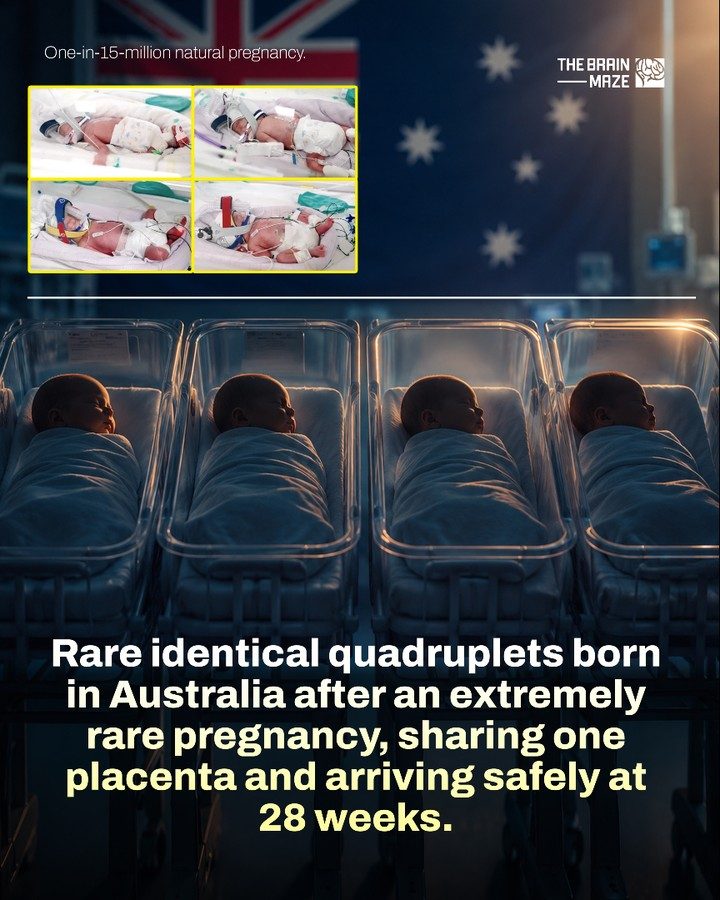
Rare Quadruplets Birth
Identical quadruplets, a medical marvel, have recently been born in Australia. This extraordinary event, occurring naturally with a one-in-15-million chance, highlights the unique complexities of human reproduction and the advancements in neonatal care. The quadruplets, all sisters, were conceived when a single fertilized egg split into four separate embryos, sharing a single placenta—a phenomenon so rare that it has captivated medical professionals and the public alike.
Why This Matters
Multiple births, particularly quadruplets, are extremely rare and pose significant challenges for both the mother and the babies. Understanding the intricacies of such pregnancies and the care required for the infants can shed light on the advancements in reproductive medicine and neonatal care. The birth of these rare quadruplets also underscores the importance of specialized medical care and the resilience of newborns.
Main Discussion
The Miracle of Multiple Births
Multiple births, especially higher-order multiples like quadruplets, are not common. The natural occurrence of quadruplets is even rarer, making this event in Australia a remarkable medical phenomenon. Identical quadruplets, in particular, are the result of a single fertilized egg that splits into four separate embryos. This process, known as monozygotic multiplication, is incredibly rare and can lead to unique medical challenges.
These quadruplets share a single placenta, a condition known as monochorionic. This shared placenta means that the babies' circulatory systems are interconnected, which can lead to complications such as twin-to-twin transfusion syndrome (TTTS). TTTS occurs when blood flow between the fetuses is uneven, potentially leading to one fetus receiving too much blood and the other too little. The shared placenta also increases the risk of premature birth, which is a significant concern for the health of the babies.
Premature Birth and Neonatal Care
Prenatal care and monitoring are crucial for multiple pregnancies, especially those involving quadruplets. Due to the increased risk of complications, medical professionals closely monitor the health of both the mother and the babies throughout the pregnancy. In the case of these quadruplets, a caesarean section was performed at 28 weeks and four days, highlighting the delicate balance between early intervention and allowing the babies to develop as much as possible in the womb.
Premature birth, particularly at 28 weeks, poses significant challenges for newborns. The earlier a baby is born, the more likely they are to face complications such as respiratory distress syndrome, cardiac problems, and digestive issues. Neonatal intensive care units (NICU) play a vital role in supporting these fragile newborns, providing specialized care and interventions to help them thrive.
The Role of Neonatal Intensive Care Units
Neonatal intensive care units are designed to provide the highest level of care for critically ill or premature newborns. These units are equipped with advanced medical technology and staffed by highly trained healthcare professionals who specialize in neonatal care. For the quadruplets, receiving care in the NICU means that they have access to life-saving interventions such as ventilator support, specialized feeding methods, and constant monitoring to ensure their health and development.
The NICU team works closely with the parents, providing emotional support and guidance throughout the challenging journey. The care provided in the NICU is tailored to the individual needs of each baby, addressing any issues that arise and ensuring that they receive the best possible start in life.
Shared Placenta and Its Implications
The shared placenta of these quadruplets is a remarkable and rare occurrence. Typically, identical quadruplets develop from a single fertilized egg that splits into four separate embryos. This process, known as monozygotic multiplication, results in the embryos sharing a single placenta. The implications of a shared placenta are significant, as it can lead to complications such as uneven blood flow between the fetuses, which can result in TTTS.
Medical professionals closely monitor the health of the babies to ensure that any potential issues are addressed promptly. The shared placenta also means that the babies are more likely to be born prematurely, as the limited space in the womb can impair their growth and development. Premature birth is a significant concern for neonatal health, as it can lead to a range of complications.
Practical Tips
For Parents of Multiple Births
Expecting multiple births can be overwhelming, but there are several practical tips to help manage the journey:
- Early and Regular Prenatal Care: Regular prenatal check-ups are crucial for monitoring both maternal and fetal health. Early intervention can help manage potential complications and ensure the best possible outcomes.
- Nutritional Support: A balanced diet rich in essential nutrients is vital for the health of both the mother and the babies. Consult with a healthcare provider to develop a nutrient-rich diet plan.
- Emotional Support: Parenting multiples can be emotionally taxing. Seek support from family, friends, or support groups to help manage stress and anxiety.
- Plan for NICU Care: Understand the potential need for neonatal intensive care and familiarize yourself with the resources available in your local NICU.
For Healthcare Providers
Healthcare providers play a crucial role in supporting families experiencing multiple pregnancies:
- Regular Monitoring: Close monitoring of the mother and babies throughout the pregnancy can help identify and manage potential complications early.
- Specialized Interventions: Tailored interventions, including specialized feeding methods, ventilator support, and constant monitoring, are essential for the care of premature or critically ill newborns.
- Parental Support: Provide emotional support and guidance to parents, helping them navigate the challenges of caring for multiples and ensuring they receive the care and support they need.
Important Takeaways
The birth of these rare identical quadruplets in Australia highlights the complexities and challenges of multiple pregnancies, particularly those involving a shared placenta. The event underscores the importance of specialized prenatal care, the critical role of neonatal intensive care units, and the resilience of newborns.
This extraordinary event also serves as a reminder of the advancements in reproductive medicine and neonatal care, as well as the ongoing need for further research and development in these fields. The care and support provided to the quadruplets and their family is a testament to the dedication and expertise of healthcare professionals.
Conclusion
The rare birth of identical quadruplets in Australia is a remarkable medical phenomenon that sheds light on the complexities of multiple pregnancies and the advancements in neonatal care. The shared placenta, premature birth, and the critical role of neonatal intensive care units are all key factors in the care and development of these fragile newborns.
Understanding the unique challenges and considerations involved in multiple pregnancies can provide valuable insights for families, healthcare providers, and the broader medical community. As we continue to learn and grow in the field of reproductive medicine, rare events like this serve as a reminder of the incredible possibilities and the ongoing need for specialized care and support.
Watch the Reel
Questions readers ask
What makes the birth of identical quadruplets in Australia so rare?
The birth of identical quadruplets in Australia is extraordinarily rare because it occurs naturally with a one-in-15-million chance. This phenomenon happens when a single fertilized egg splits into four separate embryos, making it a unique and captivating event in the realm of human reproduction.
How were the Australian identical quadruplets able to share a single placenta?
The identical quadruplets in Australia shared a single placenta because they originated from a single fertilized egg that split into four separate embryos. This sharing of a placenta is a characteristic of identical multiples, where the embryos develop from the same fertilized egg and share the same genetic makeup and placental support.
Why do identical quadruplets require advanced neonatal care?
Identical quadruplets, like any multiple birth, require advanced neonatal care due to the increased risk of preterm birth and potential health complications. Advanced neonatal care provides the essential support and medical interventions needed to ensure the health and survival of these precious infants, who are often born at a lower gestational age and birth weight.
What are the primary challenges faced by mothers carrying quadruplets?
Mothers carrying quadruplets face significant challenges, including an increased risk of preterm labor, gestational diabetes, and preeclampsia. Additionally, the physical demands of carrying multiple babies can lead to complications such as anemia and excessive weight gain, necessitating close medical monitoring and specialized care.
What is the significance of the birth of identical quadruplets for medical professionals?
The birth of identical quadruplets is significant for medical professionals as it provides valuable insights into the complexities of human reproduction and the advancements in neonatal care. This rare occurrence allows healthcare providers to refine their practices, improve patient outcomes, and contribute to the broader understanding of multiple pregnancies and their management.
Related deep dives
Similar reads based on topic and creator.


Recent articles
Fresh deep dives from the latest Reels we unpacked.




Comments
Be the first to comment.