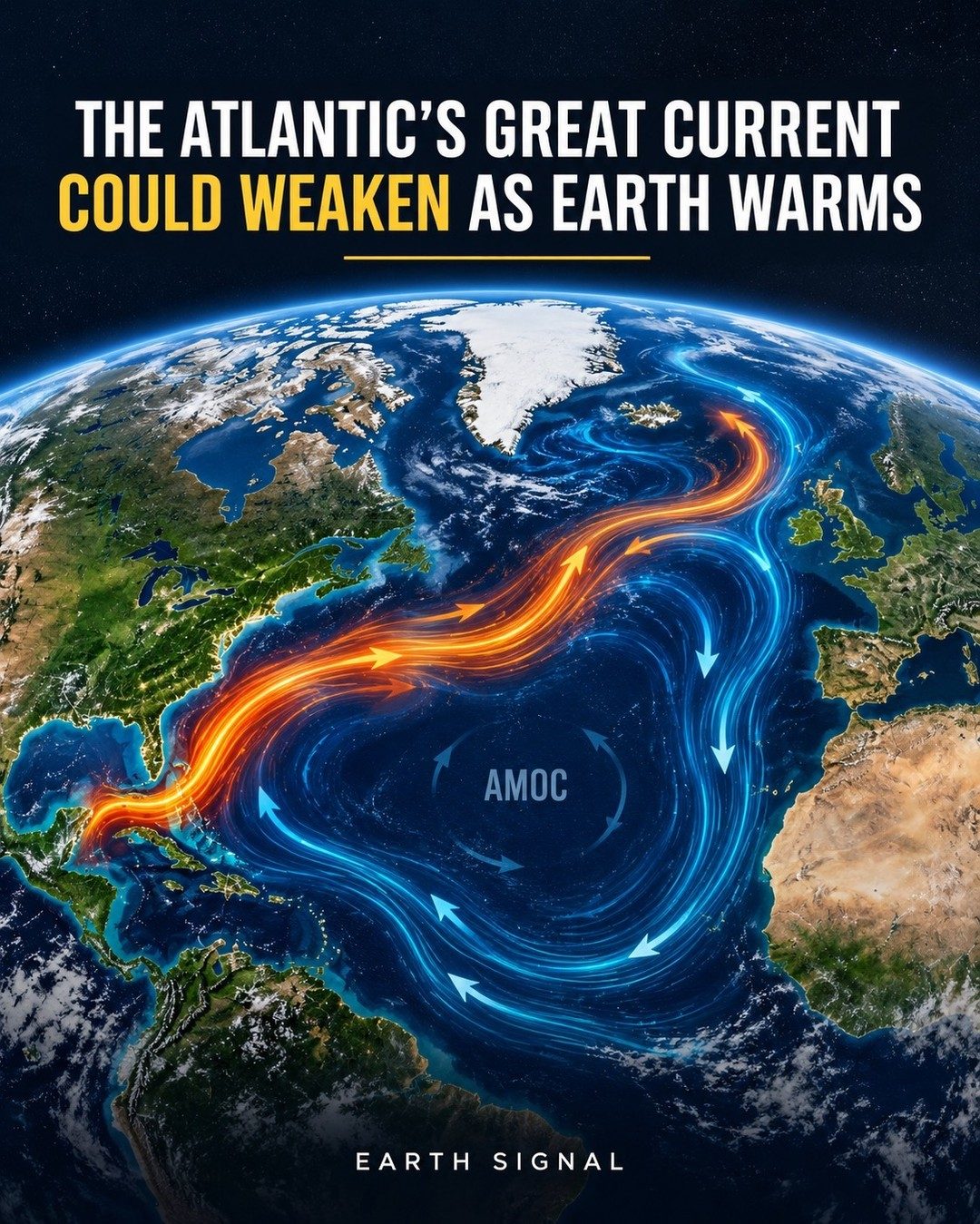
The Atlantic Ocean's Lifeblood
The Atlantic Ocean’s Great Current referred to as the Atlantic Meridional Overturning Circulation or AMOC, is a pivotal element underpinning both the world's oceanic health and climate dynamics, including the weather patterns of North America. This system drives powerful streams of water that influence oceanic moisture and nutrient distribution, govern temperature's flow between the tropics and poles. It moves warmer water northward from the tropics, and in turn, marine currents known as the Gulf Stream transports powerful heat energy. Referring to the flow pattern, the AMOC is indeed a complex dance of currents. Surface water flows northward, losing heat along the way. It becomes colder, denser, and eventually sinks in the North Atlantic. This dense water then flows southward at great depths, completing the cycle. The AMOC is essentially the Atlantic Ocean's circulatory system. It's the heart that beats beneath the surface, regulating the water's temperature, salinity, and oxygen concentration. It governs the climate of surrounding landmasses, and even the way life thrives.
Potential Weakening Due to Climate Change
The flow of the AMOC could be at risk. Climate change and rising global temperatures pose a threat, potentially weakening the AMOC. However, it's worth noting these claims require hedging. Global warming could affect the AMOC in two key ways. First, it could increase precipitation and melting in the Arctic. This influx of fresh water into the North Atlantic could disrupt the AMOC's delicate balance. Because fresh water is less dense than salt water, it reduces the rate at which sinking can happen. Second, the rate at which ice melts translates to less dense water entering the ocean. This interferes with the water's sinking ability in the Labrador and Greenland Seas. Without the sinking of dense, cold water from these regions, the AMOC could slow down. It might be helpful to think of the AMOC as a conveyor belt. If the belt slows down, the entire system of ocean circulation could be disrupted. This could impact weather patterns, marine life, and even the stability of the climate as we know it.
Watch the Reel
Related deep dives
Similar reads based on topic and creator.
Recent articles
Fresh deep dives from the latest Reels we unpacked.

Comments
Be the first to comment.