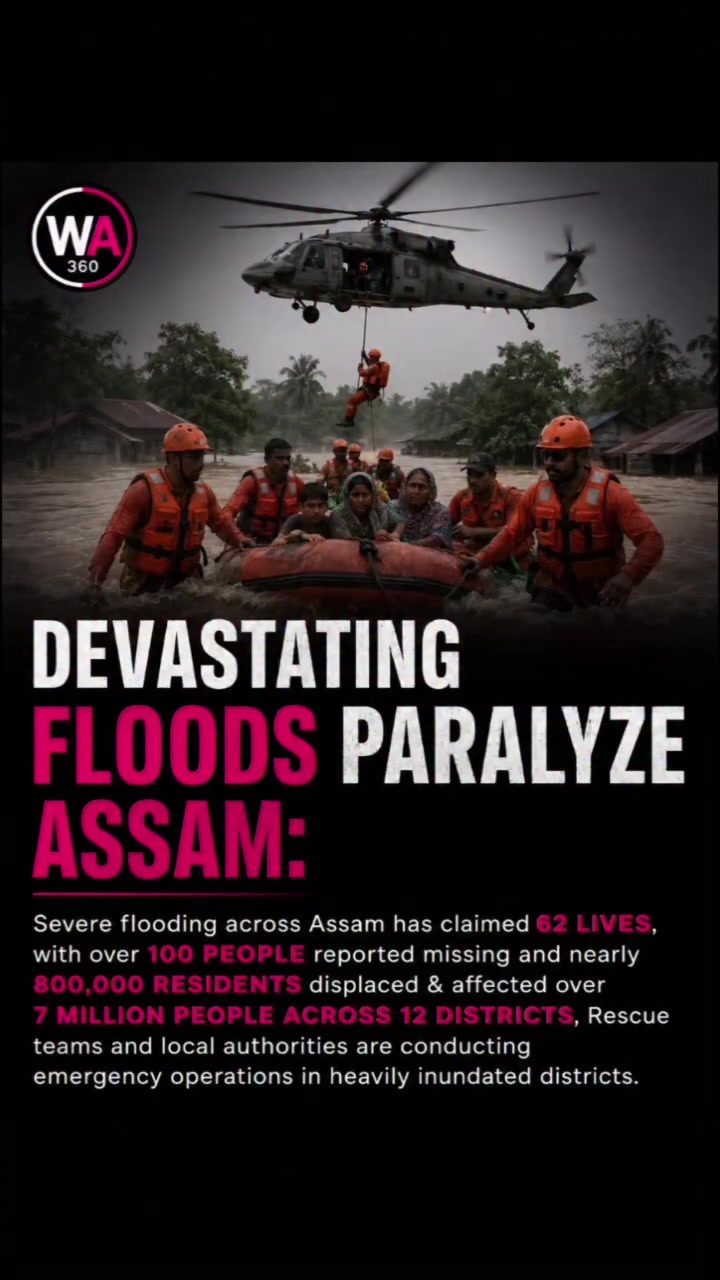
Assam Floods Disaster
The Assam floods have left a trail of devastation, impacting the lives of hundreds of thousands of people. The floods, which have been described as severe, have claimed lives, displaced families, and pushed rescue teams into action.
Why This Matters
This disaster underscores the critical need for preparedness and response mechanisms in flood-prone regions. It highlights the vulnerability of communities to natural disasters and the importance of coordinated efforts in mitigation and relief.
Main Discussion
The Scale of the Devastation
The floods have been particularly devastating, with over 62 lives lost. This grim figure is a stark reminder of the power of nature and the urgent need for effective disaster management. In addition to the fatalities, more than 100 people have been reported missing, leaving families in anguish and uncertainty. The sheer scale of the disaster is evident in the numbers: nearly 800,000 residents have been displaced, and over 1 million people across 12 districts have been affected. These figures paint a grim picture of the widespread impact of the floods, affecting entire communities and livelihoods.
Rescue Efforts and Community Response
Rescue teams and local authorities are conducting emergency operations in the heavily inundated districts. Helicopters have been deployed to rescue those trapped by the rising waters, showcasing the critical role of aerial support in such situations. The coordinated efforts of rescue teams and local authorities are crucial in mitigating the impact of the disaster and ensuring the safety of those affected. The resilience of the community is also evident, with neighbors and families coming together to support each other during this challenging time.
The Role of Verified Relief Efforts
In times of crisis, it is essential to support verified relief efforts. The influx of aid and support can make a significant difference in the lives of those affected by the floods. By staying informed and spreading awareness responsibly, individuals can contribute to the relief efforts effectively. Reliable sources of information and verified relief organizations play a pivotal role in ensuring that aid reaches those who need it most.
Practical Tips
Staying Informed and Supporting Relief Efforts
- Follow Reliable Sources: Stay updated with the latest information from verified sources. This ensures that you have accurate and timely information about the situation and ongoing relief efforts.
- Support Verified Relief Organizations: Contribute to verified relief organizations to ensure your donations are used effectively. Avoid falling for scams and misinformation by verifying the authenticity of relief efforts.
- Spread Awareness Responsibly: Share reliable information with your network to raise awareness and encourage support for the affected communities.
Donating and Volunteering
- Cash Donations: Cash donations are often the most effective way to support relief efforts. They allow organizations to purchase essential supplies locally and support the local economy.
- Volunteering: If you are in the affected area, consider volunteering with local organizations to lend a helping hand. Even small acts of kindness can make a significant difference.
Important Takeaways
The Assam floods serve as a poignant reminder of the urgent need for disaster preparedness and effective response mechanisms. The resilience of communities and the coordinated efforts of rescue teams highlight the importance of unity and collaboration in the face of adversity.
The Need for Preparedness
Preparedness is key to mitigating the impact of natural disasters. Communities and authorities must work together to develop and implement effective disaster management strategies. This includes early warning systems, evacuation plans, and emergency response mechanisms.
The Importance of Community Support
Community support is crucial in times of crisis. The Assam floods have demonstrated the power of unity and collaboration in the face of adversity. By supporting verified relief efforts and staying informed, individuals can contribute to the collective effort to help those affected.
Conclusion
The devastating impact of the Assam floods underscores the need for effective disaster management and community support. By staying informed, supporting verified relief efforts, and spreading awareness responsibly, individuals can contribute to the relief and recovery process. The resilience of the affected communities and the coordinated efforts of rescue teams serve as a testament to the human spirit and the power of unity in the face of adversity.
Watch the Reel
Questions readers ask
Which districts in Assam have been most affected by the floods?
The floods have severely impacted 12 districts in Assam. These districts include Cachar, Darrang, Dhemaji, Goalpara, Golaghat, Hailakandi, Jalpaiguri, Karimganj, Lakhimpur, Morigaon, Nagaon, and Sonitpur. Each of these areas has experienced significant dislocation and damage.
What is the current status of rescue efforts in Assam?
Rescue efforts are actively underway, with teams working tirelessly to evacuate those stranded and provide immediate relief. The Assam State Disaster Management Authority (ASDMA) is coordinating these efforts, alongside local and national emergency services.
How many people have been displaced due to the Assam floods?
Over a million people have been displaced due to the severe flooding in Assam. This displacement has led to a significant humanitarian crisis, with many families in urgent need of shelter, food, and medical assistance.
What measures are being taken to support the affected communities in Assam?
Community support is being mobilized through various channels, including government initiatives, NGOs, and volunteer efforts. This support includes the distribution of essential supplies, setting up relief camps, and providing medical aid to those in need.
How can I help the victims of the Assam floods?
There are several ways to contribute to the relief efforts. You can donate to reputable organizations involved in the rescue and rehabilitation process. Additionally, spreading awareness about the situation and the need for support can help garner more assistance for the affected communities.
Recent articles
Fresh deep dives from the latest Reels we unpacked.




Comments
Be the first to comment.