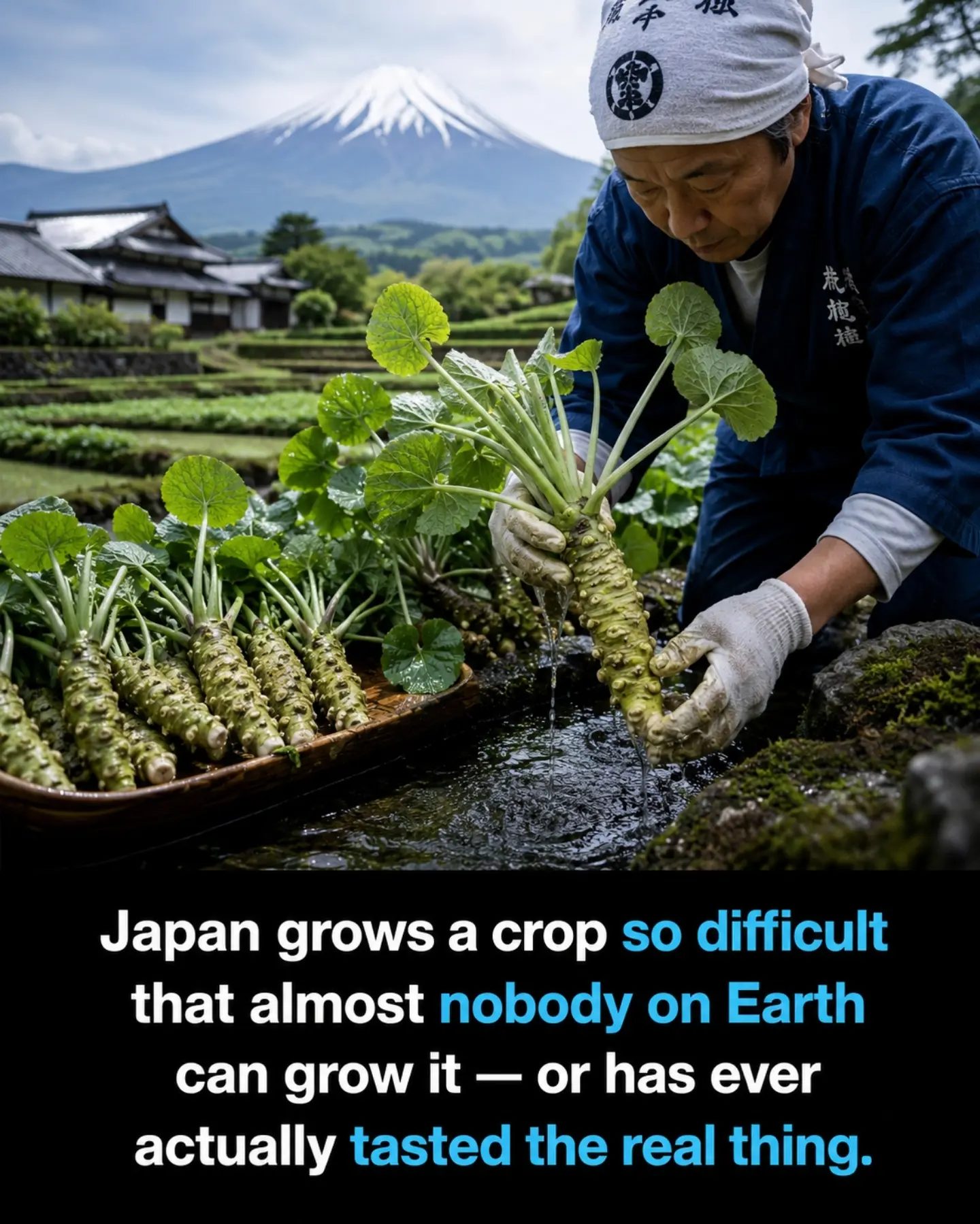
Wasabi Farming
Wasabi, the pungent green paste commonly served with sushi, is a delicacy that many people enjoy, but few truly understand. Japan is renowned for cultivating this challenging crop, and it is rare to find real wasabi outside of Japan. The difficulty of growing wasabi and the rarity of experiencing authentic wasabi make it a fascinating subject for agricultural enthusiasts and food connoisseurs alike.
Context / Why this matters
Growing wasabi is an intricate process that requires meticulous attention to detail and a deep understanding of the plant's needs. Wasabi (Wasabia japonica) is a perennial plant native to Japan, and its cultivation is primarily concentrated in regions with cool, flowing water, such as mountain streams or irrigation systems. The plant's roots, known as rhizomes, are harvested for their pungent flavor, which is often imitated by mixing horseradish, mustard, and green food coloring in commercial products.
Main discussion
The Challenges of Cultivating Wasabi
Wasabi is notoriously difficult to grow due to several factors. The plant requires specific environmental conditions, including cool temperatures and high humidity. It thrives in
*shady conditions with plenty of water, making it challenging to cultivate in areas with different climates.
- The soil must be well-drained and rich in organic matter, which can be tricky to maintain. *Additionally, wasabi is susceptible to various diseases and pests, which can devastate crops if not carefully managed.
The Art of Wasabi Harvesting
Wasabi harvesting is an art form that requires skill and precision. The roots are typically harvested after 18 to 24 months of growth, when they reach their peak flavor and size. Harvesting too early or too late can result in a less pungent or woody flavor. The harvesting process involves carefully digging up the roots and separating them from the soil without damaging them. The roots are then cleaned, trimmed, and prepared for sale or processing.
Traditional Japanese Cultivation Methods
In Japan, wasabi is often cultivated using traditional methods that have been passed down through generations. These methods involve growing the plants in trays or beds filled with sandy loam soil and keeping them submerged in cool, flowing water. The plants are carefully monitored and handpicked to ensure they receive the optimal growing conditions. This labor-intensive process contributes to the high cost of real wasabi and the scarcity of the genuine article.
Practical tips
If you're interested in growing wasabi at home, there are a few tips to keep in mind:
- Choose the Right Location: Wasabi thrives in shaded areas with cool temperatures and high humidity. Avoid direct sunlight and ensure the location has good drainage.
- Use the Correct Soil: Wasabi requires well-drained soil rich in organic matter. A sandy loam soil mixture is ideal.
- Maintain Consistent Moisture: Keep the soil consistently moist but not waterlogged. Consider using a drip irrigation system to maintain optimal moisture levels.
- Monitor for Pests and Diseases: Regularly inspect your wasabi plants for signs of pests or diseases. Early detection and treatment can prevent crop loss.
- Be Patient: Wasabi takes time to grow and mature. Be patient and allow the plants to develop naturally without rushing the process.
Important takeaways
- Wasabi is a challenging crop to grow, requiring specific environmental conditions and careful cultivation methods.
- The rarity of real wasabi is due to its difficulty in cultivation and the stringent environmental requirements.
- Traditional Japanese cultivation methods involve growing wasabi in trays or beds submerged in cool, flowing water.
- Growing wasabi at home requires patience, the right location, soil, and consistent moisture.
- Most commercially available "wasabi" is not real; it is a mixture of horseradish, mustard, and green food coloring.
Conclusion
Wasabi farming is a fascinating and complex process that showcases the intricacies of Japanese agriculture. The rarity of authentic wasabi is a testament to the challenges involved in its cultivation. Understanding the art of wasabi farming not only provides insight into the dedication and skill required but also highlights the importance of preserving traditional agricultural practices. Whether you're a gardening enthusiast or a food lover, appreciating the journey from farm to table can deepen your connection to this unique and flavorful plant.
Watch the Reel
Questions readers ask
What makes growing wasabi so challenging?
Wasabi is particularly difficult to cultivate due to its specific environmental requirements. It thrives in cool, humid conditions and requires constant access to clean, flowing water. Additionally, wasabi is sensitive to pests and diseases, necessitating meticulous care and attention to detail.
Why is wasabi cultivation primarily concentrated in Japan?
Japan's climate and geography provide ideal conditions for wasabi cultivation. The country's cool, flowing water sources, such as mountain streams and irrigation systems, create the perfect environment for wasabi to grow and flourish. These natural resources are hard to replicate in other parts of the world.
What are the essential conditions for successful wasabi farming?
To successfully grow wasabi, farmers must replicate the plant's natural habitat as closely as possible. This includes providing cool temperatures (between 50-68°F or 10-20°C), high humidity, and constant access to clean, flowing water. Additionally, wasabi plants require partial shade and well-draining, loamy soil.
Can wasabi be grown in greenhouses?
While it is possible to grow wasabi in greenhouses, it can be quite challenging due to the plant's specific climate requirements. Greenhouses must maintain cool temperatures and high humidity levels, which can be difficult and costly to sustain. Additionally, ensuring proper water flow and soil conditions can be complex in a greenhouse environment.
What are the key techniques for planting wasabi?
Planting wasabi involves dividing the rhizomes (roots) of an existing plant and replanting them in a suitable environment. The rhizomes should be planted horizontally at a depth of about 2 inches (5 cm) in well-draining soil, with the buds facing up. After planting, the soil should be kept consistently moist but not waterlogged.
Why is authentic wasabi so rare outside of Japan?
Authentic wasabi is rare outside of Japan due to the plant's complex growing requirements and the lack of suitable environments in other countries. Additionally, most 'wasabi' served outside of Japan is actually a mixture of horseradish, mustard, and green food coloring, further contributing to its rarity.
Are there any resources available for learning wasabi farming techniques?
While there are limited resources available for learning about wasabi farming, some online platforms offer guides and videos on wasabi cultivation techniques. Additionally, agricultural extension services in regions with suitable climates may provide resources and support for aspiring wasabi farmers. Connecting with experienced wasabi farmers or growers' associations can also provide valuable insights.
Related deep dives
Similar reads based on topic and creator.



Recent articles
Fresh deep dives from the latest Reels we unpacked.




Comments
Be the first to comment.