Apple vs. Microsoft: A Two-Decade Battle for Market Dominance
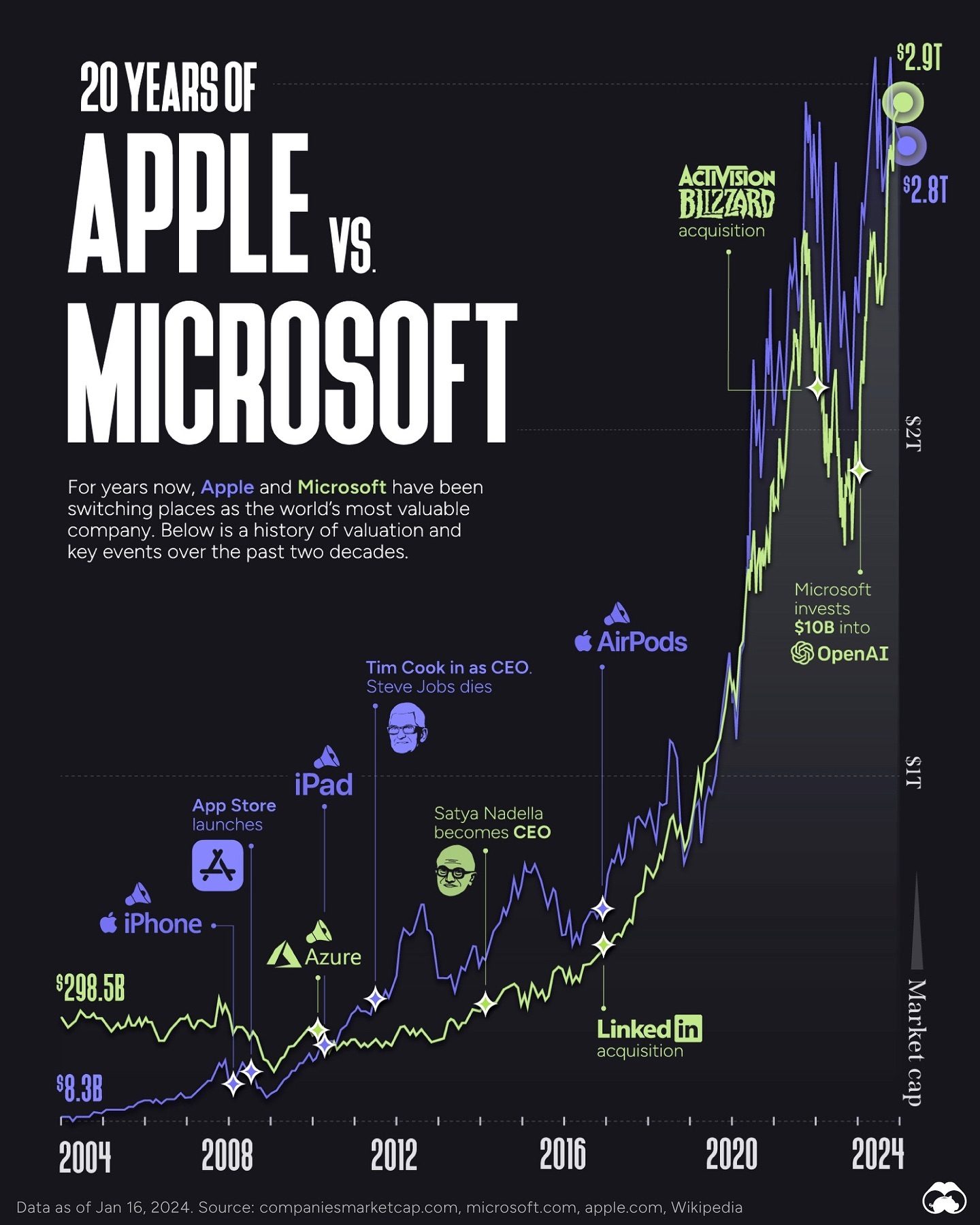
Over the past two decades, Apple and Microsoft have been locked in a intense rivalry, trading places as the world’s most valuable company. This fierce competition has been marked by significant innovations, strategic acquisitions, and shifts in market capitalization. Let’s dive into the key events and developments that have shaped this epic battle.
Why This Matters
Understanding the rivalry between Apple and Microsoft provides valuable insights into the dynamics of the tech industry. Both companies have consistently been at the forefront of technological advancements, influencing not only consumer markets but also shaping the broader business landscape. This competition has driven innovation, pushing both companies to stay ahead of the curve and adapt to changing market conditions.
The Timeline of Events
The Early 2000s: Setting the Stage
The rivalry between Apple and Microsoft began in earnest in the early 2000s. Apple was still recovering from its near-bankruptcy in the 1990s, while Microsoft was the dominant player in the software industry. The launch of the iPhone in 2007 marked a turning point for Apple, revolutionizing the mobile phone industry and propelling Apple into the ranks of the most valuable companies in the world.
The 2010s: Innovations and Acquisitions
The 2010s saw significant innovations and acquisitions from both companies. Microsoft invested heavily in cloud computing, particularly with its Azure platform, and also made major acquisitions such as LinkedIn and the Activision Blizzard acquisition. Apple, on the other hand, continued to innovate with products like the iPad and AirPods, further solidifying its position in the consumer electronics market.
The Leadership Factor
Leadership changes also played a crucial role in the competitive dynamics. In 2014, Satya Nadella took over as CEO of Microsoft, marking a shift in the company’s strategy. Under Nadella, Microsoft refocused on cloud computing and artificial intelligence, leading to significant investments in OpenAI. Apple, under the leadership of Tim Cook, continued to focus on product innovation and maintaining its strong brand image.
The Recent Turn: Microsoft’s Ascendancy
In January 2024, Microsoft became the world’s most valuable company, surpassing Apple. This shift was driven by a combination of factors, including concerns over demand for Apple’s products in China and Microsoft’s strong performance in cloud services and artificial intelligence. Microsoft’s strategic investments and leadership changes have positioned it as a formidable competitor in the tech industry.
Key Acquisitions and Investments
Both companies have made strategic acquisitions and investments that have shaped their market positions. Microsoft’s $10 billion investment in OpenAI and its acquisitions of LinkedIn, GitHub, and Activision Blizzard have bolstered its presence in various sectors. Apple, while making fewer high-profile acquisitions, has focused on product innovation and brand strength, launching products like the iPhone, iPad, and AirPods.
Key Events and Milestones
Product Launches
- iPhone (2007): The launch of the iPhone revolutionized the mobile industry, setting a new standard for smartphones and positioning Apple as a leader in consumer electronics.
- iPad (2010): The iPad further expanded Apple’s product line, solidifying its dominance in the tablet market.
- AirPods (2016): The AirPods became a hit, showcasing Apple’s ability to innovate in the wearable tech market.
Leadership Changes
- Satya Nadella (2014): Satya Nadella’s appointment as CEO of Microsoft marked a new era for the company, focusing on cloud computing and AI.
- Tim Cook (2011): Tim Cook took over as CEO of Apple, continuing the company’s focus on product innovation and brand strength.
Strategic Investments
- Microsoft invests $10B into OpenAI (2023): Microsoft’s investment in OpenAI showcases its commitment to artificial intelligence and cloud services.
- Activision Blizzard acquisition (2022): Microsoft’s acquisition of Activision Blizzard expanded its presence in the gaming industry.
Practical Tips for Investors and Enthusiasts
For investors and tech enthusiasts, understanding the dynamics between Apple and Microsoft can provide valuable insights. Here are some practical tips:
- Diversify Your Portfolio: Both companies have shown resilience and innovation, making them strong candidates for a diversified investment portfolio.
- Follow Market Trends: Stay updated on market trends and key events, such as product launches and leadership changes, as they can significantly impact stock prices.
- Analyze Financial Reports: Regularly review financial reports and market capitalization data to gauge the performance and valuation of both companies.
- Invest in Innovation: Companies that invest in cutting-edge technologies, such as AI and cloud computing, are more likely to stay ahead in the competitive landscape.
Important Takeaways
- Innovation Drives Competition: Both companies have consistently innovated, launching groundbreaking products and services.
- Leadership Matters: Strategic leadership has played a crucial role in shaping the direction and success of both companies.
- Market Capitalization Fluctuates: The market capitalization of both companies has fluctuated over the years, influenced by product launches, acquisitions, and market conditions.
- Strategic Investments Pay Off: Both companies have benefited from strategic investments and acquisitions, enhancing their market positions.
Conclusion
The rivalry between Apple and Microsoft is a testament to the dynamic nature of the tech industry. Both companies have shown remarkable adaptability and innovation, driving technological advancements and influencing market trends. As they continue to compete, their strategic moves and market performance will undoubtedly shape the future of the tech industry. Staying informed about their developments and market positions can provide valuable insights for investors, enthusiasts, and industry observers alike.
Watch the Reel
Questions readers ask
What were some of the most significant innovations driven by the Apple vs. Microsoft rivalry?
The rivalry between Apple and Microsoft has spurred numerous innovations. Apple's introduction of the iPhone in 2007 revolutionized the mobile industry, while Microsoft's development of cloud services, such as Azure, has significantly impacted the tech market trends. Additionally, advancements in operating systems, like Apple's macOS and Microsoft's Windows, have continuously evolved due to this competition.
How have strategic acquisitions played a role in the two decades of competition between Apple and Microsoft?
Strategic acquisitions have been pivotal in the battle for market dominance. For instance, Apple's acquisition of Beats Electronics in 2014 boosted its presence in the music streaming market, while Microsoft's purchase of LinkedIn in 2016 enhanced its professional networking capabilities. These moves have helped both companies stay competitive and adapt to changing tech industry dynamics.
What factors have contributed to the shifts in market capitalization between Apple and Microsoft?
Several factors have influenced the shifts in market capitalization. These include product launches—such as the iPhone for Apple and the Surface line for Microsoft—among other innovations in tech. Additionally, financial performance and investor sentiment have played crucial roles. For example, Microsoft's pivot to cloud computing has significantly boosted its market cap, while Apple's strong hardware sales have also contributed to its valuation.
Which company has held the position of the world’s most valuable company more frequently over the past two decades?
The position of the world's most valuable company has toggled between Apple and Microsoft. Apple held this title for significant periods, particularly during the peak of its iPhone sales. However, Microsoft has also held this position, especially after its strong performance in cloud services and enterprise solutions. The frequency of shifts underscores the intense nature of their competition.
What are some key tech market trends influenced by the rivalry between Apple and Microsoft?
The rivalry has driven several key trends, including the advancement of mobile technology, the growth of cloud computing, and the evolution of personal computing devices. For example, Apple's focus on design and user experience has influenced the broader market, while Microsoft's emphasis on productivity and enterprise solutions has shaped business tech trends.
How have Apple and Microsoft influenced the broader business landscape beyond consumer markets?
Both companies have significantly impacted the broader business landscape through their software and services. Apple's ecosystem, including the App Store and iCloud, has influenced how businesses approach digital services. Microsoft's Office Suite and Azure have become integral to enterprise operations, driving productivity and innovation in various industries.
What can we expect from the future of Apple and Microsoft's competition?
As both companies continue to innovate, future developments in areas like artificial intelligence, augmented reality, and sustainability are expected. Apple may focus more on integrating these technologies into its hardware, while Microsoft could leverage its enterprise strengths to enhance cloud and software services. The competition will likely remain intense, driving further advancements in the tech industry.
Related deep dives
Similar reads based on topic and creator.


Recent articles
Fresh deep dives from the latest Reels we unpacked.




Comments
Be the first to comment.