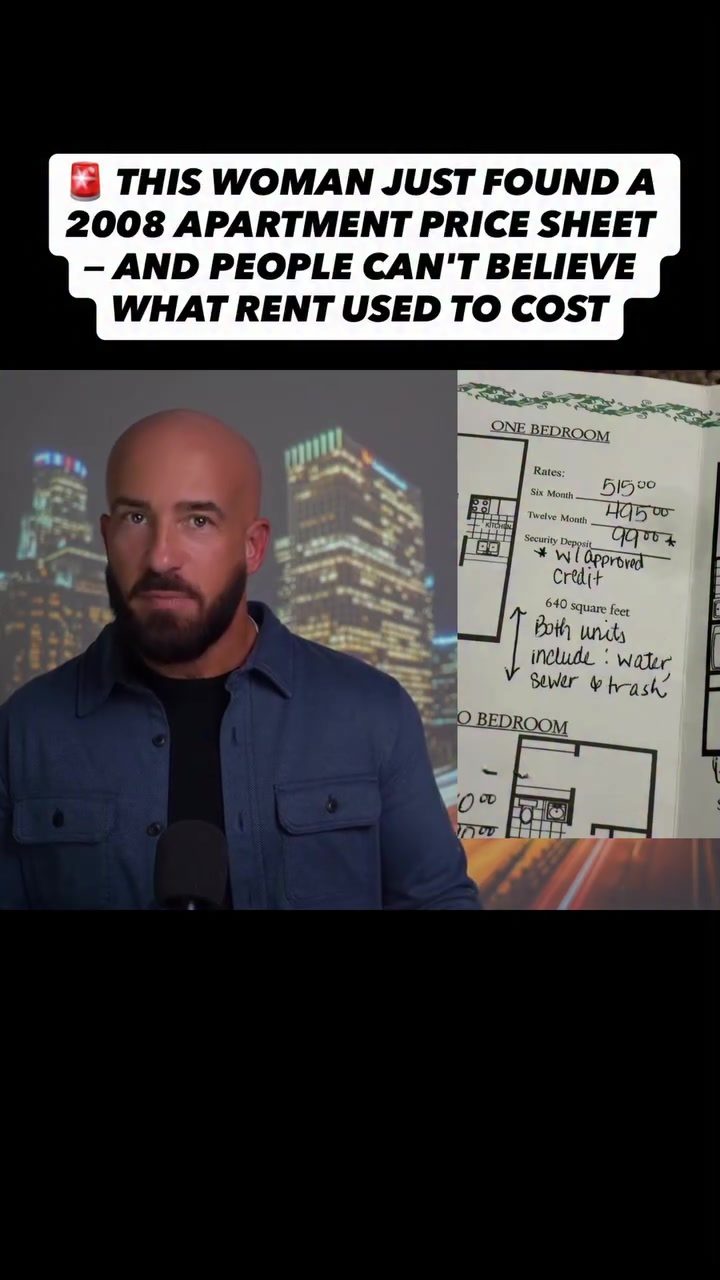
Apartment Rent Prices in 2008
The stark contrast between apartment rental prices of 2008 and today’s exorbitant rates is a revelation that has captured the attention of many. A recent viral post brought to light a 2008 apartment price sheet, highlighting just how affordable living was less than two decades ago. The key question on everyone's mind is, "How did things get so bad in just 18 years?"
Context: The Housing Market Then and Now
But first, let's take a closer look at the rental prices from 2008:
- One-Bedroom Apartment: $495 for 12 months
- Two-Bedroom Apartment: $590 for 12 months
These prices included essential utilities such as water, sewer, and trash, making them even more attractive. Fast forward to today, and these same apartments in many cities cost 3-4 times as much. The significant increase in rent over a relatively short period raises important questions about the housing market and the broader economic factors at play.
The Impact of Economic Factors
Several economic factors have contributed to the dramatic increase in rental prices over the past two decades.
Inflation and Economic Growth
Inflation, a general increase in prices and fall in the purchasing value of money, has been a significant driver of rising rental costs. While inflation is a normal part of a growing economy, the rate at which it has increased in recent years has been notable. As the cost of goods and services rises, so do the costs associated with maintaining and providing rental properties. Landlords often pass these increased costs on to tenants in the form of higher rent.
Housing Demand and Supply
Another critical factor is the imbalance between housing demand and supply. Urban areas have experienced significant population growth, fueled by job opportunities and a higher standard of living. This surge in demand has outpaced the construction of new housing units, leading to a shortage of available rentals. The limited supply drives up prices, making rentals more expensive.
Urbanization and Gentrifcation
Urbanization and gentrification have also played a significant role in rising rental costs. As cities become more desirable places to live, they attract wealthier residents who can afford higher rents. This influx often leads to gentrification, where neighborhoods undergo significant changes to accommodate the incoming higher-income residents. Older, more affordable housing units are often redeveloped or converted into luxury apartments, further reducing the availability of affordable rentals.
The Role of Government Policies
Government policies, or lack thereof, have also influenced rental prices. Policies that prioritize market-driven solutions over affordable housing initiatives can exacerbate the problem. For example, deregulation of the housing market can lead to fewer protections for tenants, making it easier for landlords to increase rents.
Zoning Laws and Building Regulations
Zoning laws and building regulations can also impact rental prices. Strict zoning laws can limit the types of housing that can be built in certain areas, reducing the supply of affordable rentals. Similarly, stringent building regulations can increase the cost of construction, making it more expensive to build new housing units.
Rent Control and Subsidies
Rent control and subsidies are other policy tools that can influence rental prices. Rent control policies aim to limit how much landlords can increase rents, while subsidies help low-income tenants afford housing. However, these policies can have mixed results. Rent control can sometimes discourage landlords from maintaining or investing in their properties, leading to a degradation in housing quality. Subsidies, on the other hand, can help alleviate some of the financial burden on tenants but may not address the underlying supply issues.
Practical Tips for Renters
Given the current state of the rental market, here are some practical tips for renters:
Research and Comparison
Conduct thorough research and compare prices across different neighborhoods. Sometimes, moving to a slightly less central area can significantly reduce rental costs.
Negotiation
Don’t hesitate to negotiate. Many landlords are willing to negotiate the rent, especially if you have a good credit history and a stable income. Highlight your strengths as a tenant to get a better deal.
Roommates and Subletting
Consider sharing a rental with roommates or subletting a room. This can significantly reduce your monthly costs and make living in a desirable area more affordable.
Government Assistance
Look into government assistance programs for renters. Many cities offer subsidies, tax credits, or other forms of financial aid to help with housing costs.
Important Takeaways
The stark contrast between rental prices in 2008 and today underscores the complex interplay of economic factors, government policies, and societal trends. Understanding these dynamics can help renters navigate the current market and make informed decisions about their housing situation.
Affordability vs. Quality of Living
It's essential to strike a balance between affordability and the quality of living. While lower rents may be attractive, they might come with compromises in terms of location, amenities, and living conditions. Evaluate your priorities and find a rental that best meets your needs.
Long-term Planning
Plan for the long term. The housing market is subject to fluctuations, and what seems unaffordable today might become more manageable in the future. Consider how your financial situation might change and plan accordingly.
Conclusion
The significant increase in rental prices over the past two decades is a multifaceted issue driven by various factors. From economic dynamics to government policies and societal trends, the reasons behind the rising costs are complex. By understanding these factors and adopting practical strategies, renters can better navigate the current market and find affordable housing solutions.
Watch the Reel
Questions readers ask
How much have rent prices increased since 2008?
Rent prices have increased significantly since 2008, with some apartments seeing rents rise 3-4 times the original cost. For example, a one-bedroom apartment that cost $495 in 2008 may cost 3 or 4 times that amount today.
What were the rent prices for apartments in 2008?
In 2008, a one-bedroom apartment could be rented for $495 per month, while a two-bedroom apartment was available for $590 per month. These prices included essential utilities like water, sewer, and trash.
What are the primary factors driving rent inflation?
Several factors contribute to rent inflation, including general inflation, increased demand for rental units, and a shortage of available housing. Additionally, changes in population and economic conditions can also significantly influence rent prices.
How does the imbalance in the housing market affect rent prices?
The imbalance between demand and supply in the housing market is a significant driver of rent increases. When demand for rental units exceeds the available supply, landlords can charge higher rents, leading to overall increases in rent prices.
What is the current trend for two-bedroom apartment rents?
Two-bedroom apartments have seen significant rent increases, with monthly prices rising to 3-4 times what they were in 2008. The exact monthly rent prices now may vary depending on the location, but the overall trend shows a substantial increase in cost.
What can be done to address the affordable housing shortage?
Addressing the affordable housing shortage requires a multi-faceted approach. This includes increasing the supply of new housing units, implementing policies that incentivize affordable housing development, and providing support to low-income renters through subsidies and rent control measures.
Why is there a shortage of affordable housing?
The shortage of affordable housing is primarily due to the disparity between the demand for rental units and the available supply. Additionally, the lack of new housing development, the high cost of construction, and economic factors have all contributed to the scarcity of affordable options.
Recent articles
Fresh deep dives from the latest Reels we unpacked.




Comments
Be the first to comment.