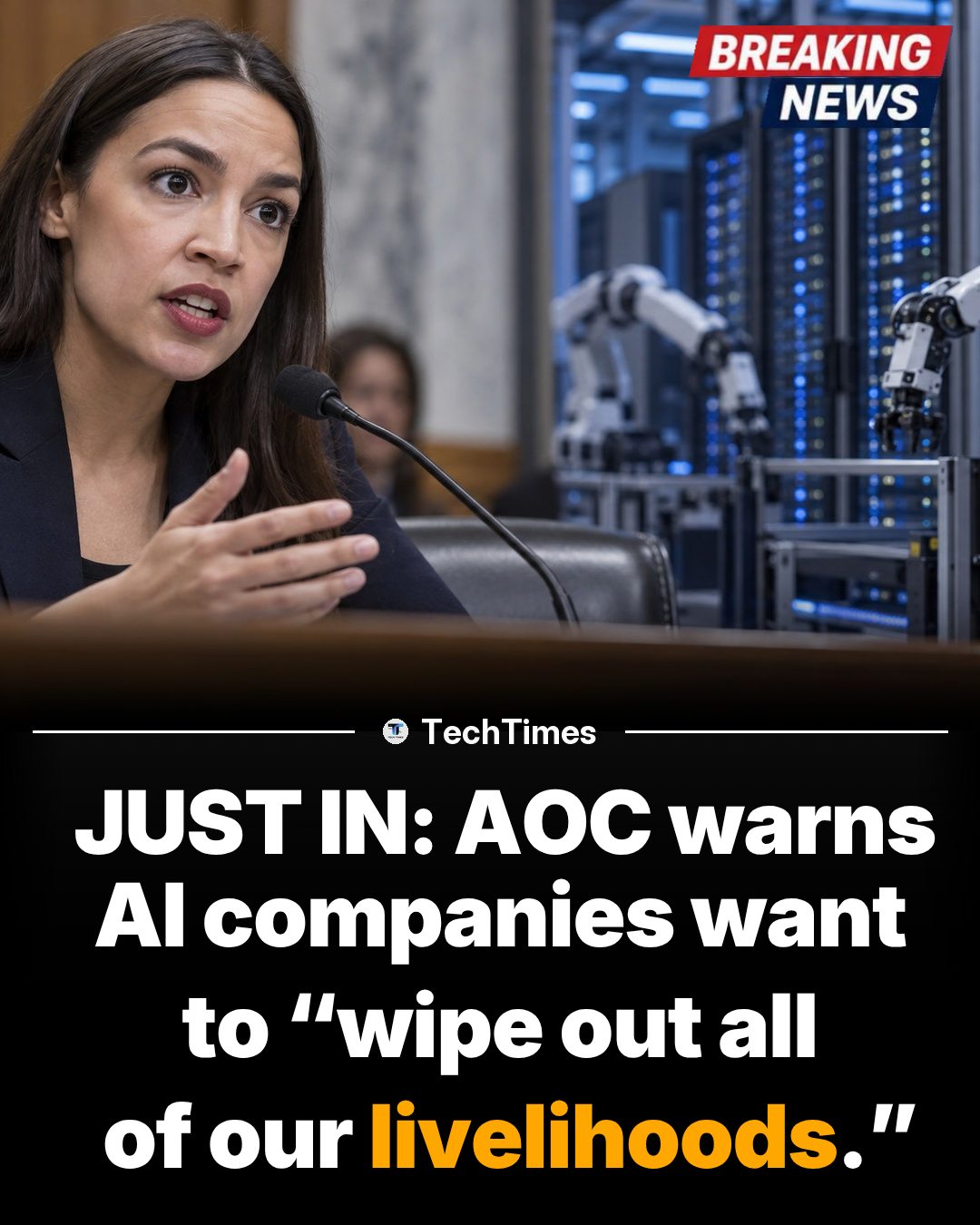
Unveiling TechTimes' Call to Arms
Alexandria Ocasio-Cortez (AOC) issued a stark warning to AI companies, alleging that they aim to "wipe out all of our livelihoods." This bold statement, reported by TechTimes, highlights a growing divide between cutting-edge technology and the workers feeling the heat of disruption.
How AI Companies and Livelihoods Collide
The technology sector’s rapid advancement, driven by artificial intelligence (AI), has led to significant disruptions in various industries, with automation often replacing human labor. “There is robust debate about whether humans will outpace AI or be outpaced by it,” said the Congressional Committee examining the ethical concerns with AI at workplaces — yet congressional debates have not resulted in public policy. AOC specifically warns of AI companies eliminating jobs in large sectors, potentially increasing economic inequality and unemployment. The primary issue underscored by AOC's warning revolves around the pervasiveness of AI across industries. Machine learning models can now perform tasks that traditionally required human intelligence, from medical diagnostics to financial analysis. However, the transition has also led to significant layoffs and job displacements, particularly in sectors with repetitive tasks. Workers in those fields are left facing an uncertain future.
What Tech's Impact on Jobs Means for Equality
The integration of AI into the workplace has sparked robust debates about job displacement, income inequality, and the broader economic impact. Automation in industries like retail, manufacturing, and customer service has already begun transforming job landscapes. While AI-driven efficiencies can lead to increased productivity and lowered costs, the immediate effect is job displacement. "The OECD estimates that 46% of jobs are at risk of automation, and 44% of US workers in low-income jobs are at a medium to high risk of automation." At the same time, the economic benefits of AI development often fall disproportionately to those who own or control the technology, potentially exacerbating income gaps. AI companies are also increasingly being scrutinized for their role in perpetuating societal inequalities. Siloed automation decisions often fail to consider the broader societal context or the consequences for communities already marginalized. This unequal impact is not just an ethical issue — it also risks destabilizing social cohesion and economic stability.
How to Prepare for an AI-Driven Future
Rethinking Education in the AI Age
Given the rapid pace of AI development, education systems need to adapt. The goal should be to balance technical training with broader skill development. This might mean encouraging more multidisciplinary thinking, problem-solving, and creativity.
Upskilling and Reskilling Programs
Employers and policymakers must prioritize upskilling and reskilling programs. This requires creating pathways for workers to transition to new roles or acquire skills in high-demand areas. The government could provide targeted funding and incentives for companies to invest in these programs, while educational institutions could adapt curricula to include more relevant, future-focused training.
Support for Displaced Workers
For those already displaced, support programs are crucial. Providing temporary financial assistance, job placement services, and mental health resources can offer a safety net during transitions. This approach not only helps individuals but also ensures that the broader economy remains stable amidst technological disruption.
The Role of the Public Sector in Mitigating AI Risks
Regulatory Frameworks for AI
There is an urgent need for regulatory frameworks that ensure AI technology is developed and deployed ethically and responsibly. Frameworks must address issues like data privacy, algorithmic bias, and job displacement. Policymakers need to collaborate with experts to create guidelines that protect workers while promoting innovation.
Public-Sector Investment in AI
Governments must increase investment in AI research and development, particularly in areas that support public welfare. This includes healthcare, public safety, and environmental sustainability. Public investment could also support the creation of innovative solutions that address the ethical challenges of AI. Such investments should be balanced with scrutiny: public investment should not propel monopolies that crowd out smaller enterprises.
Creating Inclusive Innovation Ecosystems
To ensure equitable distribution of the benefits and risks of AI, policymakers should focus on creating inclusive innovation ecosystems. This includes supporting diverse entrepreneurs, fostering regional AI hubs, and promoting public-private partnerships. By taking an inclusive approach, countries can leverage AI for widespread economic growth and social progress.
What to Watch for on the Horizon
As AI continues to evolve, the interplay between technology, labor, and policy will become even more complex. Keeping an eye out for significant technological advancements, such as the development of AI that can perform highly skilled tasks like legal analysis or complex surgical procedures, will be crucial. Additionally, monitoring policy debates and legislative initiatives will provide insights into how governments and stakeholders aim to address the challenges posed by AI. Ultimately, fostering a more inclusive future, where the benefits of AI are shared widely, will require ongoing dialogue, adaptation, and innovation.
Watch the Reel
Questions readers ask
What specific industries is AOC concerned about regarding AI job displacement?
AOC's warning highlights sectors with repetitive tasks, such as retail, manufacturing, and customer service, where automation is already causing significant job displacement. These industries are particularly vulnerable to AI-driven efficiencies, which can lead to increased productivity but also to layoffs.
How does AOC believe AI companies are contributing to economic inequality?
AOC argues that AI companies are exacerbating economic inequality by replacing human labor with automation, which often leads to job displacement. The economic benefits of AI development tend to go to those who own or control the technology, widening the income gap. This unequal distribution of wealth can destabilize social cohesion and economic stability.
What are the potential benefits of AI integration into the workplace, despite the job displacement concerns?
While AI can lead to job displacement, it also offers benefits such as increased productivity and lowered costs. The transition to AI-driven efficiencies can improve overall economic performance, but it requires a balanced approach to ensure that the benefits are distributed equitably and that workers are supported through the transition.
What steps are being taken to address the challenges posed by AI in the workforce?
There is a growing call for educational reforms to balance technical training with broader skill development, encouraging multidisciplinary thinking, problem-solving, and creativity. Additionally, upskilling and reskilling programs are being proposed to help workers transition to new roles or acquire skills in high-demand areas, with potential government funding and incentives for companies to invest in these programs.
What is the role of policymakers in mitigating the impact of AI on job displacement?
Policymakers play a crucial role in creating pathways for workers to transition to new roles or acquire skills in high-demand areas. This can be achieved through targeted funding and incentives for companies to invest in upskilling and reskilling programs, as well as adapting educational curricula to better prepare workers for an AI-driven future.
How does the integration of AI into the workplace affect societal inequalities?
The integration of AI can perpetuate societal inequalities by disproportionately impacting marginalized communities. Automation decisions often fail to consider the broader societal context or the consequences for these communities, exacerbating income gaps and potentially destabilizing social cohesion and economic stability.
Can AI companies be held accountable for the job displacement they cause?
There is ongoing debate about whether AI companies should be held accountable for job displacement, and how. While there are ethical concerns about the impact of AI on livelihoods, there has not yet been significant public policy to address these issues. AOC's warning is part of a broader call for greater scrutiny and regulation of AI companies to ensure a more equitable transition.
Related deep dives
Similar reads based on topic and creator.

Recent articles
Fresh deep dives from the latest Reels we unpacked.




Comments
Be the first to comment.