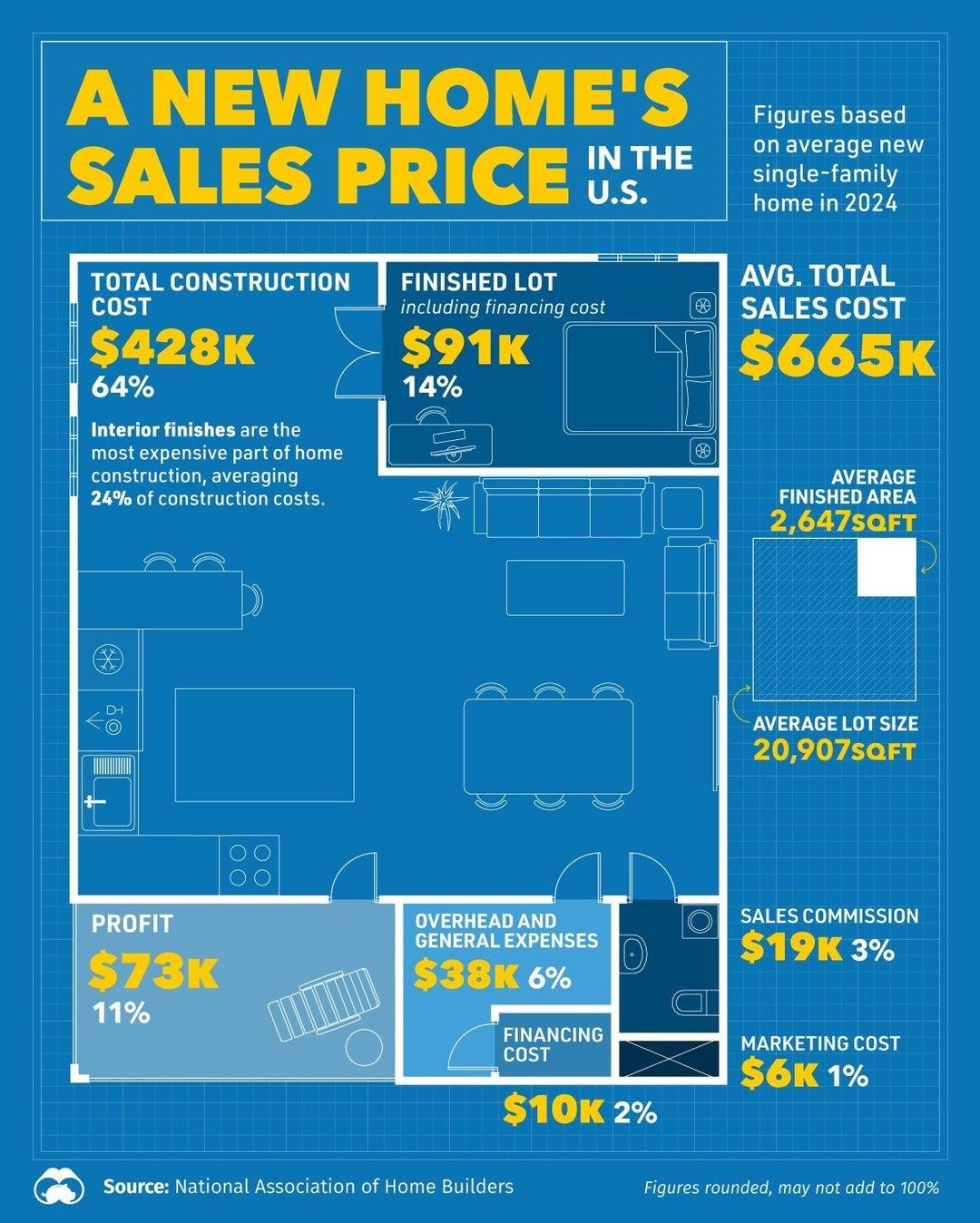
New Home Sales Price Breakdown
In 2024, the average price of a new single-family home in the United States reached $665,000, marking a significant 67% increase from 2013. The most substantial component of this price is construction costs, which account for approximately 64%, or $428,000, of the total price. This overview of a new home's sales price provides a detailed breakdown of the various factors contributing to the total cost.
Context / Why this matters
Understanding the cost breakdown of a new single-family home is crucial for both prospective homebuyers and industry professionals. Whether you're planning to purchase a new home or involved in the construction or real estate business, knowing the components that make up the overall price can provide valuable insights. It helps in making informed decisions, negotiating better deals, and anticipating market trends.
Main discussion
Construction Costs
The largest cost component in a new single-family home is construction, which amounts to $428,000. This figure encompasses all the expenses related to building the home, including materials, labor, and permits. Generally, interior finishes are the most expensive part of home construction, accounting for 24% of the total construction cost.
Interior finishes encompass a wide range of elements, from flooring and countertops to lighting and plumbing fixtures. These finishes significantly impact the home's overall aesthetic and functionality, warranting the higher expenditure. For instance, high-quality materials and custom finishes can add both beauty and value to the home, justifying the cost.
Finished Lot Cost
The finished lot, including financing costs, is the second-largest expense at $91,000. This cost includes the price of the land, site preparation, and any necessary utilities or infrastructure. Site preparation might involve grading, excavation, and landscaping, while infrastructure includes water, sewer, and electrical connections. The finished lot's cost varies significantly depending on the location, zoning regulations, and local market conditions.
Profit and Overhead
Profit, overhead, and general expenses make up a combined 17% of the total sales price. The profit margin is 11%, or $73,000, ensuring the developer can sustain operations and generate returns. Overhead and general expenses, totaling $38,000 (6%), cover operational costs such as administrative salaries, office expenses, and insurance. These costs are essential for maintaining the business and ensuring smooth operations.
Financing and Sales Commissions
Financing costs amount to $10,000 (2%). These costs include interest payments, loan origination fees, and closing costs. Financing is crucial for both developers and buyers, as it enables the transaction to proceed. Sales commission of $19,000 (3%) and marketing costs of $6,000 (1%) are other significant expenses. Sales commissions are paid to real estate agents for their services in facilitating the sale, while marketing costs cover advertising and promotional activities to attract buyers.
Practical Tips
For Homebuyers
When purchasing a new home, it's essential to understand the breakdown of costs. This knowledge helps in negotiating a better price and allocating your budget more effectively. For instance, if construction costs are high, you might explore options for reducing interior finishes or negotiating lower-priced materials. Understanding the profit margins and overhead costs can also provide leverage during negotiations, as developers may be willing to lower their profit margin to secure a sale. Additionally, being aware of financing and sales commission costs can help you plan your financial strategy and potentially find ways to reduce these expenses.
For Developers and Builders
Developers and builders can use this cost breakdown to optimize their operations. By closely examining the construction costs, they can identify areas where efficiencies can be gained, such as sourcing materials more cost-effectively or improving labor productivity. Understanding the profit margins and overhead costs can also help them streamline their operations and reduce unnecessary expenses.
Important takeaways
High Construction Costs
Construction costs are the most significant component of a new home's sales price, emphasizing the importance of efficient construction practices. Both homebuyers and developers should focus on optimizing this aspect to reduce overall costs.
Finished Lot and Financing
The finished lot and financing costs are also substantial, highlighting the need for careful planning and budgeting. Buyers should be mindful of these costs and explore options for reducing them, such as choosing a less expensive lot or securing better financing terms.
Overhead and Profit
Overhead and profit are essential for sustaining the business, but they also represent potential areas for negotiation. Buyers can leverage their understanding of these costs to negotiate better deals, while developers can work on reducing overhead to increase profitability.
Marketing and Sales
Marketing and sales commissions are necessary for attracting buyers and facilitating sales, but they can also add up. Developers should focus on efficient marketing strategies and consider negotiating lower commission rates to reduce these costs.
Conclusion
The cost breakdown of a new single-family home in 2024 provides valuable insights into the various factors contributing to the overall price. Understanding these components can help both homebuyers and developers make more informed decisions, negotiate better deals, and optimize their operations. Whether you're planning to purchase a new home or involved in the construction industry, this knowledge can be a valuable asset.
Watch the Reel
Questions readers ask
What is the average price of a new single-family home in the U.S. in 2024?
The average price of a new single-family home in the U.S. in 2024 is $665,000, reflecting a 67% increase from 2013 and highlighting the rising cost of new home sales.
What is the largest contributor to the 2024 average new home price?
Construction costs are the largest contributor, accounting for approximately 64% of the total price, or about $428,000. This includes materials, labor, and other building expenses.
How does the cost of the finished lot factor into the 2024 new home price?
The finished lot, or the prepared land on which the home is built, is another significant component. While the exact percentage can vary, it contributes to the remaining 36% of the total price, along with other factors such as financing and developer profits.
What other factors contribute to the 2024 average new home price besides construction and land costs?
Other factors include financing costs, such as interest on construction loans, developer profits, and other ancillary expenses. These elements make up the remaining portion of the $665,000 price tag.
Why is it important to understand the breakdown of a new home's price in 2024?
Understanding the breakdown helps prospective homebuyers make informed decisions and industry professionals stay competitive. It provides insights into where costs are highest and where potential savings might be achieved.
How can knowing the components of a new home's price benefit homebuyers in 2024?
For homebuyers, knowing the components can help set realistic expectations and budget accordingly. It also enables them to negotiate more effectively with builders and developers, potentially saving costs on certain aspects of the home purchase.
What trends have influenced the increase in new home prices from 2013 to 2024?
Several trends have influenced the increase, including rising construction costs due to inflation and supply chain disruptions, increased demand for housing, and higher land prices. These factors have collectively driven the 67% increase in the average new home price.
Related deep dives
Similar reads based on topic and creator.


Recent articles
Fresh deep dives from the latest Reels we unpacked.




Comments
Be the first to comment.