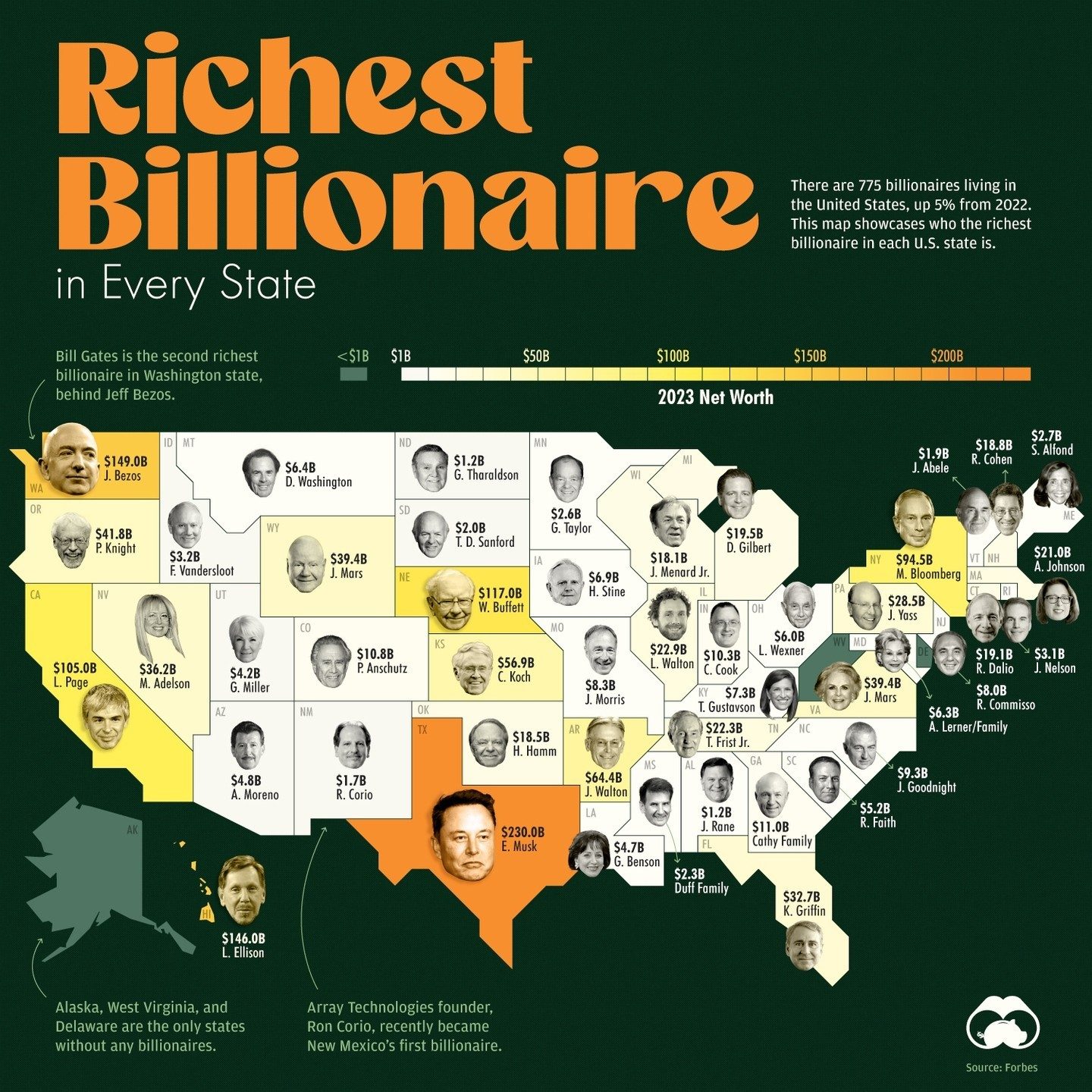
Billionaires in the U.S. : Concentrations, Changes, and Dominant Figures
The billionaire landscape in the United States is vast, and the numbers are growing. The total number of billionaires in the U.S. has increased by 5% from 2022, reaching 775 individuals. This growth reflects a broader trend of increasing wealth concentration and provides insights into where the wealthiest individuals reside.
Why This Matters
Understanding the distribution and concentration of wealth in different states can provide valuable insights into economic trends, investment opportunities, and the social fabric of each region. The concentration of billionaires in specific states also highlights the economic sectors and industries that drive wealth creation in those areas.
Increased Billionaire Population
The rise in the number of billionaires in the U.S. indicates a growing wealth disparity. This trend can have significant implications for policy, inequality, and economic growth. While the increase in billionaires suggests economic growth, it also underscores the widening gap between the ultra-wealthy and the rest.
Richest Billionaires by State
Concentrations in Key States
The richer billionaires often reside in states known for their economic powerhouses. For instance, Texas, home to tech and energy giants, has a significant concentration of billionaires. Billionaires in Texas include figures like Jeff Nelson and David Sanford, showcasing the state's diverse economic landscape.
California, the tech hub of the nation, also boasts a high number of billionaires. Names like Larry Page, Elon Musk, and Larry Ellison are synonymous with California's tech dominance. This state's billionaires are often associated with the tech industry, signaling the sector's pivotal role in wealth creation.
New York, the financial capital of the nation, has a notable presence of billionaires, including figures like Michael Bloomberg and hedge fund managers. These billionaires' wealth often stems from investments, real estate, and financial services. The presence of these high net worth individuals underscores the importance of financial markets in the state's economy.
Geographical Spread
While the richest of the rich are often found in states like Texas, California, and New York, there is almost one billionaire in every single state. This distribution highlights the widespread nature of wealth creation across the U.S. States like Florida, Washington, and Illinois also host significant numbers of billionaires, each contributing to their unique economic landscapes.
New York
New York is a hub for financial services and real estate, making it a magnet for billionaires. Some of the state's prominent billionaires include Michael Bloomberg, whose wealth is estimated to be $4.2 billion. Bloomberg's success is deeply rooted in the financial services industry, particularly in the realm of financial news and information. Similarly, California-based billionaires like Larry Ellison and Elon Musk are leading figures in the tech industry, contributing to the state's innovative and entrepreneurial ecosystem.
Florida
Florida’s billionaires are often associated with the real estate and hospitality sectors. For instance, Donald Washington has a net worth of $2.6 billion, reflecting the state's strong real estate market. Florida's billionaires often have diverse investment portfolios, contributing to the state's economic diversity and resilience.
California
California's tech and entertainment industries are major contributors to its wealth concentration. The state boasts several billionaires, including Jeff Bezos, whose net worth is around $105.0 billion. Bezos' wealth has been amassed through his retail and technology ventures, making him one of the world's richest individuals.
Washington
Washington State hosts several billionaires, including figures like Bill Gates, whose net worth is approximately $18.8 billion. Gates is a well-known figure in the tech industry, co-founding Microsoft and contributing to various philanthropic efforts. Other notable billionaires in Washington include R. Faith, whose wealth is estimated to be around $7.3 billion, and Chris Rice, who has a net worth of around $6.3 billion. These individuals' contributions to the tech and investment sectors have solidified Washington's position as a hub for innovation and wealth creation.
The Richest Billionaires
Jeff Bezos
Jeff Bezos, the former CEO of Amazon, is one of the richest individuals globally, with a net worth of approximately $105.0 billion. Bezos' wealth is primarily derived from his stake in Amazon, the e-commerce giant he founded in the mid-1990s. His innovative approach to online retail and logistics has revolutionized the industry, making Amazon one of the most valuable companies in the world.
Bill Gates
Bill Gates, co-founder of Microsoft, is another prominent figure on the list of the richest billionaires. With a net worth of approximately $18.8 billion, Gates' wealth is largely attributed to his stake in Microsoft. Gates' contributions to the tech industry have been monumental, and his philanthropic efforts through the Bill and Melinda Gates Foundation have had a significant global impact.
Larry Ellison
Larry Ellison, the co-founder of Oracle, is one of the richest individuals in California, with a net worth of approximately $56.9 billion. Ellison's wealth is derived from his stake in Oracle, a leading software and cloud services provider. His leadership and strategic vision have positioned Oracle as a major player in the tech industry.
The Impact of Wealth Distribution
The concentration of wealth in specific states has significant implications for economic policy and social fabric. For instance, the presence of billionaires in states like Texas, California, and New York underscores the importance of these regions as economic powerhouses. Their wealth creation often stems from investments in innovation, technology, and financial services, contributing to economic growth and job creation.
Practical Tips
Navigating the landscape of billionaires and their wealth distribution can provide valuable insights for investors, entrepreneurs, and policymakers. Here are some practical tips for understanding and leveraging this information:
Investing in Innovation and Technology
Investing in states with a high concentration of billionaires often means tapping into innovative sectors. For instance, California's tech industry and Florida's real estate market are hotspots for investment opportunities. Understanding the trends and key players in these sectors can help investors make informed decisions.
Policy and Philanthropy
The philanthropic efforts of billionaires can have a significant impact on society. Engaging with and supporting initiatives led by these individuals can provide opportunities for collaboration and impactful change. Policymakers can leverage the expertise and resources of billionaires to address pressing social and economic issues.
Economic Diversification
Understanding the distribution of wealth can help policymakers and businesses diversify their economic strategies. For instance, states with a high concentration of billionaires in specific sectors can explore ways to diversify their economies to ensure long-term sustainability and resilience.
Important Takeaways
Wealth concentration in specific states highlights the economic powerhouses of the nation. Understanding the distribution of billionaires can provide valuable insights into economic trends, investment opportunities, and social fabric. By leveraging this information, investors, entrepreneurs, and policymakers can make informed decisions and drive positive change.
Innovation and Technology
The tech industry is a significant contributor to the wealth of many billionaires, particularly in states like California and Texas. Investing in innovation and technology can provide lucrative opportunities for growth and development.
Economic Policy
The concentration of wealth in specific states underscores the importance of economic policy in driving growth and development. Policymakers can leverage the insights gained from the distribution of billionaires to shape policies that promote economic diversification and resilience.
Investment Opportunities
Understanding the distribution of billionaires can provide valuable insights into investment opportunities. Investors can leverage this information to make informed decisions and capitalize on the trends and opportunities presented by the wealthiest individuals.
Conclusion
The billionaire landscape in the United States is dynamic and concentrated in key states. The growth in the number of billionaires and their distribution across the nation highlight the economic trends and opportunities that shape the country's wealth. By understanding the concentration of billionaires, their industries, and the implications of their wealth, investors, policymakers, and entrepreneurs can make informed decisions and drive positive change.
Watch the Reel
Questions readers ask
Which state in the U.S. has the most billionaires?
California is home to the highest number of billionaires in the U.S. This is largely due to the state's dominance in the tech industry, which has seen significant growth and innovation in recent years. The state's billionaire population is highly concentrated in areas like Silicon Valley and Los Angeles.
Why are so many billionaires in Texas?
Texas, the second highest in terms of billionaire residents, has seen significant growth in its billionaire population due to its thriving tech and energy sectors. The state's business-friendly environment and lack of state income tax have attracted many wealthy individuals, contributing to its status as a major hub for wealth creation.
How has the total number of billionaires in the U.S. changed recently?
The total number of billionaires in the U.S. has increased by 5% from 2022, reaching 775 individuals. This increase reflects a broader trend of growing wealth concentration in the country. The rise in billionaire numbers can also provide insights into economic trends and investment opportunities in various regions.
Which industries are driving the growth of billionaires in the U.S.?
The growth of billionaires in the U.S. is largely driven by the tech and energy sectors. These industries have seen significant advancements and innovations, leading to substantial wealth creation. In Texas, the energy sector is a major contributor, while in California, the tech industry dominates.
How can understanding the distribution of billionaires in the U.S. be beneficial?
Knowing where the wealthiest individuals reside can provide valuable insights into economic trends, investment opportunities, and the social dynamics of different regions. It can also highlight the economic sectors and industries that drive wealth creation in those areas, offering a clearer picture of the economic landscape.
What trends can be observed in the U.S. billionaire population, and what do they reveal about the state economies?
The U.S. billionaire population is seeing an increase in numbers, with a notable concentration in states like California and Texas. This trend reveals the economic strength and growth in industries like tech and energy, which are driving wealth creation. The distribution of billionaires also reflects a broader trend of increasing wealth concentration in these regions.
Recent articles
Fresh deep dives from the latest Reels we unpacked.




Comments
Be the first to comment.