Housing Affordability Crisis: The Widening Gap Between Income and Housing Prices
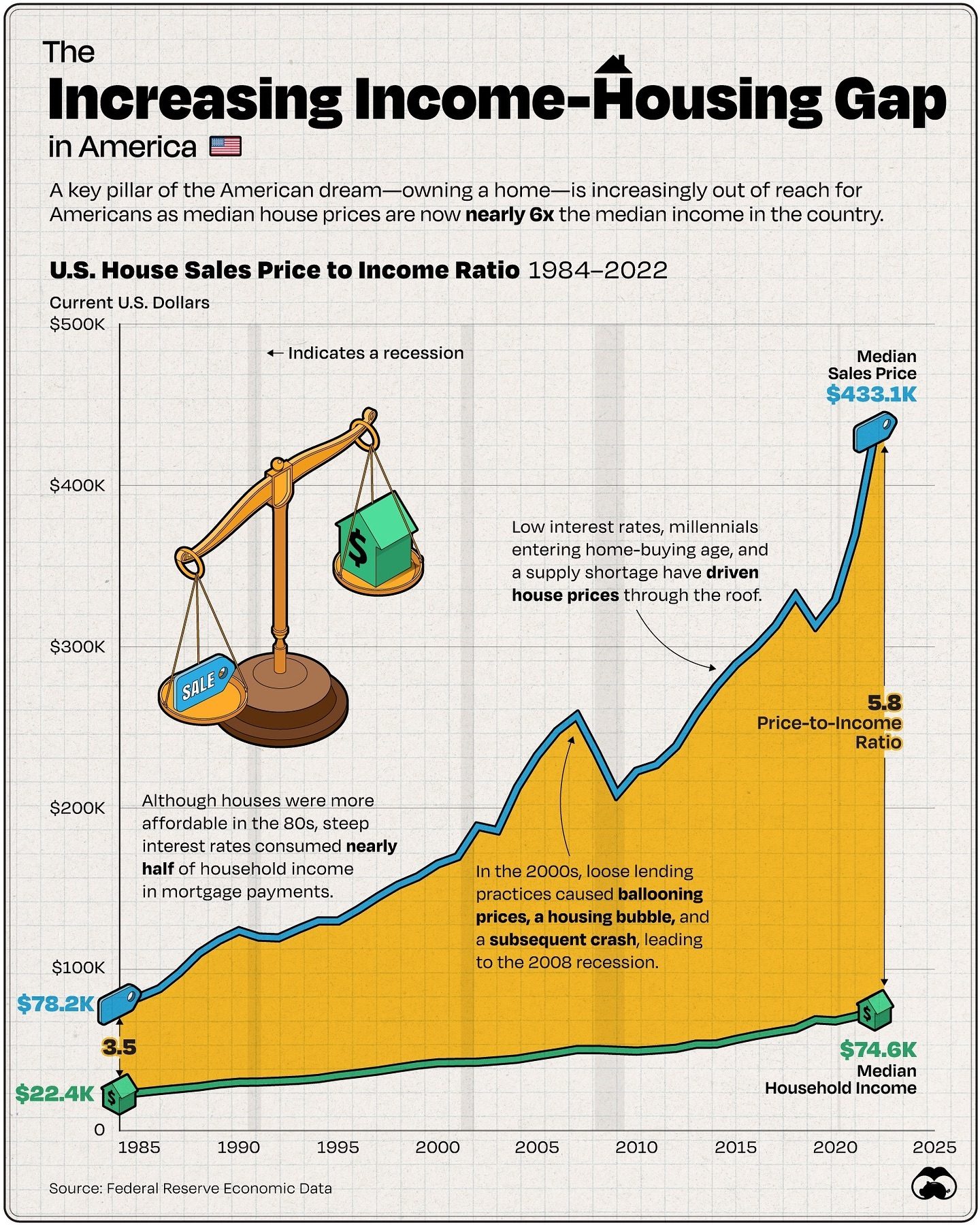
The housing affordability crisis in America is starkly evident as of 2023, with a median-priced home now requiring an annual household income of at least $100,000. In some cities, this figure skyrockets to nearly 3–4 times that amount. This disparity is alarming, given that the median household income in the country is well below the $100,000 threshold. This article delves into the widening gap between median incomes and house prices, using data from the Federal Reserve from 1984 to 2022.
Context / Why This Matters
The American dream of homeownership has long been a symbol of prosperity and stability. However, the escalating cost of housing has made this dream increasingly elusive for many Americans. Understanding the factors driving this trend is crucial for policymakers, economists, and potential homebuyers alike. The housing market's dynamics have shifted significantly over the past few decades, influenced by various economic and demographic changes.
The Increasing Income-Housing Gap in America
The Price-to-Income Ratio
The price-to-income ratio, which measures the median house price relative to the median household income, has seen a dramatic increase since 1984. In 2022, this ratio reached 5.8, indicating that the median house price is 5.8 times the median income. This ratio has risen steadily over the years, reflecting the growing disparity between income and housing prices.
Historical Factors Contributing to the Gap
Several historical factors have contributed to the widening gap between income and housing prices. In the 1980s, houses were more affordable, but steep interest rates consumed nearly half of household income in mortgage payments. The 2000s saw loose lending practices that led to a housing bubble and subsequent crash, culminating in the 2008 recession. This period of economic turmoil left a lasting impact on the housing market, with prices ballooning and then crashing before slowly recovering.
Low Interest Rates and Millennial Home-buying
In recent years, low interest rates have made mortgages more affordable, but they have also driven up house prices. As millennials enter the home-buying age, their demand for housing has increased, further fueling price increases. Additionally, a supply shortage has exacerbated the situation, with the availability of affordable housing failing to meet the growing demand.
Millennial Home-buying
Millennials, the largest generation in U.S. history, are now entering their prime home-buying years. This demographic shift has significantly impacted the housing market, driving up demand and prices. Millennials, who are more tech-savvy and environmentally conscious, often seek modern, sustainable homes, further fueling the demand for new construction and renovation projects.
Supply Shortages
A critical factor contributing to the housing affordability crisis is the persistent supply shortage. The lack of new housing construction and the slow pace of development have created a market imbalance, with demand outstripping supply. This shortage has driven up prices, making it even more challenging for potential homebuyers to afford a median-priced home.
Practical Tips
Understanding the Market
To navigate the current housing market, it's essential to understand the local dynamics. Researching market trends, understanding the price-to-income ratio in your area, and consulting with real estate professionals can provide valuable insights. Knowing the local market can help you make informed decisions and avoid overpaying for a property.
Financing Options
Exploring various financing options can make homeownership more attainable. Government-backed loans, such as FHA and VA loans, offer lower down payment requirements and more flexible qualification criteria. Additionally, first-time homebuyer programs and grants can provide financial assistance, making the dream of homeownership more accessible.
Long-term Planning
Long-term planning is crucial when entering the housing market. Consider your financial goals, job stability, and future plans before making a significant investment. Building a strong credit score, saving for a down payment, and managing debt can improve your chances of securing a mortgage and affording a home.
Important Takeaways
The housing affordability crisis in America highlights the widening gap between income and housing prices. Factors such as low interest rates, millennial home-buying, and supply shortages have driven up prices, making it challenging for many Americans to afford a median-priced home. Understanding the market, exploring financing options, and long-term planning can help potential homebuyers navigate the current housing landscape.
Conclusion
Homeownership remains a cornerstone of the American dream, but the escalating cost of housing has made this dream increasingly out of reach for many. The widening gap between income and housing prices underscores the need for comprehensive solutions to address the affordability crisis. By understanding the market, exploring financing options, and planning for the future, potential homebuyers can navigate the current housing landscape and achieve their dream of homeownership.
Watch the Reel
Questions readers ask
What is the current median home price in America and what income is required to afford it?
As of 2023, the median-priced home in America requires an annual household income of at least $100,000. In some cities, the required income can be up to 3-4 times that amount, making homeownership a significant challenge for many.
How has the gap between home prices and household income changed over time?
The gap between home prices and household income has been widening for decades. According to data from the Federal Reserve from 1984 to 2022, the disparity between the two has increased significantly, making homeownership less attainable for a larger portion of the population.
What is the current median household income in America and how does it compare to the required income for a median-priced home?
The current median household income in America is well below the $100,000 threshold required to afford a median-priced home, according to 2023 data.
Which cities in America have the highest required incomes for a median-priced home?
Cities with the highest required incomes for a median-priced home include major metropolitan areas like San Francisco, New York, and Boston. In these cities, the required income can be up to 3-4 times the national median, making homeownership particularly challenging.
What factors contribute to the widening gap between home prices and household income?
Several factors contribute to this widening gap, including stagnant wage growth, increasing construction costs, and limited housing supply in high-demand areas. These factors combined make it more difficult for many Americans to afford homeownership.
How does the home price to income ratio affect homeownership affordability?
The home price to income ratio is a key indicator of housing affordability. A higher ratio means that homes are less affordable, as the cost of housing increases relative to household income. In 2023, the ratio indicates that homeownership is becoming increasingly unattainable for many Americans.
What challenges do first-time homebuyers face in the current housing market?
First-time homebuyers face numerous challenges in the current housing market, including high home prices, rising interest rates, and intense competition for available homes. This makes it difficult for many to enter the market and achieve the American dream of homeownership.
Related deep dives
Similar reads based on topic and creator.




Recent articles
Fresh deep dives from the latest Reels we unpacked.




Comments
Be the first to comment.