Economic Policy Perceptions: Harris vs. Trump
The 2024 U.S. presidential election is heating up, and economic policy is at the forefront of many Americans' minds. Recent surveys from YouGov reveal how the public perceives the stances of Kamala Harris and Donald Trump on key economic issues. Understanding these perceptions is crucial for grasping the current political climate and the potential implications of the upcoming election.
Why This Matters
Economic policies significantly impact daily life, from personal finances to business operations. Taxes, wages, and government spending are all areas where policy changes can have a direct and tangible effect on citizens. The upcoming election will determine which economic policies are implemented, making it essential to understand the public's expectations and the perceived differences between the two candidates.
Public Perceptions of Economic Policies
Taxes on Corporations and the Wealthy
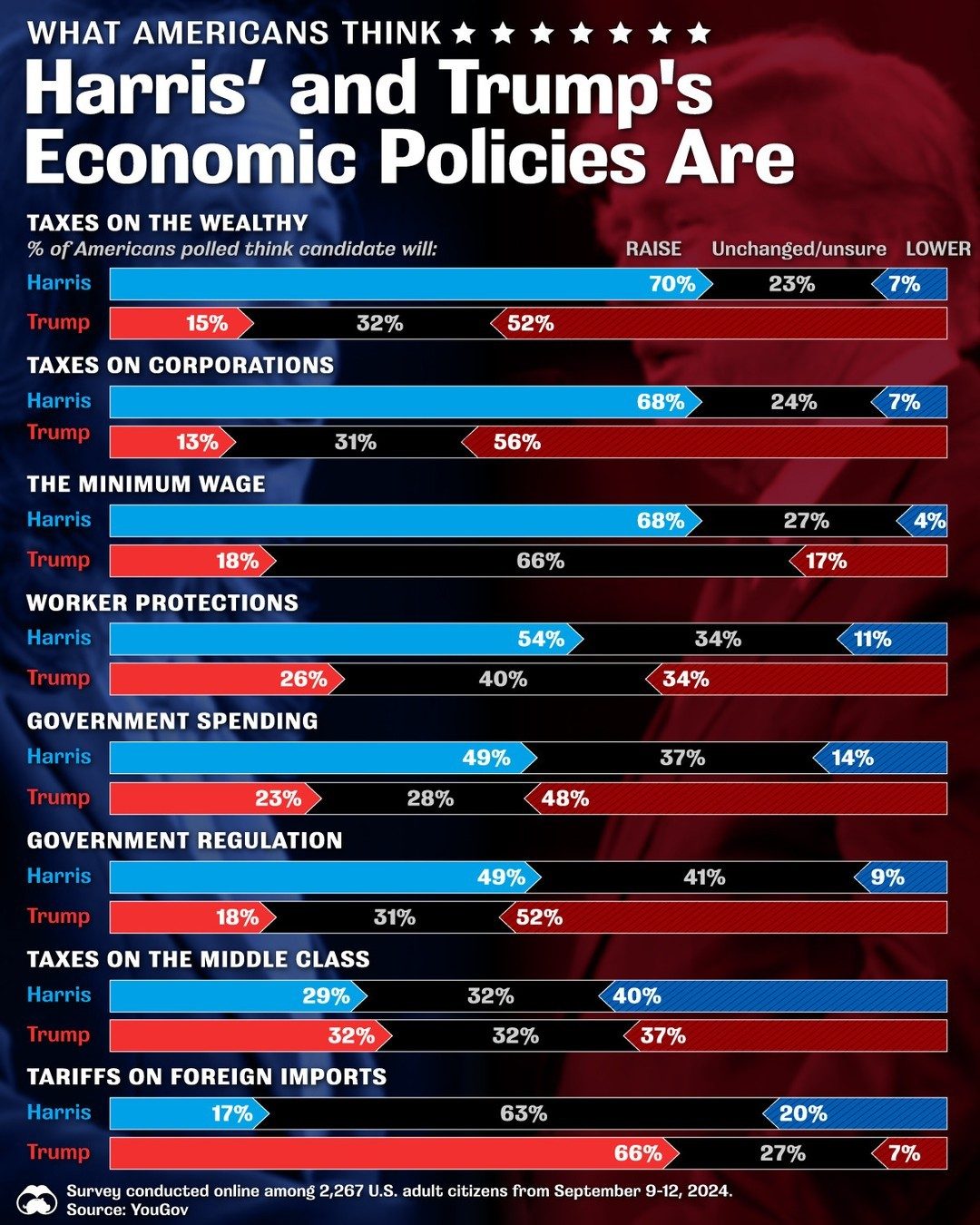
One of the most contentious issues is taxation, particularly how it affects corporations and the wealthy. According to the YouGov poll, 68% of Americans believe that Harris will raise taxes on corporations. This expectation could be driven by Harris's stance on income inequality and her proposed policies to address it. Conversely, 56% of Americans expect Trump to further reduce corporate taxes, aligning with his previous economic policies and his stated plan to lower the corporate tax rate to 15%.
When it comes to taxes on the wealthy, there's a significant overlap in public perception. A majority of Americans polled believe both candidates will raise taxes on the wealthy. This consensus reflects a broader public sentiment that wealthy individuals should bear a greater share of the tax burden.
Minimum Wage and Worker Protections
Minimum wage and worker protections are also pivotal issues. The poll indicates that 53% of Americans think Harris will raise the minimum wage, while 47% believe Trump will leave it unchanged. This reflects a common perception that Harris is more likely to advocate for workers' rights and economic fairness. Similarly, 55% of Americans expect Harris to strengthen worker protections, compared to 43% who believe Trump will do the same. These perceptions align with Harris's public statements and past actions, which often emphasize worker rights and economic security.
Government Spending and Regulation
Public opinion on government spending and regulation also differs between the two candidates. 52% of Americans believe Harris will increase government spending, while 45% think Trump will reduce it. This perception likely stems from Harris's proposed policies on infrastructure, healthcare, and social programs, which often require significant government investment. In contrast, Trump's stance on reducing government spending and regulations aligns with a more conservative economic approach.
On the topic of government regulation, 51% of Americans expect Harris to increase regulations, while 41% believe Trump will reduce them. This reflects a broader perception that Harris is more likely to support a greater regulatory role for the government, while Trump is seen as favoring deregulation.
Tariffs on Foreign Imports
Tariffs on foreign imports are another contentious issue. 46% of Americans believe Harris will increase tariffs, while 40% think Trump will leave them unchanged. This perception might be influenced by Harris's focus on protecting domestic industries. In contrast, 48% of Americans expect Trump to increase tariffs, reflecting his previous trade policies and "America First" approach. This difference in perception highlights a divide in public opinion on how each candidate will handle international trade.
Practical Tips for Staying Informed
As the election approaches, staying informed about the candidates' economic policies is crucial. Here are some practical tips for staying up-to-date:
- Follow Official Statements: Keep an eye on official statements and policy proposals from Harris and Trump. This will give you the most accurate information about their stances.
- Read Reliable News Sources: Follow news outlets known for their balanced and thorough reporting. This will help you understand the nuances of each candidate's economic proposals.
- Engage in Public Discussions: Participate in community forums, town halls, and online discussions. Engaging with others can provide different perspectives and deepen your understanding of the issues.
- Attend Policy Debates: Watching or attending policy debates can give you a clearer picture of where the candidates stand on various issues and how they plan to implement their policies.
Important Takeaways
- The public has distinct perceptions of Harris's and Trump's economic policies, with significant differences on issues like corporate taxes, minimum wage, and government regulation.
- Both candidates face a public that expects them to address the economic concerns of their constituents, particularly when it comes to taxes on the wealthy and worker protections.
- Understanding these perceptions can help voters make more informed decisions and anticipate the potential impacts of the upcoming election on their daily lives.
Conclusion
The 2024 U.S. presidential election will significantly shape the economic landscape of the country. By understanding the public's perceptions of Harris's and Trump's economic policies, we can better anticipate the potential impacts of their proposed changes. Whether it's taxes, wages, or government spending, each policy area plays a crucial role in shaping the economic well-being of Americans. Staying informed and engaged will be key to navigating the upcoming election and its consequences.
Watch the Reel
Questions readers ask
What are the key differences in corporate taxation policies between Harris and Trump?
Harris has proposed increasing corporate taxes to fund infrastructure and social programs, while Trump has advocated for maintaining or even lowering corporate tax rates to stimulate economic growth and job creation.
How do Harris and Trump differ in their views on minimum wage?
Harris supports a significant increase in the federal minimum wage, while Trump has been more cautious, preferring to leave wage decisions to individual states and businesses.
What are the public's views on the economic policies of Harris and Trump in the 2024 election?
Recent surveys indicate that Americans are divided in their preferences, with some favoring Harris's plans for increased taxation and worker protections, and others supporting Trump's focus on economic growth and lower taxes.
What impact could the 2024 election have on Americans' personal finances?
The outcome of the 2024 election could significantly affect personal finances through changes in taxation, minimum wage, and government spending. This could influence savings, job opportunities, and cost of living for many Americans.
How do Harris and Trump approach worker protections?
Harris advocates for stronger worker protections, including expanded labor laws and benefits, while Trump has focused on deregulation and business-friendly policies to foster economic growth.
What is the public perception on wealth taxation proposed by Harris and Trump?
Harris has proposed a wealth tax on the ultra-rich, which has gained support from those who believe it addresses income inequality. Trump, however, has not shown support for such measures, preferring to maintain lower tax rates across the board.
What are the potential implications of the upcoming election on corporate tax reforms?
The election could lead to significant changes in corporate tax policies, with Harris promoting higher taxes to fund public initiatives and Trump advocating for reductions to boost business investments and job creation.
Recent articles
Fresh deep dives from the latest Reels we unpacked.




Comments
Be the first to comment.