How Americans Spend Their Time on Weekdays vs. Weekends
The way Americans allocate their time on weekdays versus weekends and holidays reveals significant shifts in daily routines. These changes reflect a clear distinction between workdays and days off, offering insights into how leisure, personal care, and other activities are balanced.
Context / Why This Matters
Understanding how time is spent on weekdays versus weekends is crucial for personal planning, productivity, and work-life balance. By examining the data from the U.S. Bureau of Labor Statistics' American Time Use Survey, we can gain a deeper understanding of the patterns and priorities that shape American life.
Weekday Time Allocation
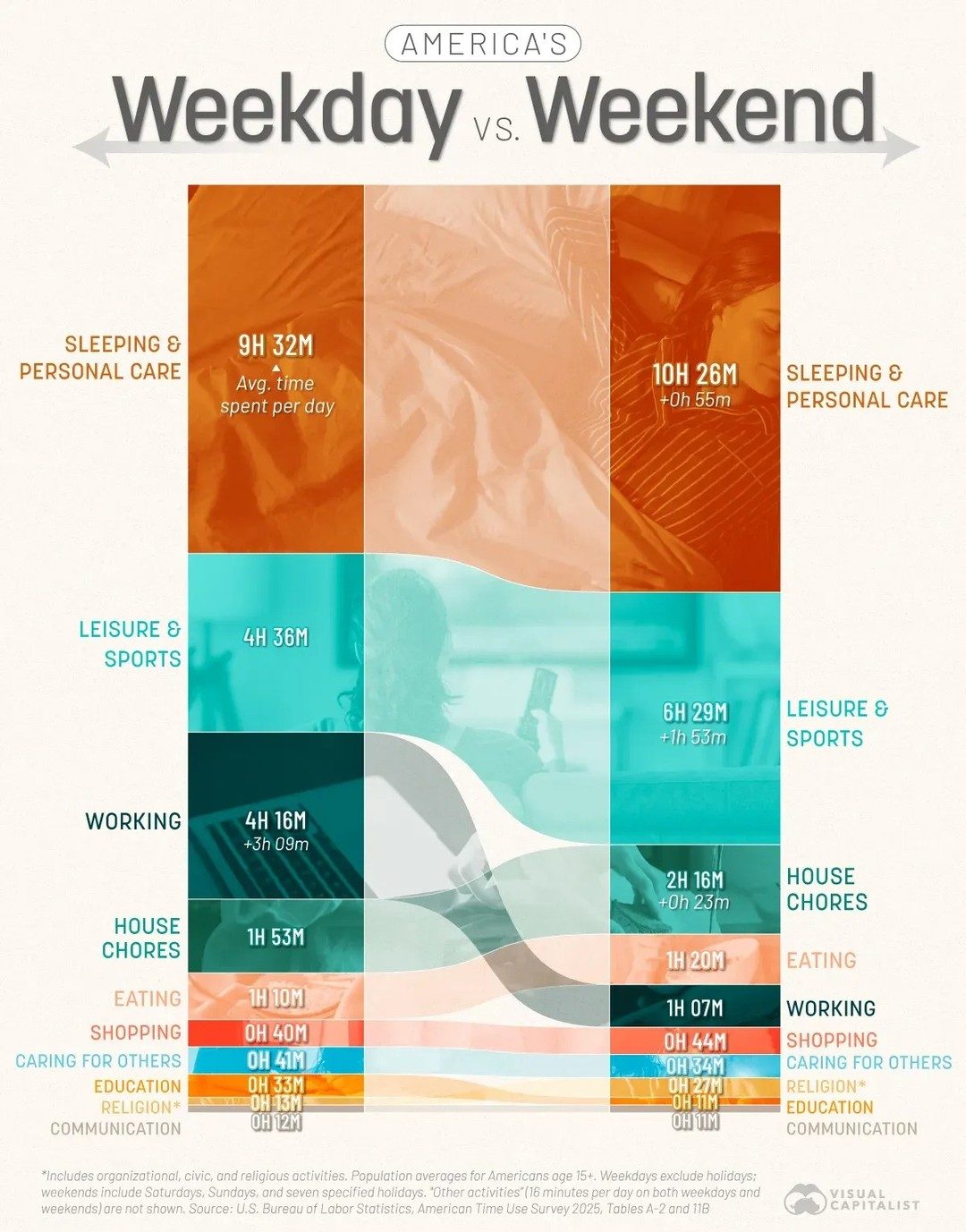
On weekdays, Americans typically engage in a structured routine dominated by work-related activities. The average American spends approximately 4 hours and 16 minutes on working tasks. This leaves about 9 hours and 32 minutes for sleeping and personal care. The remaining time is allocated to household chores, eating, shopping, caring for others, and other miscellaneous activities.
Sleeping and Personal Care
During weekdays, sleeping and personal care consume about 9 hours 32 minutes. This time includes morning and evening routines, personal hygiene, and relaxation. The structured nature of weekdays means that this time is often optimized for efficiency, reflecting the need to balance work and personal needs.
Work Schedule
The work schedule during weekdays is the most significant time commitment, with an average of 4 hours 16 minutes. However, this figure can vary widely depending on the nature of the job, commuting time, and additional work-related tasks such as meetings and travel.
Household Chores
Household chores and eating take up about 1 hour 53 minutes and 1 hour 10 minutes, respectively. These activities are essential for maintaining daily life and ensuring that personal and family needs are met.
Other Activities
Other activities such as shopping, caring for others, and miscellaneous tasks take up a combined average of 2 hours 22 minutes. These activities are crucial for maintaining a balanced life, but they often take a backseat to work and personal care needs.
Main Discussion
Leisure and Other Activities
Weekends and holidays provide a significant break from work-related activities, allowing for nearly double the amount of time spent on leisure and other activities. On weekends, the average American spends about 10 hours and 26 minutes on sleeping and personal care, an increase of 55 minutes compared to weekdays. This extra time can be crucial for recuperation and relaxation.
Working Hours vs. Free Time
On weekends, working hours drop to about 2 hours and 29 minutes. This reduction in work-related activity frees up more than 3 hours per day for sleep, television, socializing, and household tasks. This shift is reflected in the data, which shows that average TV viewing increases from 2.33 hours on weekdays to 3.27 hours on weekends and holidays.
Sleeping and Personal Care on Weekends
The additional 55 minutes allocated to sleeping and personal care on weekends allows for a more relaxed and unhurried routine. This extra time can be used for activities such as exercise, meditation, or simply enjoying a leisurely breakfast. This increase in personal care time is crucial for maintaining mental and physical health.
Household Chores and Eating
On weekends, the time spent on household chores and eating increases to 1 hour 26 minutes and 1 hour 20 minutes, respectively. This extra time allows for more leisurely meals, meal preparation, and catching up on household tasks that may have been neglected during the week.
Leisure Activities
Weekends and holidays provide ample opportunities for leisure and recreational activities. On average, Americans spend about 6 hours and 29 minutes on leisure and other activities. This includes watching TV, socializing, and engaging in hobbies and sports. This significant increase in leisure time highlights the importance of weekends and holidays for relaxation and enjoyment.
Practical Tips
To optimize the time spent on weekdays and weekends, consider the following practical tips:
Optimizing Weekday Routines
Creating a structured routine can help optimize your weekdays. This includes planning your meals, setting aside time for exercise, and allocating specific times for work-related tasks. By planning ahead, you can ensure that you make the most of your time and reduce stress.
Maximizing Weekend Leisure
Make the most of your weekends by planning activities that you enjoy and that help you relax. This could include spending time with family and friends, engaging in hobbies, or simply taking time for yourself.
Balancing Work and Leisure
Finding a balance between work and leisure is crucial for maintaining a healthy lifestyle. This means allocating sufficient time for work-related tasks during the week and ensuring that you have enough leisure time on weekends and holidays. This balance can help you stay productive and motivated, while also allowing you to recharge and enjoy life.
Importance of Personal Care
Personal care is essential for maintaining physical and mental health. Ensure that you allocate enough time for self-care activities such as exercise, meditation, and relaxation. This will help you stay energized and focused throughout the week.
Important Takeaways
The way Americans spend their time on weekdays versus weekends highlights the importance of balancing work and leisure. Key takeaways include:
- Weekdays are characterized by work-related activities, while weekends and holidays offer more time for leisure and personal care.
- Sleeping and personal care times increase on weekends, providing a vital opportunity for relaxation and recuperation.
- The reduction in work-related activities on weekends allows for more time to be spent on household tasks, eating, and leisure activities.
- Balancing work and leisure is crucial for maintaining a healthy lifestyle.
Conclusion
Understanding how time is allocated on weekdays versus weekends can provide valuable insights into personal planning, productivity, and work-life balance. By leveraging the data from the American Time Use Survey, we can gain a deeper understanding of the patterns and priorities that shape American life. This knowledge can help individuals optimize their routines, maximize leisure time, and maintain a healthy balance between work and personal life.
Watch the Reel
Related deep dives
Similar reads based on topic and creator.




Recent articles
Fresh deep dives from the latest Reels we unpacked.




Comments
Be the first to comment.