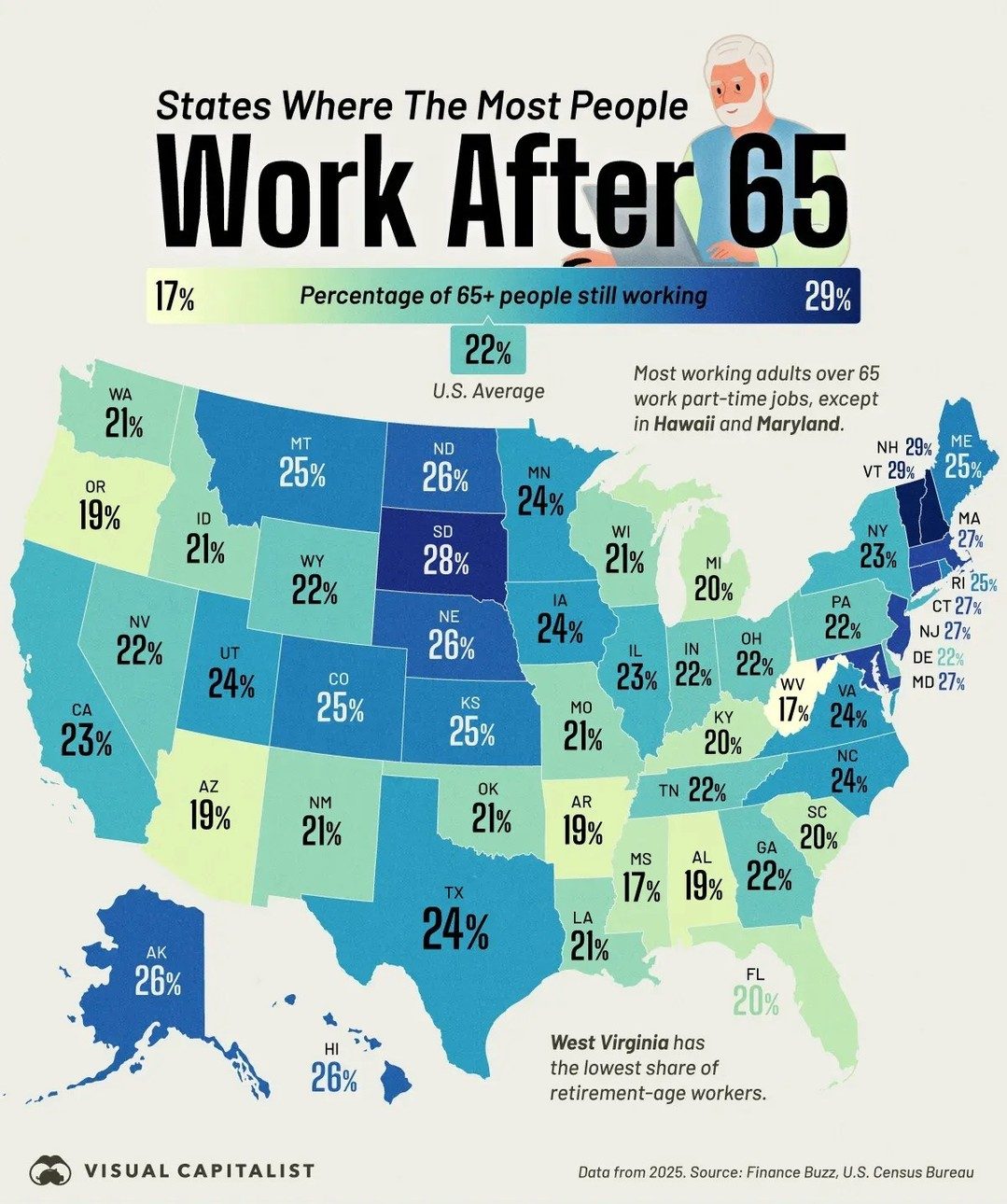
Work After 65 in America: A State-by-State Breakdown
Age is just a number, and for nearly one in four Americans aged 65 or older, that means continuing to work. This trend is particularly noticeable in states like Vermont and New Hampshire, where participation in the workforce for people over 65 reaches 28.6%. At the other end of the spectrum, West Virginia has the lowest participation with only 16.7%.
The reasons for working after 65 are varied, encompassing both financial necessity and personal fulfillment. Retirement is not always the golden age of leisure that society often portrays. Let's delve into why this trend is significant and how it varies across the country.
Why Work After 65?
There are several compelling reasons why older Americans choose to stay in the workforce beyond traditional retirement age. Financial stability is a significant driver: many older adults rely on their income to supplement Social Security and retirement savings. Additionally, healthcare costs and increasing longevity mean that seniors need to maintain financial stability for a longer period.
However, financial need alone doesn't tell the whole story. Many seniors choose to work because they find fulfillment and purpose in their careers. Aging workforces also bring valuable experience and skills to the table, contributing positively to companies and the broader economy.
State-by-State Variation
The map of workforce participation for those over 65 shows distinct regional patterns. States with high participation, such as Vermont and New Hampshire, benefit from a strong tourism sector, healthcare, and education fields that value experience. Conversely, West Virginia's lower participation can be attributed to its aging population and higher unemployment rates.
High Participation States: Vermont and New Hampshire
Vermont and New Hampshire share a robust workforce of older adults, with 28.6% of people aged 65 and above still employed. These states boast a high quality of life, strong healthcare systems, and a welcoming environment for older workers. The states' strong service sectors, including tourism and healthcare, provide ample opportunities for part-time and flexible work arrangements suitable for older adults.
Low Participation States: West Virginia
West Virginia stands out with the lowest participation rate of 16.7%. Factors contributing to this include a declining population, high unemployment rates, and an industrial economy that may offer fewer part-time or flexible opportunities. The state's aging population and economic challenges likely influence these trends.
Factors Influencing Workforce Participation
Economic Factors
Economic conditions play a crucial role in post-65 workforce participation. States with strong economies and higher median incomes often see a higher proportion of older adults in the workforce. These regions typically offer better job opportunities, higher wages, and more flexible work arrangements, making it appealing for older adults to continue working.
Healthcare and Wellness
Affordable access to healthcare is another significant factor. States with robust healthcare systems and lower healthcare costs enable older adults to stay active and healthy, thus facilitating continued employment. Additionally, the availability of preventive healthcare services and wellness programs can support an active and productive post-retirement phase.
Social and Cultural Norms
Social and cultural attitudes toward aging and retirement also impact workforce participation. In regions where working after 65 is culturally more acceptable, older adults are more likely to stay employed. Conversely, in areas where retirement is seen as a strict milestone, the participation rate may be lower.
Practical Tips for Older Adults Considering Work
Planning to continue working after 65 involves careful consideration and preparation. Here are some practical tips:
Assess Financial Needs
Evaluate your financial situation to determine if continued employment is necessary for financial stability. This includes reviewing savings, retirement plans, and potential healthcare costs. Applying for part-time work can be a viable option to supplement income without the full-time commitment.
Update Skills
Consider updating your skills to stay relevant in the job market. Many employers value experience, but technical skills and familiarity with new technologies can make a significant difference. Online courses, workshops, and certificates can help enhance your employability.
Leverage Networks
Networking is essential, regardless of age. Engage with professional associations, alumni groups, and community organizations. These networks can provide valuable job leads and support.
Important Takeaways
For older adults, staying in the workforce can have multiple benefits. States like Vermont and New Hampshire show that with the right mix of economic stability, social support, and healthcare, older adults can thrive in the workforce. Understanding state-specific data and trends can provide valuable insights for policymakers and individuals planning their post-65 years.
Conclusion
The trend of older Americans continuing to work after 65 is a multifaceted issue influenced by economic conditions, healthcare, and social norms. States like Vermont and New Hampshire lead the way, while others like West Virginia face unique challenges. For those considering work after 65, assessing financial needs, updating skills, and leveraging networks can pave the way for ongoing employment and fulfillment.
Watch the Reel
Questions readers ask
Which states have the highest senior workforce participation rates?
Vermont and New Hampshire top the list with 28.6% of their residents aged 65 and older still working. Other states with high participation rates include Oregon, Colorado, and Alaska, all exceeding 25%.
What are some reasons why seniors choose to work past 65?
Seniors choose to work past 65 for a variety of reasons, including financial need, desire for personal fulfillment, and staying engaged with their communities. Some seniors may also work part-time to supplement retirement income or health benefits.
How do state senior employment rates vary across the USA?
State senior employment rates vary significantly. For instance, West Virginia has the lowest participation rate at 16.7%, while Vermont and New Hampshire have the highest at 28.6%. This variation is due to factors like regional job opportunities and the cost of living.
What trends are observed in senior workforce participation across the country?
One notable trend is the increase in senior workforce participation, with nearly 25% of Americans aged 65 and older continuing to work. This trend is influenced by both economic factors, such as financial need, and personal preferences for staying active and engaged.
Are there specific industries that employ more seniors than others?
While the provided article doesn't specify industries, typically, seniors are more likely to be found in roles that offer flexibility, such as part-time or freelance work. Industries like healthcare, retail, and professional services often have opportunities for seniors to continue working.
How can seniors find job opportunities in their state?
Seniors looking for job opportunities in their state can utilize various resources, including state employment offices, online job boards, and local community centers. Networking with former colleagues and joining professional organizations can also provide valuable leads.
Recent articles
Fresh deep dives from the latest Reels we unpacked.




Comments
Be the first to comment.