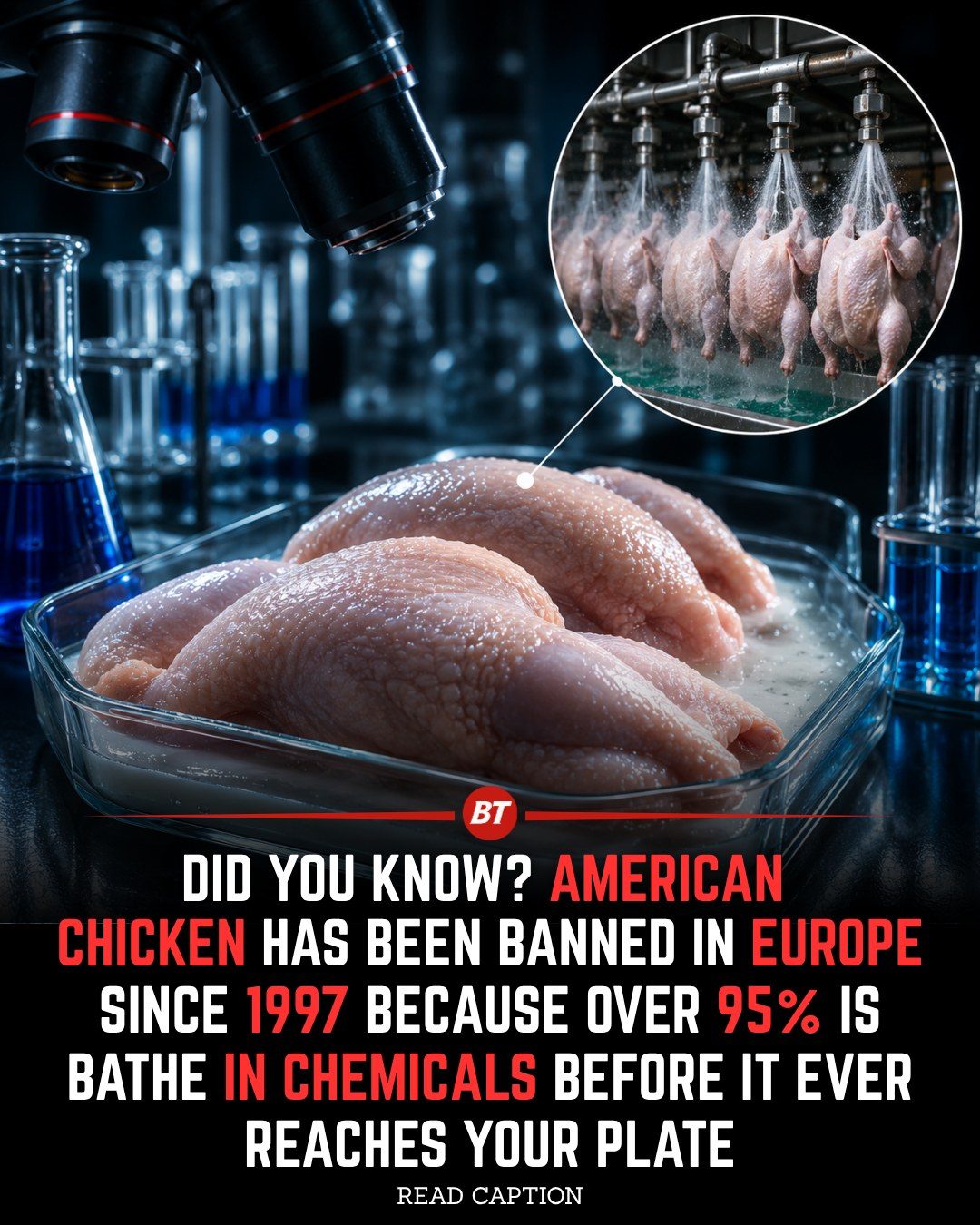
Raw chicken is a staple in many households, but have you ever wondered about the chemicals and sanitary practices involved in its processing? Since 1997, the European Union has restricted the import of most U.S. poultry treated with antimicrobial chemical rinses. This has sparked a longstanding debate about food safety and the use of chemicals in chicken production.
Why This Matters
The European Union's decision to ban the import of U.S. poultry treated with antimicrobial rinses highlights a critical difference in food safety philosophies. These practices involve washing chicken carcasses with solutions like chlorine dioxide or peracetic acid to reduce pathogens such as Salmonella and Campylobacter. The goal is to ensure that the poultry is safe for consumption by the time it reaches consumers. However, the EU takes a different approach, emphasizing contamination prevention throughout the entire production chain, from farming to packaging. This approach has significant implications for both consumers and producers.
Chicken Processing in the United States
In the United States, the use of antimicrobial rinses is a common practice. The U.S. Food and Drug Administration (FDA) and the U.S. Department of Agriculture (USDA) approve these treatments, stating that they are safe when used according to regulations. These treatments are designed to remove harmful bacteria, ensuring that the chicken is safe for consumption. The process typically involves washing chicken carcasses with solutions such as chlorine dioxide, peracetic acid, or other approved antimicrobial rinses.
The European Union's Stance
The European Union, on the other hand, has a different perspective. Rather than relying on antimicrobial rinses at the end of the processing line, the EU emphasizes preventing contamination throughout the entire production chain. This approach includes strict regulations on farming practices, slaughter procedures, and packaging to ensure that the chicken is safe from the outset. As a result, poultry treated with these rinses has generally not been permitted for sale in the EU since 1997.
The Debate
The debate between the U.S. and EU approaches to food safety is not about the toxicity of the rinses but about the philosophy behind achieving food safety. The U.S. approach focuses on using antimicrobial rinses to reduce pathogens, while the EU emphasizes prevention throughout the production process. Both methods aim to ensure food safety, but they employ different strategies to achieve this goal.
Practical Tips for Consumers
Regardless of where your chicken comes from, there are several practical steps you can take to ensure food safety:
Cooking to the Right Temperature
Always cook chicken to an internal temperature of 165°F (74°C). This kills any bacteria that may be present, ensuring that the chicken is safe to eat.
Avoiding Cross-Contamination
Be cautious when handling raw chicken to avoid cross-contamination. Use separate cutting boards and utensils for raw and cooked food, and wash your hands thoroughly after handling raw chicken.
Choosing Trusted Producers
When possible, choose poultry from producers whose farming and processing practices align with your preferences. Look for producers that prioritize food safety and transparency in their methods.
Important Takeaways
The use of antimicrobial rinses in chicken processing is a contentious issue, with different approaches taken by the U.S. and the EU. Understanding these differences can help consumers make informed decisions about the poultry they purchase.
Conclusion
Food safety is a critical concern for consumers, and the debate between the U.S. and EU approaches to chicken processing highlights the importance of understanding the methods used in poultry production. Whether you prefer the U.S. approach of using antimicrobial rinses or the EU's emphasis on prevention, taking practical steps to ensure food safety at home is essential. By cooking chicken to the right temperature, avoiding cross-contamination, and choosing trusted producers, you can help ensure that your chicken is safe and enjoyable to eat.
Watch the Reel
Questions readers ask
What specific chemicals are used in U.S. poultry processing that Europe objects to?
Europe has concerns about U.S. poultry treated with antimicrobial rinses, notably chlorine dioxide and peracetic acid. These chemicals are used to reduce pathogens such as Salmonella and Campylobacter. This is a key reason for the European ban on U.S. poultry imports.
When did the European Union first ban U.S. poultry imports?
The European Union first banned most U.S. poultry imports in 1997. This ban is primarily due to concerns about the use of antimicrobial chemical rinses in U.S. poultry processing.
What are the main differences between U.S. and EU food safety philosophies regarding poultry?
The U.S. and EU have differing food safety approaches. The U.S. focuses on post-processing treatments to ensure safety, while Europe emphasizes prevention and avoiding chemical treatments.
Are there any exemptions to the European ban on U.S. poultry?
The EU ban on U.S. poultry is quite comprehensive, but there are some exemptions. For instance, certain processed poultry products, like canned or cooked chicken, may be allowed under specific conditions.
How do these antimicrobial rinses work in the poultry processing?
Antimicrobial rinses, such as chlorine dioxide and peracetic acid, are applied to chicken carcasses during processing. Their purpose is to kill or reduce bacteria and other pathogens, ensuring the poultry is safe to consume before it reaches the consumer.
What are the potential health risks associated with these antimicrobial rinses?
The EU has concerns about the potential health risks of consuming poultry treated with these chemicals. While the U.S. maintains these chemicals are safe, the EU prefers prevention methods to avoid potential long-term health impacts. Additionally, there are environmental concerns related to the disposal of these chemicals.
Have there been any efforts to resolve the disagreement between the U.S. and the EU on this issue?
Over the years, there have been negotiations and discussions between the U.S. and the EU to address these concerns. However, a resolution has not been reached. The U.S. has proposed alternatives and data to support the safety of these treatments, but the EU has yet to lift the ban.
Recent articles
Fresh deep dives from the latest Reels we unpacked.




Comments
Be the first to comment.