Iconic U.S. Brands Now Foreign-Owned
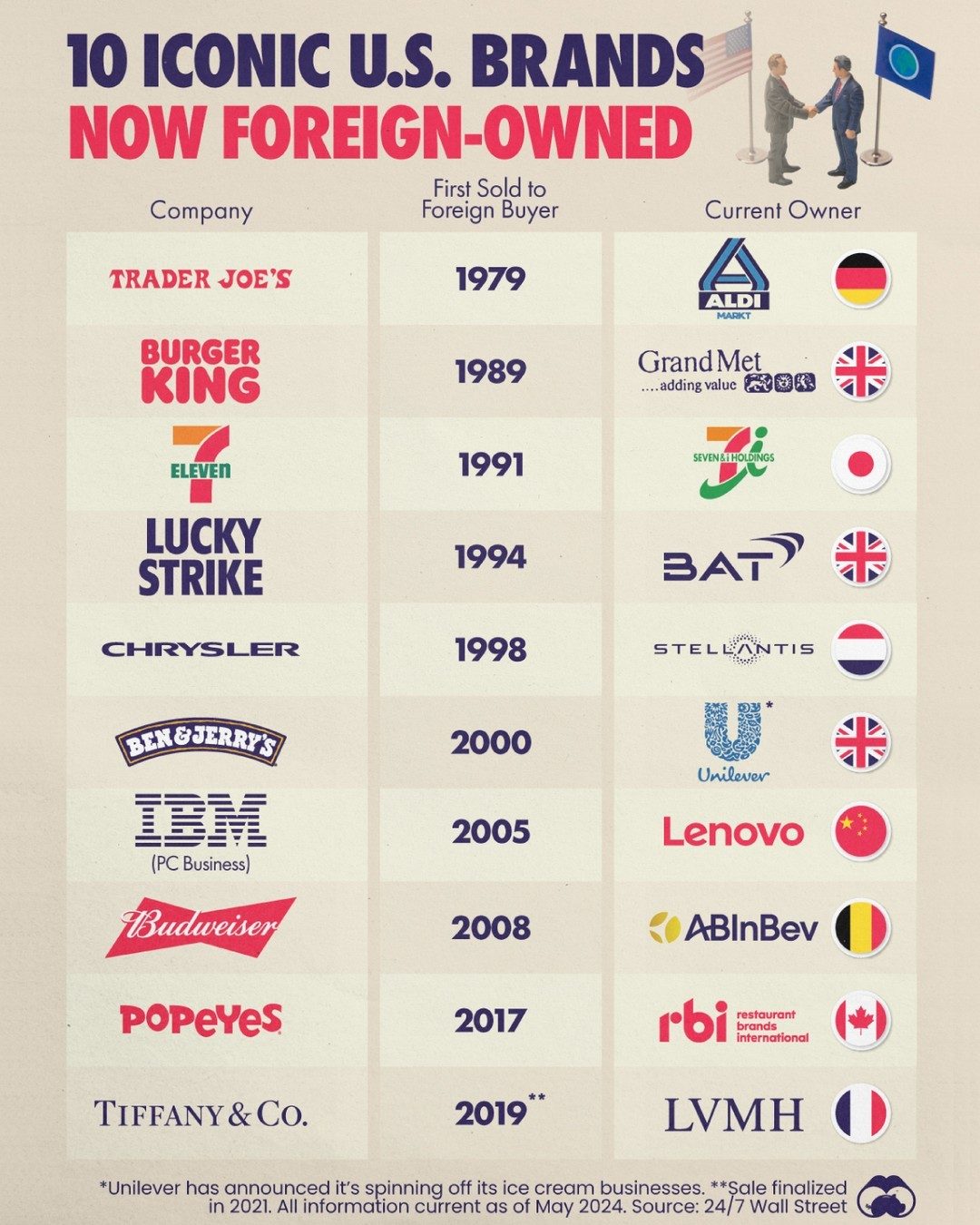
The landscape of American business has evolved significantly over the years, with many iconic U.S. brands now under foreign ownership. This shift has had profound implications for the global marketplace, influencing everything from product distribution to brand identity. The trend is particularly notable, with 70% of these brands owned by European companies. Tiffany & Co., for instance, joined the French luxury conglomerate LVMH in 2019, marking a significant shift in the ownership of high-end American brands.
Context / Why this matters
Understanding the foreign ownership of these brands is essential for grasping the broader economic and cultural dynamics at play. It highlights the interconnected nature of the global economy, where the lines between domestic and international business are increasingly blurred. Additionally, it underscores the importance of strategic acquisitions in the corporate world, where foreign companies often leverage their resources to expand into new markets and gain a competitive edge.
Main discussion
Historical Background
The trend of foreign ownership of iconic American brands began as early as 1979 when Trader Joe's, a beloved grocery chain, was acquired by ALDI. This acquisition was followed by several others, including Burger King's sale to Grand Met in 1989 and Seven-Eleven's acquisition by Seven & I Holdings in 1991. These early acquisitions set the stage for a more globalized business landscape, where American brands were increasingly seen as valuable assets for foreign companies seeking to expand their reach.
Major Acquisitions
Trader Joe's and ALDI
Trader Joe's, known for its unique grocery offerings and customer loyalty, was acquired by ALDI in 1979. This acquisition allowed ALDI to enter the U.S. market and establish a strong presence, leveraging Trader Joe's brand recognition and distribution network. Through this, ALDI could better compete with other major grocery retailers, such as Walmart and Kroger.
Burger King and Grand Met
Burger King, another iconic American brand, was acquired by Grand Met in 1989. This acquisition marked a significant expansion for Grand Met, which later became Diageo, a global beverage conglomerate. Burger King's strong brand identity and extensive franchise network provided Grand Met with a robust platform for growth in the fast-food industry.
Seven-Eleven and Seven & I Holdings
Seven-Eleven, a staple in convenience store culture, was acquired by Seven & I Holdings in 1991. This acquisition allowed Seven & I Holdings to expand its global footprint, leveraging Seven-Eleven's vast network of convenience stores. The acquisition also facilitated the integration of Seven-Eleven's operations with Seven & I Holdings' existing business, creating a more cohesive and efficient retail network.
Other Notable Acquisitions
Several other notable acquisitions have shaped the landscape of American business. Lucky Strike, a well-known cigarette brand, was acquired by BAT (British American Tobacco) in 1994. Chrysler, an iconic American automaker, was acquired by Stellantis in 1998, reflecting a broader trend of foreign ownership in the automotive industry. Ben & Jerry's, a beloved ice cream brand, was acquired by Unilever in 2000, and IBM's personal computer division was acquired by Lenovo in 2005. Budweiser, an iconic American beer brand, was acquired by ABInBev in 2008, and Popeyes, a popular fast-food chain, was acquired by RBI (Restaurant Brands International) in 2017. Finally, Tiffany & Co., a luxury jewelry brand, was acquired by LVMH in 2019, marking a significant shift in the ownership of high-end American brands.
Current Trends and Implications
The trend of foreign ownership of iconic American brands is likely to continue, driven by several factors. One of the key drivers is the search for growth opportunities in mature markets. Foreign companies often acquire established American brands to gain a foothold in the U.S. market, leveraging the brand's existing customer base and distribution network.
Another significant factor is the desire for innovation and diversification. Foreign companies often acquire American brands to gain access to innovative technologies, products, and processes. This allows them to diversify their portfolios and stay competitive in a rapidly changing market.
Moreover, foreign ownership can also have cultural implications. When an iconic American brand is acquired by a foreign company, it can lead to changes in the brand's identity and image. For example, some brands may undergo rebranding efforts to appeal to a global audience, while others may maintain their American heritage while benefiting from foreign investment and expertise.
Finally, foreign ownership can also have economic implications. It can lead to job creation, investment in infrastructure, and increased economic activity. However, it can also lead to concerns about job losses, outsourcing, and the erosion of American manufacturing.
Practical tips
For businesses and consumers alike, understanding the foreign ownership of iconic American brands can provide valuable insights. Here are some practical tips for navigating this complex landscape:
Research Brand Ownership
When considering a purchase or investment, it's essential to research the brand's ownership and history. This information can provide valuable context for understanding the brand's values, practices, and future direction.
Stay Informed
Stay informed about the latest trends and developments in the global business landscape. This includes keeping up with news and analysis on foreign acquisitions, mergers, and partnerships.
Assess the Impact
When an iconic American brand is acquired by a foreign company, it's essential to assess the potential impact on the brand's products, services, and customer experience. This includes evaluating changes in product quality, pricing, and availability.
Engage with the Community
Engage with the community of consumers, investors, and stakeholders who are interested in the brand's future. This can provide valuable insights and perspectives on the brand's direction and impact.
Important takeaways
The foreign ownership of iconic American brands is a complex and multifaceted issue with significant implications for the global marketplace. Understanding the trends, implications, and context of these acquisitions can provide valuable insights for businesses, consumers, and investors alike. By researching brand ownership, staying informed, assessing the impact, and engaging with the community, you can navigate this landscape more effectively and make informed decisions.
Conclusion
The landscape of American business is evolving, with many iconic brands now under foreign ownership. From Trader Joe's to Tiffany & Co., these acquisitions reflect a broader trend of globalization and strategic acquisitions. Whether you are a consumer, investor, or business owner, understanding this evolving landscape is crucial for navigating the modern market and making informed decisions.
Watch the Reel
Questions readers ask
What are some notable examples of American brands owned by foreign companies?
Many well-known American brands are now under foreign ownership. For instance, Tiffany & Co. is owned by LVMH, a French luxury conglomerate, and Burger King is owned by Restaurant Brands International, a Canadian multinational fast food holding company. Additionally, Unilever, a British multinational consumer goods company, owns several American brands.
Why are foreign companies acquiring American brands?
Foreign companies often acquire American brands to gain a competitive edge in new markets, expand their global footprint, and leverage the strong brand recognition and market presence of these iconic U.S. brands. These acquisitions also help foreign companies diversify their portfolios and tap into the lucrative American consumer market.
Which countries are most involved in the acquisition of American brands?
The trend of foreign acquisition of American brands is particularly notable among European companies, with 70% of these brands owned by European entities. This includes high-profile acquisitions by companies based in France, the United Kingdom, and other European nations.
Are there any benefits for American consumers from this trend?
The foreign acquisition of American brands can benefit consumers by introducing new products and services, enhancing product quality, and providing greater variety. Additionally, foreign ownership can lead to increased investment in marketing, distribution, and innovation, which can improve the overall consumer experience.
How does the foreign ownership of American brands impact the global marketplace?
The foreign ownership of American brands shapes the global marketplace by influencing product distribution, brand identity, and market strategies. It fosters a more interconnected global economy, where foreign companies leverage well-known American brands to expand their reach and influence.
What is the significance of the LVMH Tiffany acquisition?
The acquisition of Tiffany & Co. by LVMH, a French luxury conglomerate, marked a significant shift in the ownership of high-end American brands. This acquisition is a notable example of how foreign companies are strategically investing in iconic American brands to gain a competitive edge and expand their global presence.
What are the implications of foreign investment in U.S. brands for the American economy?
Foreign investment in U.S. brands can have several implications for the American economy. It can lead to job creation, increased competition, and greater innovation. However, it also raises questions about control over iconic American assets and the potential influence of foreign entities on domestic markets.
Recent articles
Fresh deep dives from the latest Reels we unpacked.




Comments
Be the first to comment.