America's Infrastructure Funding Gap
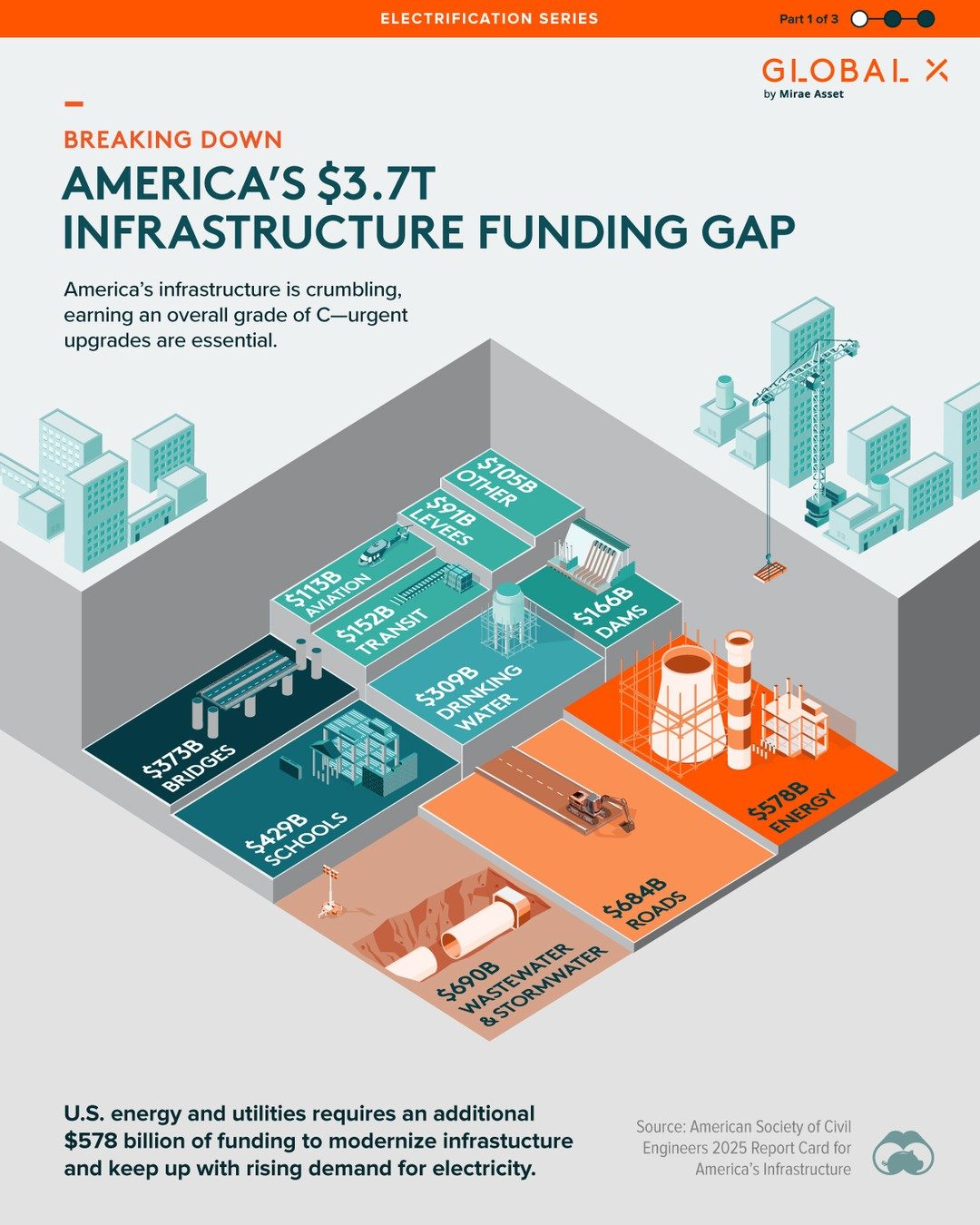
For years, there have been concerns in the U.S. about the surging demand for electricity and whether the current energy and utilities infrastructure can keep up. According to a recent analysis, the U.S. energy and utilities infrastructure requires $578 billion of funding to modernize infrastructure and keep up with rising demand. This is part of a larger, $3.7 trillion problem that spans multiple sectors, including bridges, transit, water, dams, schools, wastewater, stormwater, and roads. The funding gap is a critical issue that affects the daily lives of Americans and the future of the nation's infrastructure.
Why This Matters
The funding gap in America's infrastructure is not just about numbers; it's about the quality of life, economic growth, and national security. Infrastructure supports everything from daily commutes to the growing needs of data centers. Outdated or insufficient infrastructure can lead to increased costs, decreased efficiency, and reduced competitiveness in the global market. Additionally, the rising demand for electricity, driven by technological advancements and an increasing population, necessitates a robust and modernized energy and utilities infrastructure.
Main discussion
The Scope of the Funding Gap
The $3.7 trillion funding gap is substantial and affects various sectors. Here’s a breakdown of the needs:
- Bridges: $173 billion
- Transit: $152 billion
- Water: $309 billion
- Dams: $166 billion
- Schools: $737 billion
- Wastewater and Stormwater: $690 billion
- Roads: $578 billion
- Other Levels: $105 billion
These figures highlight the magnitude of the problem and the urgent need for investment. Each sector plays a crucial role in the overall infrastructure, and neglecting any one of them can have cascading effects on others.
The Energy and Utilities Sector
Energy and utilities are at the heart of modern society. With the rise of data centers and the increasing reliance on electricity, the need for a robust energy infrastructure is more critical than ever. The demand for electricity is surging, and the current infrastructure may not be able to keep up without significant investment.
The $578 billion needed for energy and utilities is part of the $3.7 trillion total. This investment is essential for modernizing the infrastructure, improving efficiency, and ensuring a reliable power supply. Data centers, in particular, are significant consumers of electricity, and their growing power needs necessitate a more robust and efficient energy infrastructure.
The Role of Mirai Asset
Mirai Asset, in partnership with various organizations, has been instrumental in highlighting the infrastructure funding gap. Their electrification series provides valuable insights into the challenges and opportunities in the energy and utilities sector. By breaking down the funding needs and the impact on various sectors, Mirai Asset offers a comprehensive view of the issue, helping stakeholders understand the urgency of the situation.
Practical Tips
Investing in infrastructure is a complex process that requires careful planning and execution. Here are some practical tips for addressing the funding gap:
1. Prioritize Critical Areas
Identify the most critical areas that need immediate attention. For example, roads and bridges are essential for economic activity, while water and wastewater infrastructure impacts public health. Prioritizing these areas can help maximize the impact of investments.
2. Leverage Public-Private Partnerships
Public-private partnerships can be a viable solution for bridging the funding gap. Private companies can bring in much-needed capital and expertise, while the government can provide regulatory support and ensure public interests are protected.
3. Implement Innovative Financing Models
Traditional financing models may not be sufficient to address the $3.7 trillion gap. Exploring innovative financing models, such as green bonds or infrastructure banks, can provide the necessary funds. Additionally, leveraging technology to enhance efficiency and reduce costs can help stretch the available resources.
4. Modernize Regulations
Outdated regulations can hinder progress and lead to inefficiencies. Modernizing regulations to encourage innovation and investment in infrastructure can help address the funding gap more effectively.
Important Takeaways
- The U.S. energy and utilities infrastructure needs $578 billion to modernize and meet rising electricity demand.
- The overall infrastructure funding gap is $3.7 trillion, affecting multiple sectors.
- Energy and utilities are critical for modern society, particularly with the growing power needs of data centers.
- The American Society of Civil Engineers 2025 Report Card for America’s Infrastructure provides valuable insights into the infrastructure funding gap.
- Addressing the funding gap requires innovative financing models, public-private partnerships, and modernized regulations.
- Modernizing infrastructure is essential for economic growth, public health, and national security.
Conclusion
The funding gap in America's infrastructure is a significant challenge that requires immediate attention. With $3.7 trillion needed across various sectors and an additional $578 billion specifically for energy and utilities, the situation is dire. However, with thoughtful planning, innovative solutions, and strategic investments, it is possible to address this gap and build a robust, modern infrastructure for the future. The insights from Mirai Asset and other organizations highlight the importance of this issue and provide a pathway for tackling it effectively. By prioritizing critical areas, leveraging public-private partnerships, implementing innovative financing models, and modernizing regulations, we can ensure that America's infrastructure is ready to meet the challenges of the 21st century.
Watch the Reel
Questions readers ask
What is the total infrastructure funding gap in the United States?
The total infrastructure funding gap in the U.S. is approximately $3.7 trillion. This encompassing figure covers various sectors, including energy, utilities, roads, bridges, transit, water, dams, and schools.
Why is there a funding gap in the U.S. infrastructure?
The funding gap arises due to the increasing demand for services and the aging of existing infrastructure. Modernizing these sectors to meet current and future needs requires significant investment, which has not been fully met.
Which sectors are most affected by the infrastructure funding gap?
Several sectors are notably affected, including energy and utilities, which require $578 billion alone. Other critical areas include roads, bridges, transit, water, dams, and schools, all of which face substantial funding shortfalls.
How does the infrastructure funding gap impact daily life?
The infrastructure funding gap can lead to increased costs and reduced efficiency in daily services. For instance, outdated energy infrastructure may result in power outages or higher electricity bills, while poor road conditions can lead to longer commutes and higher maintenance costs for vehicles.
What are the implications of the infrastructure funding gap for national security?
The infrastructure funding gap poses significant risks to national security. Aging and poorly maintained infrastructure can be vulnerable to failures or disruptions, which can have cascading effects on essential services and critical operations.
Related deep dives
Similar reads based on topic and creator.

Recent articles
Fresh deep dives from the latest Reels we unpacked.




Comments
Be the first to comment.