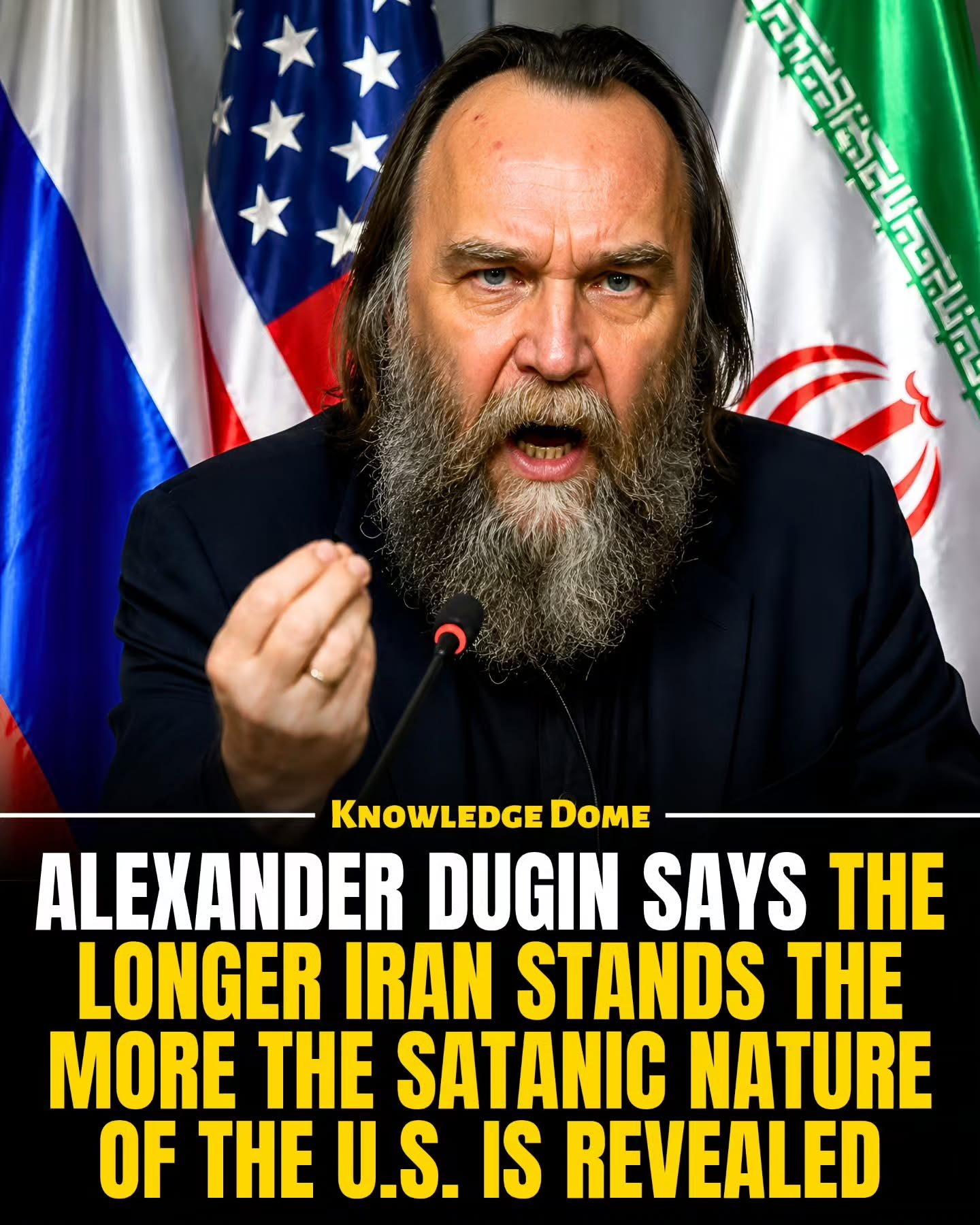
Alexander Dugin, a prominent Russian philosopher, offers a stark perspective on the geopolitical dynamics involving Iran and the United States. He argues that the prolonged resistance of Iran against Western pressure serves as a window into the true nature of U.S. foreign policy. According to Dugin, this conflict extends beyond mere politics; it is a battle for power, control, and the future trajectory of the world.
Context / Why this matters
Understanding Dugin's views provides insight into the complex relationships and power struggles at play in global politics. His passionate beliefs and strong rhetoric highlight the deep divisions that exist between the West and its critics, particularly regarding the influence of the United States and its allies.
Main discussion
The Concept of Power and Control
Dugin contends that the United States advocates for peace and order in public discourse, but its actions often contradict this rhetoric. This discrepancy is what he describes as the "satanic" nature of the U.S. When a country like Iran refuses to back down, the U.S. responds with escalated measures, revealing its true intentions.
Dugin’s take is grounded in the idea that power and control are not just political tools but fundamental elements of global governance. He believes that the U.S. and its Western allies seek to dictate the actions of other nations, enforcing a unipolar world order where their interests are paramount.
The Idea of a Multipolar World
Dugin envisions a multipolar world, where multiple power centers—including Russia, Iran, and other countries—stand together against Western dominance. This concept challenges the traditional view of geopolitics, suggesting a more balanced and diverse global political landscape.
In this multipolar framework, countries like Iran are not just protecting their national interests but also fighting for a broader cause: a world where decisions are not solely dictated by a single power or coalition of nations. Dugin’s philosophy aligns with his belief that resistance from countries like Iran forces the Western powers to reveal their true intentions and strategies.
Emotional and Strong Language
Dugin's language is characterized by its intensity and emotional charge. Terms like "satanic" are not mere hyperbole but reflect his deep-seated beliefs about the moral and ethical dimensions of geopolitical power struggles. His rhetoric aims to provoke thought and action, urging his audience to question the underlying motivations of Western foreign policy.
Practical tips
Navigating Geopolitical Commentary
For those interested in geopolitics, it is crucial to critically evaluate influential figures like Dugin. Here are some tips for navigating such commentary:
- Consider the Source: Understand the background and motivations of the commentator. Dugin's views are shaped by his Russian political and philosophical context, which influences his interpretations.
- Evaluate the Evidence: Look for substantiated claims and evidence to support the arguments presented. While Dugin’s rhetoric is compelling, it is essential to verify his assertions with independent research.
- Seek Multiple Perspectives: Engage with a variety of viewpoints to gain a comprehensive understanding of global politics. This includes both Western and non-Western perspectives to avoid bias.
Engaging in Constructive Dialogue
When discussing geopolitical issues, it’s important to foster a productive and respectful dialogue. Here are some ways to do that:
- Avoid Personal Attacks: Focus on the ideas and arguments rather than the individuals involved. This helps keep the conversation grounded and constructive.
- Encourage Questions: Ask clarifying questions to better understand the other person’s stance and to challenge assumptions.
- Be Open to Change: Be willing to modify your views based on new information and perspectives. This openness is key to fostering meaningful dialogue.
Important takeaways
- Power Dynamics: The conflict between Iran and the U.S. is not just political but also a struggle for power and control.
- True Intentions: Dugin suggests that the true nature of U.S. foreign policy is revealed through its responses to resistance.
- Multipolar World: Dugin envisions a world where multiple power centers challenge Western dominance, emphasizing Iran's role in this vision.
- Emotional Rhetoric: Dugin’s strong and emotive language aims to provoke thought and action, highlighting the moral and ethical dimensions of geopolitical power.
Conclusion
Dugin's perspective provides a unique lens through which to view the geopolitical tensions between Iran and the United States. His ideas about power, control, and the multipolar world offer a different narrative to the traditional Western-centric views. Engaging with such perspectives can deepen our understanding of global politics and the forces at play.
Watch the Reel
Questions readers ask
Who is Alexander Dugin and why is his perspective on Iran and the U.S. significant?
Alexander Dugin is a prominent Russian philosopher known for his strong views on geopolitics. His perspective is significant because it offers a critical view of the U.S.'s role in global affairs, particularly its interactions with Iran, and sheds light on the deeper power struggles at play.
What does Dugin mean by the 'true nature' of U.S. foreign policy?
Dugin suggests that the U.S. foreign policy, particularly in relation to Iran, is driven by a desire to enforce a unipolar world order. This means the U.S. seeks to dominate global politics and economics, often contradicting its public claims of promoting peace and order.
How does Iran's resistance against Western pressure influence Dugin's views?
According to Dugin, Iran's prolonged resistance against Western pressure exposes the U.S.'s true intentions and the underlying power dynamics in global politics. This resistance serves as a lens through which the broader struggle for global control can be examined.
What is the 'unipolar world order' that Dugin refers to?
The 'unipolar world order' is a global political system where a single power, in this case, the U.S., dominates and influences international relations, economics, and security. Dugin argues that the U.S. aims to maintain this order, despite public claims to the contrary.
How does Dugin's philosophy view the role of the U.S. in global politics?
Dugin's philosophy sees the U.S. as a dominant force seeking to impose its will on other nations. He believes that the U.S.'s actions, particularly towards Iran, reveal a satanic nature, driven by a desire for power and control rather than benevolent intentions.
What are the main points of Dugin's stance on Iranian resistance against Western pressure?
Dugin views Iran's resistance as a critical factor in exposing the U.S.'s global intentions. He argues that this resistance is not just a political conflict, but a broader struggle for power and control over the future direction of the world. Dugin also sees this as a battle against the U.S.'s unipolar aspirations.
What does Dugin's analysis reveal about the relationship between the U.S. and Iran?
Dugin's analysis suggests that the relationship between the U.S. and Iran is deeply rooted in a power struggle, where the U.S. seeks to enforce its dominance. He believes that the U.S. uses various means, including economic and political pressure, to control Iran and maintain its unipolar world order.
Recent articles
Fresh deep dives from the latest Reels we unpacked.




Comments
Be the first to comment.