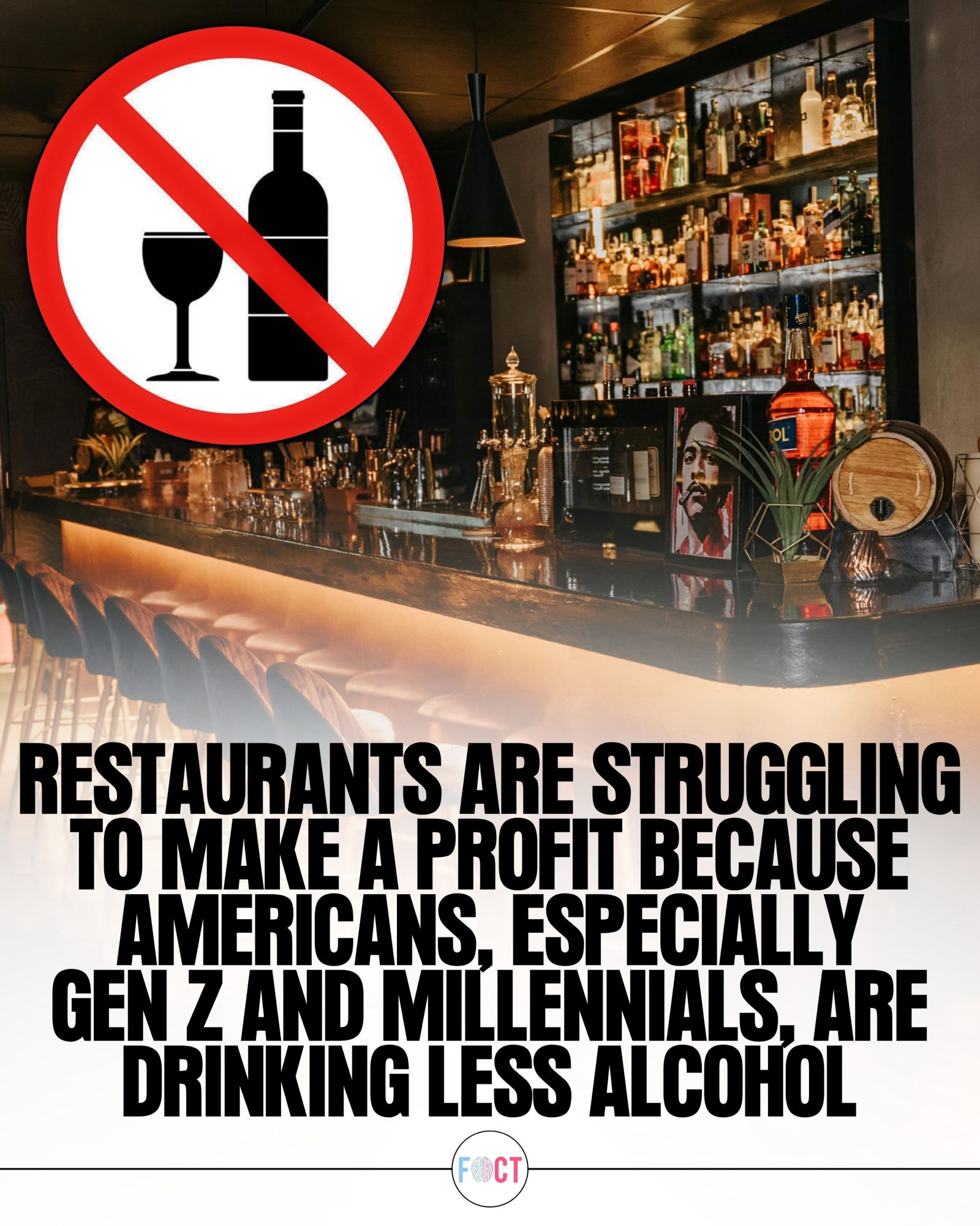
Restaurant Profitability Crisis in the United States
Restaurants across the United States are facing a significant profitability crisis due to declining alcohol sales, particularly among younger generations like Gen Z and millennials.
Why This Matters
Restaurants thrive on high-margin items that boost their overall profitability. For a long time, alcohol has been one of these key items. The shift in drinking habits among younger consumers is forcing restaurateurs to rethink their business models and adapt to changing consumer behaviors.
The Decline in Alcohol Consumption
Alcohol has long been a cornerstone of restaurant revenue, often carrying significantly higher margins than food. However, younger generations are drinking less alcohol. This trend is particularly pronounced among Gen Z and millennials.
Changing Consumer Habits
Data shows a clear shift in spending habits away from high-margin beverage sales. Younger consumers are increasingly opting for non-alcoholic beverages or simply skipping drinks altogether. This trend is not just a passing fad but a significant cultural shift that is impacting the bottom line of many restaurants.
Restaurant patrons are more health-conscious than ever before. The shift towards healthier lifestyles and reduced alcohol consumption is reflected in the declining sales of alcoholic beverages. This trend is particularly noticeable in restaurants and bars, where alcohol sales have historically been a major revenue stream.
Economic Implications
Restaurants are struggling to maintain profitability. While food traffic may remain steady or even increase, the loss of revenue from alcohol sales is significant. The profitability of a restaurant is closely tied to its ability to generate high-margin sales. With fewer customers ordering drinks, many establishments are finding it challenging to balance their books.
Challenges for Restaurant Owners
Many restaurants are finding it difficult to adapt to these changes. Alcoholic beverages are typically priced with higher margins, which means that a drop in alcohol sales directly impacts the overall profitability. This challenge is compounded by the fact that many restaurants have already optimized their operations around these high-margin sales.
Practical Tips
Restaurants can adapt to this shift in consumer behavior by exploring new strategies to boost profitability.
Diversify Revenue Streams
One effective approach is to diversify revenue streams. Instead of relying heavily on alcohol sales, restaurants can focus on other high-margin items such as specialty coffees, mocktails, or even high-quality non-alcoholic beverages.
Enhance Food Offerings
Another strategy is to enhance food offerings. By offering unique and high-margin food items, restaurants can attract a wider range of customers and boost overall revenue. This could include introducing new menu items, offering seasonal specials, or emphasizing healthier food options.
Optimize Operations
Efficient operations are crucial for maintaining profitability. This includes optimizing inventory management, reducing food waste, and enhancing staff training. By improving operational efficiency, restaurants can lower costs and maintain profitability even with reduced alcohol sales.
Leverage Technology
Technology can also play a significant role in adapting to changing consumer behaviors. For instance, using data analytics to understand customer preferences and trends can help restaurants tailor their offerings to meet demand. Additionally, online ordering systems and mobile apps can streamline operations and improve customer satisfaction.
Important Takeaways
The shift in alcohol consumption among younger generations is a significant challenge for the restaurant industry. However, by diversifying revenue streams, enhancing food offerings, optimizing operations, and leveraging technology, restaurants can adapt to this change and maintain profitability.
It's essential for restaurant owners to stay informed about changing consumer behaviors and adapt their strategies accordingly. This includes monitoring trends, understanding customer preferences, and continuously innovating to meet the evolving needs of their customers.
Conclusion
The profitability crisis in the restaurant industry is a real and pressing issue. By understanding the changing consumer behaviors and adapting their strategies, restaurants can navigate this challenge and continue to thrive. The key is to remain flexible, innovative, and customer-focused in the face of shifting trends and consumer preferences.
Watch the Reel
Questions readers ask
Why are U.S. restaurants experiencing a decline in profits?
U.S. restaurants are facing a profitability crisis due to a notable decline in alcohol sales. This shift is largely attributed to changing drinking habits among younger generations, such as Gen Z and millennials, who are consuming less alcohol than previous generations.
How has alcohol contributed to restaurant profitability in the past?
Alcohol has traditionally been a key driver of restaurant profitability due to its high margins. It often brings in more revenue than food, making it a crucial component of a restaurant's overall financial health.
What are the implications of younger generations drinking less alcohol?
The trend of younger consumers drinking less alcohol poses a significant challenge for restaurants. As these generations form a larger portion of the customer base, restaurants are seeing a decrease in alcohol sales, which can lead to reduced overall profits.
How are restaurants adapting to the decline in alcohol sales?
In response to the decline in alcohol sales, many restaurant owners are rethinking their business models. This includes exploring alternative high-margin items, adjusting menus, and finding new ways to attract and retain customers who are less likely to consume alcohol.
What can restaurants do to mitigate the impact of declining alcohol sales?
Restaurants can mitigate the impact of declining alcohol sales by focusing on enhancing their food offerings, providing more non-alcoholic beverage options, and creating experiences that attract a wider range of customers. Additionally, optimizing operational efficiencies can help maintain profitability.
How do younger generation drinking habits compare to previous generations?
Younger generations, particularly millennials and Gen Z, are drinking less alcohol compared to previous generations. This shift is evident in their lower consumption rates and preference for non-alcoholic beverages, which is a notable change from the drinking habits of older generations.
What trends are driving the change in alcohol consumption in the U.S.?
Several trends are driving the change in alcohol consumption in the U.S., including a growing emphasis on health and wellness, increased awareness of the effects of alcohol, and a cultural shift towards more mindful drinking habits. These factors are contributing to the overall decline in alcohol sales.
Related deep dives
Similar reads based on topic and creator.




Recent articles
Fresh deep dives from the latest Reels we unpacked.




Comments
Be the first to comment.