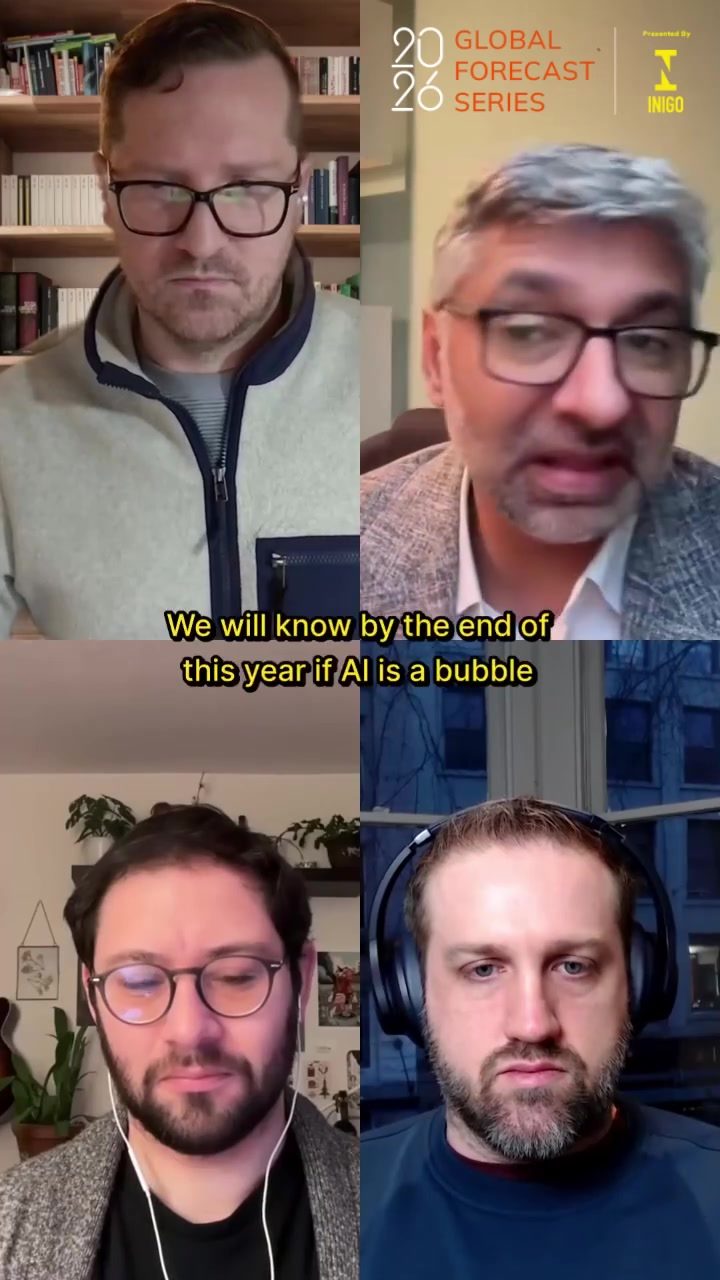
Forecasting AI: Will the Boom Continue or Is a Bust Imminent?
Artificial Intelligence (AI) has undeniably been a driving force in the tech industry and global markets. As we approach 2026, the question on many minds is whether the AI surge is a lasting transformation or a bubble waiting to burst. Economic expert Mo Tanweer, associated with INIGO, delves into this critical issue, providing insights that are crucial for understanding the future of AI.
Context: Why This Matters
The implications of AI's continued growth or a potential bust are vast. For investors, understanding whether AI is a sustainable investment or a fleeting trend can significantly impact their portfolios. For businesses, recognizing the longevity of AI could influence strategic planning and resource allocation. Meanwhile, policymakers need clarity to develop regulations that support innovation without risking economic stability.
Economic Interdependence
One of the most compelling arguments for AI's resilience is its integration into the broader economy. Without substantial investment in AI, the stock market boom in the US last year could not have happened. The US economy has essentially bet on AI, and its influence is deeply embedded in various sectors.
This bet on AI raises a critical question: Was the recent success due to luck, or is it a sign of economic resilience? The distinction between luck and resilience is crucial. If the boom was merely a stroke of luck, the risk of a bubble bursting is higher. However, if it reflects resilience, the AI surge could be a lasting transformation.
Evaluating AI's Sustainability
To determine whether AI will continue to boom or bust, several factors must be considered:
Market Dynamics
The market dynamics surrounding AI are complex. Investors have poured significant capital into AI, indicating confidence in its potential. However, the market's volatility means that this confidence could waver if AI technologies fail to deliver on their promises.
Technological Advancements
Technological advancements are a key indicator of AI's sustainability. Continuous innovation in AI algorithms, hardware, and applications can sustain growth. Conversely, stagnation in technological development could lead to a bust.
Regulatory Environment
The regulatory environment plays a pivotal role in shaping AI's future. Governments worldwide are grappling with how to regulate AI to ensure ethical use and protect consumers. Effective regulation can foster trust and ensure AI's long-term viability, while overly restrictive regulations could stifle innovation.
Business Adoption
The widespread adoption of AI by businesses is another critical factor. Companies that integrate AI into their operations are likely to see improved efficiency and profitability, driving further investment and innovation. Conversely, if businesses are hesitant to adopt AI, the sector could face a slowdown.
Global Economic Trends
Global economic trends also influence AI's trajectory. Economic stability and growth in key markets can support AI's continued boom. Conversely, economic downturns could lead to reduced investment and a potential bust.
Practical Tips for Navigating the AI Landscape
Stay Informed
Keep abreast of the latest developments in AI technology, market trends, and regulatory changes. Attending industry conferences, reading reports from reputable sources, and engaging with experts can provide valuable insights.
Diversify Investments
If you are an investor, consider diversifying your portfolio to mitigate risks. While AI offers significant opportunities, it is essential to balance your investments across different sectors to protect against potential downturns.
Foster Innovation
For businesses, fostering a culture of innovation is crucial. Encourage experimentation and investment in AI to stay ahead of the curve. Collaboration with academic institutions and research organizations can drive innovation and ensure your business remains competitive.
Monitor Market Signals
Stay vigilant for market signals that could indicate a shift in AI's trajectory. Changes in investment flows, market sentiment, and technological advancements can provide early warnings of potential disruptions.
Important Takeaways
The future of AI is complex and multifaceted. While there are strong indications that AI will continue to thrive, the risk of a bubble bursting remains. Economic experts like Mo Tanweer at INIGO emphasize the need for continuous evaluation and strategic planning. Investors and businesses must stay informed, diversify their portfolios, foster innovation, and monitor market signals to navigate the AI landscape effectively.
Conclusion
In 2026, we will have a clearer picture of whether AI is a lasting transformation or a bubble waiting to pop. The resilience of the technology and the broader economic context will play crucial roles in determining its future. Understanding the dynamics at play and being prepared for potential shifts will be vital for investors, businesses, and policymakers alike. By staying informed and strategic, stakeholders can navigate the complexities of the AI landscape and position themselves for success.
Watch the Reel
Questions readers ask
What are the signs that AI might be a bubble?
Some indicators of a potential AI bubble include over-hyped expectations, excessive venture capital investment despite slim profit margins, and an influx of startups with similar AI-focused products. Rapid price inflation of AI-related stocks and a surge in AI job postings across various sectors may also signal a bubble.
How can investors assess the sustainability of AI as an investment?
Investors should consider the long-term business models of AI companies, the diversity of AI applications in various industries, and the potential for AI to drive cost savings and revenue growth. Additionally, looking at the fundamentals of AI-related stocks and the broader economic impact of AI can provide insights into its sustainability.
What does the global AI trend analysis suggest about the future of AI by 2026?
Global AI trend analysis suggests that AI will continue to grow, with increased adoption in industries like healthcare, finance, and manufacturing. However, the pace of growth may vary, and some areas could experience consolidation or correction, especially if expectations outpace real-world applications.
How might an AI bust affect businesses and policymakers?
An AI bust could lead to significant job losses, particularly in tech and related sectors. It could also result in a loss of investor confidence, leading to reduced funding for AI startups and projects. Policymakers might need to respond to the economic fallout, potentially by introducing new regulations or incentives to stabilize the market.
What are the implications of an AI bubble for the tech industry?
If an AI bubble were to burst, the tech industry could see a significant downturn, with many AI-focused companies struggling to survive. This could lead to a period of belt-tightening, layoffs, and consolidation, similar to previous tech bubbles. However, it could also pave the way for more sustainable growth in the long run.
What factors contribute to the economic impact of AI?
The economic impact of AI is influenced by its ability to increase productivity, create new jobs, and drive innovation. AI can also lead to cost savings and revenue growth for businesses, contributing to overall economic growth. However, the economic impact could be negatively affected by a potential AI bust or misalignment between AI capabilities and market needs.
Related deep dives
Similar reads based on topic and creator.


Recent articles
Fresh deep dives from the latest Reels we unpacked.




Comments
Be the first to comment.