AI Investment: U.S. vs. EU
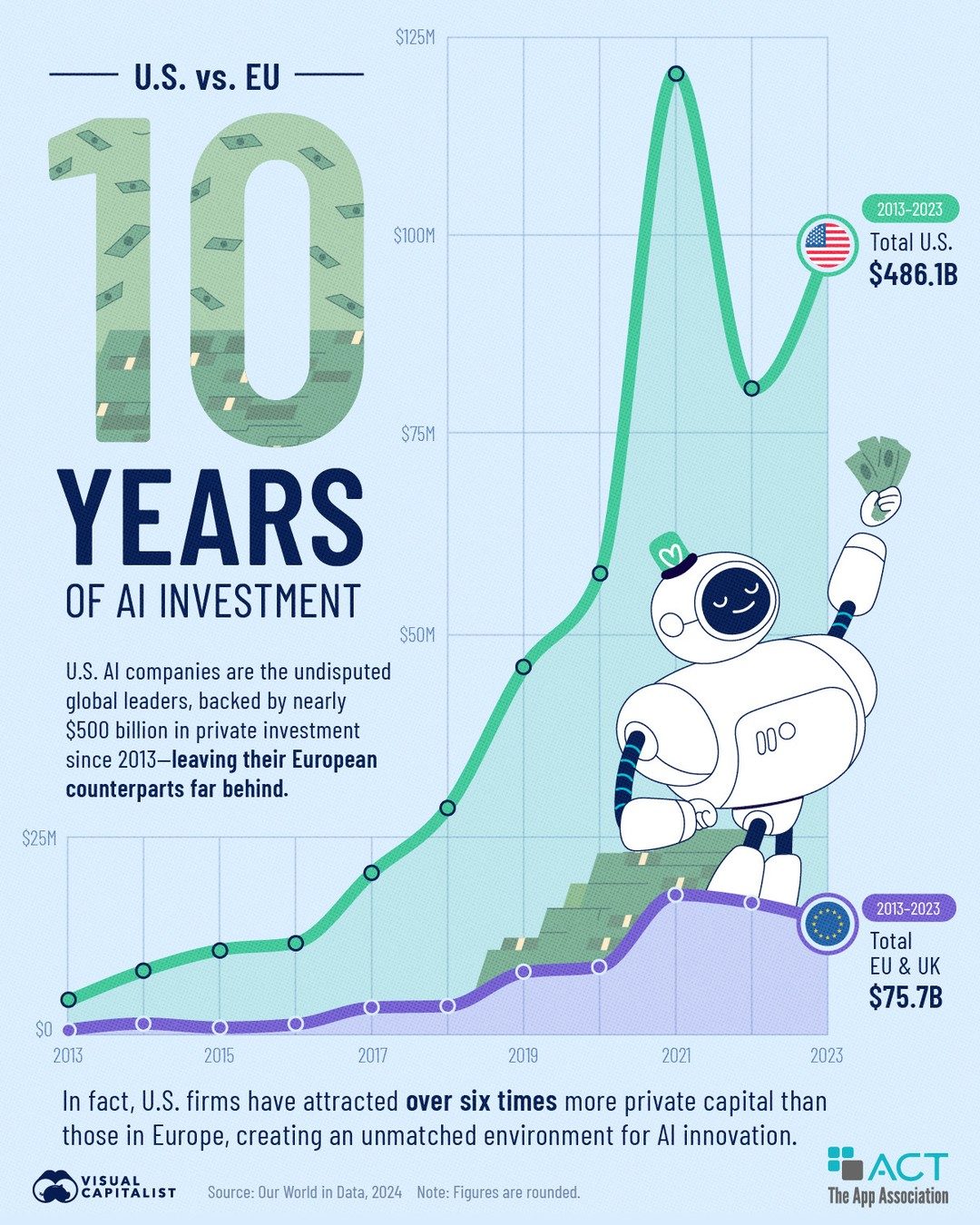
The landscape of AI investment has seen significant disparities between the U.S. and Europe over the past decade. From 2013 to 2023, U.S. AI companies have attracted over six times more private capital than their European counterparts, creating a robust environment for innovation. This stark contrast has implications for both regions' technological advancements and economic growth.
Context: Why This Matters
AI investment is a critical indicator of a region's commitment to technological progress. The amount of capital poured into AI startups and companies influences the pace of innovation, job creation, and economic competitiveness. Understanding the disparities between the U.S. and EU in this arena provides insights into global tech trends and future economic shifts.
Main Discussion
The Decade of AI Investment
Over the past decade, the U.S. has emerged as the undisputed global leader in AI investment. Since 2013, U.S. firms have attracted nearly $500 billion in private capital, creating a fertile ground for AI innovation. This investment has not only fueled the development of cutting-edge technologies but has also positioned the U.S. as a hub for AI research and development.
U.S. vs. EU: The Investment Gap
The investment gap between the U.S. and the EU is substantial. While the U.S. has seen $486.1 billion in AI investment, the EU and UK combined have attracted only $75.7 billion. This sixfold difference highlights the disparity in private sector confidence and governmental support for AI initiatives in both regions.
Factors Driving the Investment Disparity
Several factors contribute to the significant investment gap between the U.S. and the EU. These include:
-
Regulatory Environment: The regulatory frameworks in the U.S. are often seen as more favorable for tech startups and innovative companies. The EU, on the other hand, has stricter data protection laws and regulatory hurdles that can deter investment.
-
Policy and Funding: The U.S. government has implemented various policies and funding initiatives to support AI research and development. Programs like the National AI Research and Development Strategic Plan and substantial federal research grants have played a crucial role in attracting private capital.
-
Startup Ecosystem: The U.S. boasts a robust startup ecosystem with Silicon Valley as a global epicenter for innovation. This ecosystem provides a supportive environment for AI startups, including access to venture capital, talent, and market opportunities. The EU, while making strides, has yet to match this level of supporting infrastructure.
Practical Tips
For those interested in investing in or advancing AI technology, consider the following tips:
For Investors
-
Conduct Thorough Research: Understand the regulatory environment and policies in both the U.S. and EU before making investment decisions. Policy changes can significantly impact the market dynamics.
-
Look for Synergies: Identify synergies between tech hubs in the U.S. and EU. Collaborations can provide mutual benefits and foster innovation.
-
Diversify Your Portfolio: Diversifying investments across both regions can hedge against market risks and take advantage of growth opportunities in both the U.S. and EU.
For Entrepreneurs
-
Leverage Grant Programs: Utilize government grants and funding initiatives to support your AI projects. Both the U.S. and EU have various programs aimed at fostering innovation.
-
Build Strong Partnerships: Form strategic partnerships with established companies in the AI sector. These collaborations can provide access to resources, expertise, and market opportunities.
-
Engage with Policy Makers: Advocate for favorable policies and regulations that can support AI development and attract private capital.
Important Takeaways
The significant investment gap between the U.S. and the EU in AI highlights the importance of regulatory environments, policy support, and a robust startup ecosystem. For those involved in AI, whether as investors or entrepreneurs, understanding these factors can provide valuable insights and strategic advantages.
Conclusion
The disparity in AI investment between the U.S. and the EU is a critical aspect of the global tech landscape. As the U.S. continues to lead with substantial private capital investments, the EU faces the challenge of bridging this gap through policy reforms and supportive ecosystems. By understanding the underlying factors and leveraging practical tips, stakeholders can navigate this competitive landscape more effectively.
Watch the Reel
Questions readers ask
Why is there a significant difference in AI investment between the U.S. and Europe?
The primary factors driving the disparity in AI investment between the U.S. and Europe are the regulatory environments and the level of governmental support for AI initiatives. The U.S. has implemented policies that foster a more favorable climate for AI investment, leading to a considerable influx of private capital into AI research and development.
How much more private capital has the U.S. attracted in AI compared to Europe?
From 2013 to 2023, the U.S. has attracted over six times more private capital into AI than Europe. This significant difference highlights the U.S.'s leading position in AI investment and innovation.
What impact does AI investment have on a region's technological progress?
AI investment is a crucial driver of technological progress. Regions with higher AI investment tend to see faster innovation, increased job opportunities, and enhanced economic competitiveness. This investment fuels the development of new technologies and solutions, positioning the region as a leader in the global tech landscape.
How does the regulatory environment affect AI investment?
A favorable regulatory environment can attract more investment by providing clear guidelines, reducing uncertainty, and creating opportunities for growth. Conversely, stringent or unclear regulations can deter investors, leading to lower AI investment and slower technological advancement.
What role does governmental support play in AI investment?
Governmental support is essential for fostering AI investment. Governments can provide direct funding, tax incentives, and research grants, which encourage both public and private sector investments in AI. Moreover, governmental support can create an ecosystem that promotes innovation and attracts more capital.
What are the potential consequences of the AI investment disparity between the U.S. and Europe?
The AI investment disparity between the U.S. and Europe may result in the U.S. maintaining its lead in AI innovation and technological advancements. Europe, on the other hand, might face challenges in keeping pace with AI developments, potentially impacting its economic competitiveness and job market.
What can Europe do to bridge the AI investment gap with the U.S.?
To narrow the AI investment gap, Europe could focus on creating a more favorable regulatory environment, increasing governmental support for AI initiatives, and fostering public-private partnerships. By doing so, Europe can attract more private capital and stimulate AI innovation, enhancing its competitiveness in the global AI landscape.
Related deep dives
Similar reads based on topic and creator.


Recent articles
Fresh deep dives from the latest Reels we unpacked.




Comments
Be the first to comment.