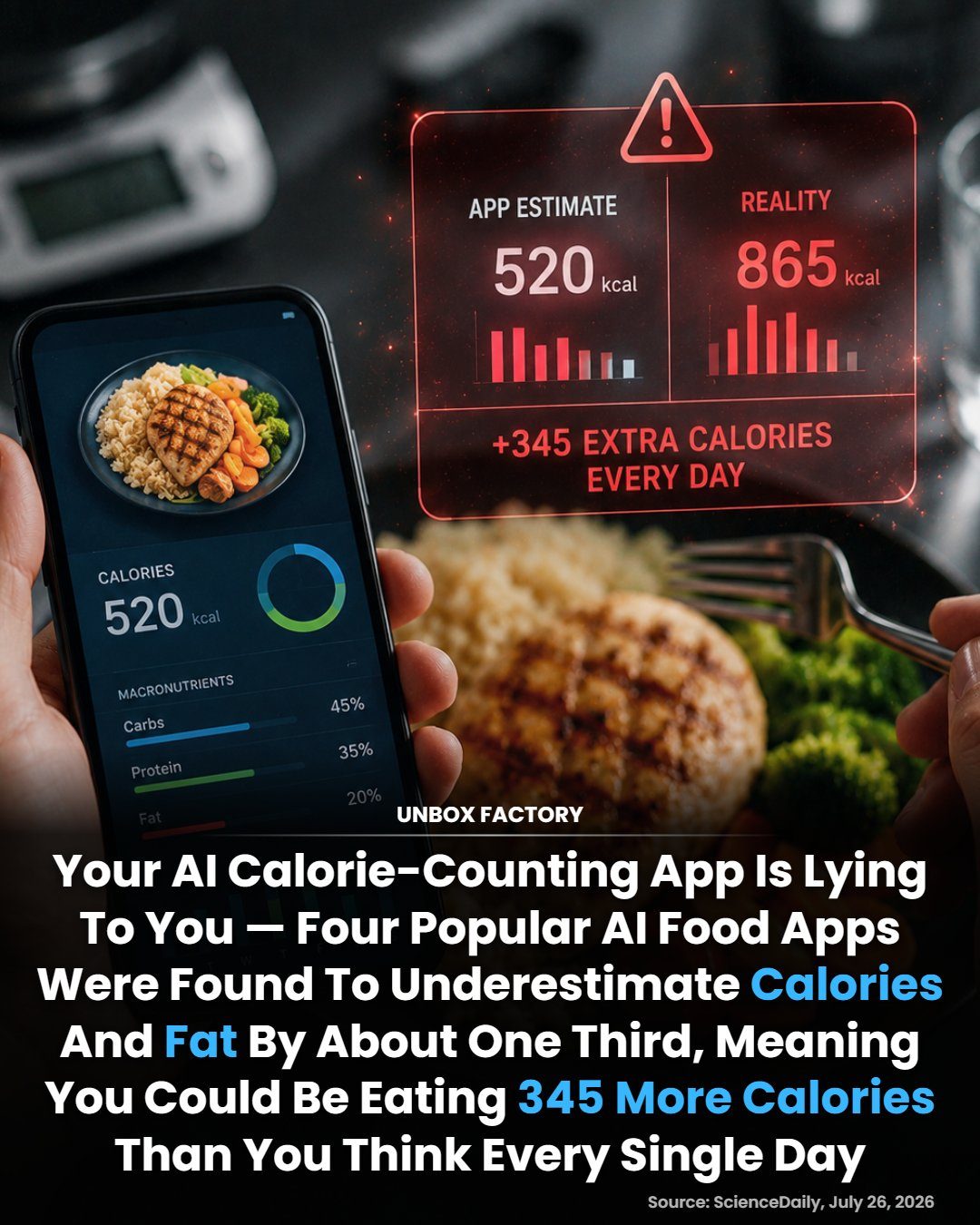
AI Calorie-Counting Apps: Addressing Inaccuracies and Their Implications
It's no secret that AI-powered calorie-counting apps have become increasingly popular. However, recent research reveals significant inaccuracies in how these apps estimate calorie and fat content. These findings are crucial for anyone using or considering AI-powered nutrition apps. They can significantly impact long-term weight management and overall health.
Why This Matters
AI-powered calorie-counting apps have become increasingly popular. They offer a convenient way to track daily calorie intake, monitor macronutrients, and make informed dietary choices. However, relying solely on these apps can lead to unintended consequences. They can underestimate the true number of calories and fat in a meal, potentially affecting long-term weight management and nutritional goals.
The Study Findings
Let's dive into the findings of the recent research on AI-powered food recognition apps:
Average Inaccuracies
The study evaluated four widely used AI-powered food recognition apps. These apps consistently underestimated calorie and fat content by about 30–35%. This might not sound like a lot, but the implications can be significant.
For instance, if an app estimates 520 calories for a meal, the reality could be 865 calories. This discrepancy of 345 calories per day can lead to an extra 345 calories consumed daily. Over time, these extra calories can add up, affecting weight management and overall health.
Common Causes of Inaccuracy
The AI-powered apps often struggle with estimating portion sizes, cooking oils, sauces, mixed dishes, and hidden ingredients. These factors can lead to inaccurate nutritional calculations. For example, an app might not accurately account for the calories in a thick sauce or hidden fats in a processed food. This can result in significant underestimation of calorie and fat content.
The Current Reality
Here's a breakdown of the current landscape of AI-powered calorie-counting apps and their implications:
AI Limitations
AI-powered apps rely on algorithms to estimate calorie and fat content. While these algorithms are advanced, they still have limitations. They can struggle with:
- Portion Sizes: Estimating portion sizes accurately can be challenging, especially for foods that are not easily measurable.
- Cooking Oils and Sauces: These can add significant calories and fat, but AI apps often struggle to account for them accurately.
- Mixed Dishes: Dishes that combine multiple ingredients can be difficult for AI to analyze accurately.
- Hidden Ingredients: Ingredients that are not visible, such as those in processed foods, can be overlooked by AI algorithms.
Practical Implications
The inaccuracies in AI-powered calorie-counting apps have practical implications for users:
- Long-term Weight Management: Consuming 345 extra calories per day can lead to significant weight gain over time. This can undermine long-term weight management goals.
- Nutritional Goals: Inaccurate calorie and fat estimations can make it difficult to achieve specific nutritional goals, such as reducing fat intake or maintaining a balanced diet.
Practical Tips
So, what can you do to mitigate these inaccuracies?
Consider Alternative Methods
While AI-powered apps can be useful, consider supplementing them with other methods:
- Manual Tracking: Manually tracking your meals can provide more accurate calorie and fat content information.
- Professional Guidance: Consulting with a registered dietitian or nutritionist can provide personalized, accurate dietary guidance.
- Verified Nutrition Labels: Relying on verified nutrition labels for packaged foods can provide more accurate calorie and fat content information.
Cross-Verify with Other Tools
Cross-verifying the information from AI-powered apps with other tools can help:
- Calorie Counter Books: These can provide a more comprehensive list of calories and nutrients for a wide range of foods.
- Fitness Trackers: Some fitness trackers offer built-in calorie counter features that can be more accurate.
Be Mindful of Hidden Calories
Be mindful of hidden calories in your diet:
- Cooking Oils and Sauces: Be aware of the calories and fat in cooking oils and sauces. Try to use them sparingly or opt for healthier alternatives.
- Mixed Dishes: Be cautious with mixed dishes and try to break down the calories and fat in each component.
Regularly Update Your App
Finally, make sure to regularly update your AI-powered calorie-counting app. Developers often release updates to improve accuracy and fix bugs.
Important Takeaways
Here are some key takeaways from the discussion:
- AI-powered calorie-counting apps can significantly underestimate calorie and fat content.
- This can lead to consuming 345 extra calories per day, impacting long-term weight management and nutritional goals.
- The inaccuracies are often due to difficulties in estimating portion sizes, cooking oils, sauces, mixed dishes, and hidden ingredients.
- While AI-powered apps can be useful, they should not replace professional dietary guidance or verified nutrition labels.
- Supplementing AI-powered apps with other methods, cross-verifying information, being mindful of hidden calories, and regularly updating the app can help mitigate inaccuracies.
Conclusion
AI-powered calorie-counting apps offer a convenient way to track daily calorie intake and monitor macronutrients. However, their inaccuracies can have significant implications for long-term health and weight management goals. Understanding these inaccuracies and taking steps to mitigate them can help ensure that these apps remain useful tools in your health journey. They can be a powerful aid, but they should not be the sole method for managing your diet and nutrition. Always consider consulting with a professional and verifying the information with other tools and resources.
Watch the Reel
Questions readers ask
How do AI calorie apps typically miscalculate daily calorie intake?
AI calorie apps often underestimate daily calorie intake due to difficulties in accurately assessing portion sizes and identifying hidden fats in food. This can lead to a daily underestimation of up to 345 calories.
What are the potential consequences of relying on AI calorie apps for weight management?
Relying solely on AI calorie apps for weight management can result in overeating, as users may consume more calories than they realize, leading to potential weight gain or stalling weight loss.
Why is portion size estimation a challenge for AI calorie apps?
AI calorie apps struggle with portion size estimation because they often rely on user input or standard serving sizes, which may not accurately reflect the actual amount of food consumed.
How can hidden fats in food affect the accuracy of AI calorie apps?
Hidden fats, such as those in sauces, dressings, and processed foods, can be difficult for AI apps to detect, leading to underestimations in both calorie and fat content, thus skewing the user's understanding of daily intake.
What can users do to mitigate the inaccuracies of AI calorie apps?
To mitigate inaccuracies, users should manually track portion sizes as precisely as possible, be aware of hidden fats in their meals, and consider using additional tools or consulting with a nutrition professional for a more holistic approach to nutrition.
Recent articles
Fresh deep dives from the latest Reels we unpacked.




Comments
Be the first to comment.