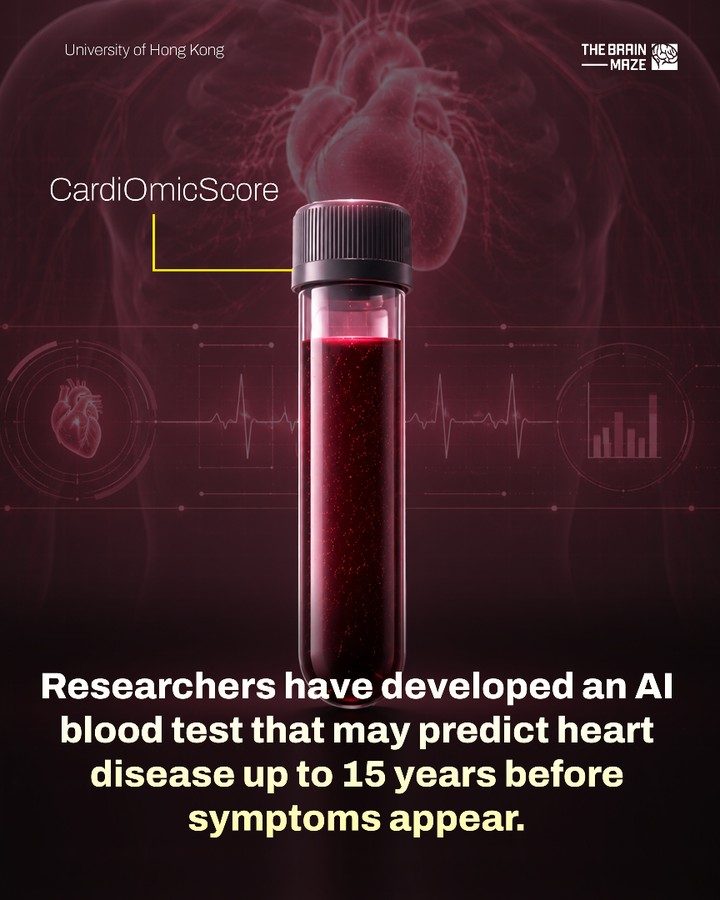
AI Blood Test for Heart Disease Prediction
CardiOmicScore, an innovative AI-powered blood test, has been developed by researchers at the University of Hong Kong. This groundbreaking technology analyzes thousands of proteins and metabolites to predict the risk of six major cardiovascular diseases. For high-risk individuals, CardiOmicScore can detect warning signs up to 15 years before symptoms manifest, providing ample time for preventive measures, monitoring, and lifestyle adjustments.
Context / Why This Matters
Heart disease remains one of the leading causes of death worldwide. Early detection and prevention are crucial for mitigating its impact. Traditional methods of heart disease prediction often rely on symptoms and risk factors that may only manifest in the later stages of the disease. CardiOmicScore offers a revolutionary approach by leveraging AI to analyze complex biological data, enabling earlier and more accurate predictions.
Main Discussion
The Science Behind CardiOmicScore
At its core, CardiOmicScore utilizes advanced AI algorithms to examine thousands of proteins and metabolites in a blood sample. Proteins and metabolites are biomarkers that provide insights into the body's biological processes. By analyzing these biomarkers, the AI can identify patterns and anomalies that may indicate an increased risk of heart disease.
Predicting Six Major Cardiovascular Diseases
CardiOmicScore is designed to predict the risk of six major cardiovascular diseases:
- Coronary artery disease
- Heart failure
- Atrial fibrillation
- Stroke
- Peripheral artery disease
- Aortic aneurysm
By focusing on these key areas, the test aims to cover a broad spectrum of cardiovascular risks, making it a comprehensive tool for early detection.
The Advantage of Early Detection
One of the most significant benefits of CardiOmicScore is its ability to detect warning signs up to 15 years before symptoms appear. This early detection allows individuals to take proactive steps to manage their health, including:
- Lifestyle changes: Adopting a healthier diet, increasing physical activity, and quitting smoking can significantly reduce the risk of heart disease.
- Preventive medications: Doctors can prescribe medications to manage risk factors such as high blood pressure, high cholesterol, and diabetes.
- Regular monitoring: Regular check-ups and screenings can help track the progression of any underlying conditions and ensure timely intervention.
The Role of AI in CardiOmicScore
AI plays a pivotal role in the development and functionality of CardiOmicScore. The advanced algorithms used in this blood test can process and analyze large amounts of data with high accuracy. This capability enables the test to detect subtle changes in biomarkers that might go unnoticed by traditional methods.
Additionally, AI allows for continuous improvement of the test. As more data is collected and analyzed, the algorithms can be refined to enhance their predictive power, making CardiOmicScore an evolving tool that adapts to new insights and discoveries in cardiovascular health.
Practical Tips
Who Should Consider CardiOmicScore?
While CardiOmicScore is a powerful tool, it is particularly beneficial for individuals at high risk of developing cardiovascular diseases. This includes:
- People with a family history of heart disease: Genetic predisposition can significantly increase the risk of heart disease. Early screening can help identify potential issues before they become serious.
- Individuals with lifestyle risk factors: Smoking, poor diet, sedentary lifestyle, and obesity are major contributors to heart disease. Those with these risk factors can benefit from early detection and lifestyle changes.
- Older adults: Age is a significant risk factor for heart disease. Regular screenings can help older adults monitor their cardiovascular health and take necessary precautions.
What to Expect from the Test
Getting a CardiOmicScore test is a straightforward process. Here’s what individuals can expect:
- Blood Sample Collection: A small blood sample is taken, similar to a standard blood test.
- Lab Analysis: The sample is analyzed in a laboratory using AI algorithms to detect thousands of proteins and metabolites.
- Results Interpretation: The results are reviewed by medical professionals, who provide a detailed report on the risk of developing the six major cardiovascular diseases. The report may also include recommendations for lifestyle changes, preventive measures, and follow-up tests.
Following Up on Results
Once the results are in, it is essential to follow up with a healthcare provider to discuss the next steps. This may include:
- Lifestyle Modifications: Making changes to diet, exercise, and other habits to reduce risk factors.
- Medical Interventions: Starting medications to manage conditions like high blood pressure or high cholesterol.
- Regular Check-Ups: Scheduling regular follow-up appointments to monitor progress and make adjustments as needed.
Important Takeaways
- CardiOmicScore is an AI-powered blood test developed by researchers at the University of Hong Kong.
- It analyzes thousands of proteins and metabolites to predict the risk of six major cardiovascular diseases.
- Early detection can provide up to 15 years of lead time for preventive measures, monitoring, and lifestyle changes.
- The test is particularly beneficial for individuals with a family history of heart disease, lifestyle risk factors, and older adults.
Conclusion
CardiOmicScore represents a significant advancement in the field of cardiovascular health. By leveraging AI and advanced biological analysis, this blood test offers an unparalleled level of accuracy and early detection for heart disease. For individuals at high risk, CardiOmicScore provides a valuable tool for taking proactive steps towards a healthier future. It is a testament to the potential of medical technology to revolutionize health care and save lives.
Watch the Reel
Questions readers ask
How does the CardiOmicScore test work to predict heart disease?
The CardiOmicScore test uses advanced AI algorithms to analyze thousands of proteins and metabolites in a blood sample. By examining these biomarkers, the test can identify patterns that indicate an increased risk of six major heart diseases, even up to 15 years before symptoms appear.
What are the benefits of early heart disease prediction?
Early prediction allows for timely intervention and preventive measures. This can include lifestyle changes, such as improved diet and exercise, as well as medical monitoring and treatments to reduce the risk of developing heart disease. Early detection can significantly improve long-term health outcomes.
Can the CardiOmicScore test replace traditional heart disease screening methods?
The CardiOmicScore test is designed to complement rather than replace traditional screening methods. While traditional methods are important for current health assessments, CardiOmicScore provides deeper insights and earlier warnings, making it a valuable addition to comprehensive heart health evaluations.
Who can benefit from taking the CardiOmicScore test?
Anyone concerned about their heart health can benefit from the CardiOmicScore test, especially those with a family history of heart disease or other risk factors. Early detection can be particularly beneficial for individuals who may not yet show symptoms but are at high risk of developing heart disease.
What should I do if my CardiOmicScore test results indicate a high risk of heart disease?
If your test results indicate a high risk, it's important to consult with a healthcare provider. They can help develop a personalized plan that may include lifestyle changes, regular check-ups, and specific treatments to manage and reduce your risk of developing heart disease.
Related deep dives
Similar reads based on topic and creator.

Recent articles
Fresh deep dives from the latest Reels we unpacked.




Comments
Be the first to comment.