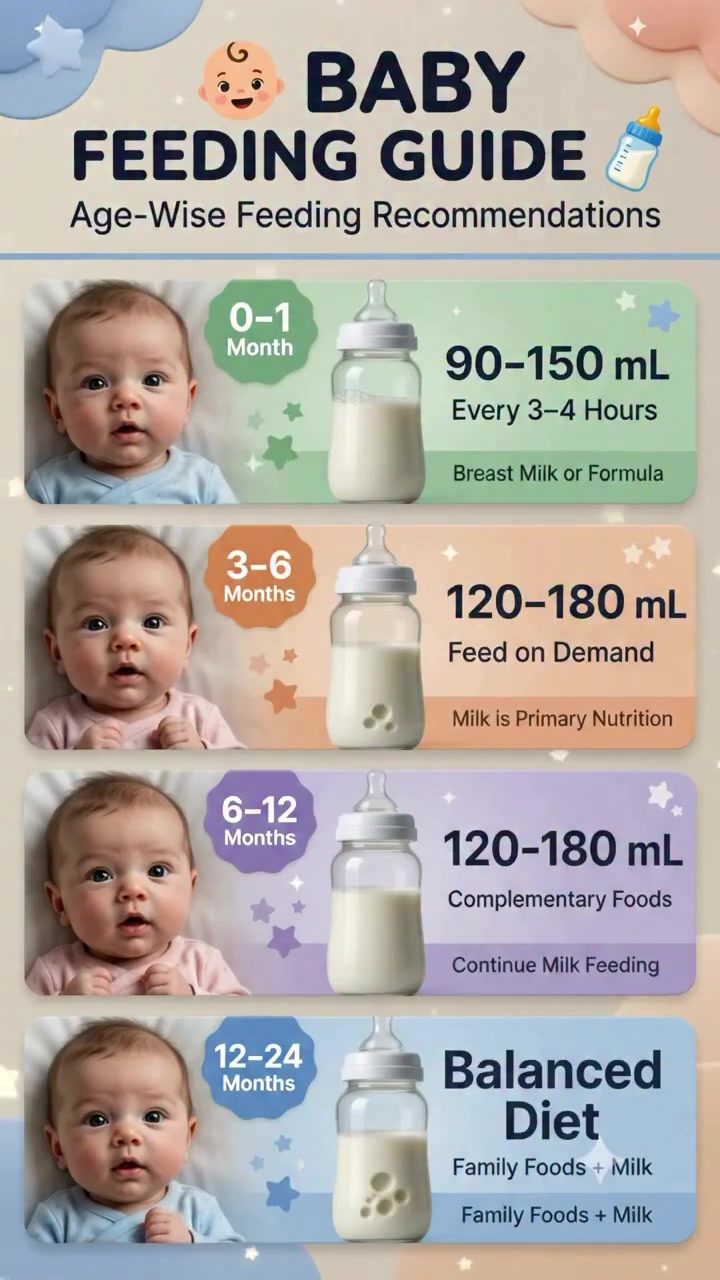
Baby Feeding Guide: Age-Wise Recommendations
Feeding a baby involves more than just ensuring they consume enough milk. Understanding and responding to their hunger and fullness cues is crucial. Each baby grows at their unique pace, so the following guidelines are approximations and may need to be adjusted based on individual needs.
Why This Matters
Feeding a baby is a critical aspect of their early development. Understanding the appropriate amounts and types of food to provide at different ages can help ensure your baby gets the nutrients they need. This guide provides a general framework for feeding babies from birth to 24 months, with a focus on milk intake and the introduction of complementary foods.
Main Discussion
Understanding Hunger and Fullness Cues
Every baby is different, and it's essential to pay attention to their hunger and fullness cues. While the guidelines provided are helpful, they should be adjusted based on your baby's specific needs. Here are some common signs to look for:
- Hunger Cues: Rooting, sucking on hands, making sucking noises, or becoming more alert.
- Fullness Cues: Turning away from the bottle or breast, closing the mouth, or falling asleep.
Feeding Guidelines by Age
0–1 Month
Newborns typically need to be fed frequently. A general guideline is 30–90 mL per feed, about every 2–4 hours. Breast milk or infant formula should be the primary source of nutrition during this period. Newborns may be fed more often because their stomachs are very small.
1–3 Months
By this age, babies usually start to consume more milk per feed. Aim for 90–150 mL per feed, about every 3–4 hours. Their feeding patterns may become more predictable, but it's still important to respond to their cues.
3–6 Months
Milk remains the primary source of nutrition for babies in this age group. Feed them according to their hunger cues, which might mean offering the breast or bottle more frequently. Most babies start complementary foods around 6 months, but this can vary. Consult your pediatrician for personalized advice.
6–12 Months
Continue breast milk or formula while gradually introducing age-appropriate complementary foods. Start with single-ingredient foods and gradually move to a variety of textures and flavors. Continue to offer milk, as it remains an essential part of their diet.
12–24 Months
By this age, babies should be transitioning to a balanced family diet. Offer a variety of foods, including fruits, vegetables, proteins, and grains. Milk is still important, but it should be appropriate for their age and nutritional needs.
Practical Tips
Responding to Growth Spurts
Growth spurts can temporarily increase your baby's appetite. During these periods, they may need to feed more frequently. Trust your baby's hunger cues during these times and offer additional feedings as needed.
Introducing Complementary Foods
When introducing complementary foods, start with small amounts and gradually increase the variety and texture. Watch for any signs of allergic reactions, such as rashes, vomiting, or diarrhea. If you notice any adverse reactions, consult your pediatrician immediately.
Monitoring Weight Gain
Regularly monitor your baby's weight gain to ensure they are growing properly. Sudden changes in weight or feeding patterns can indicate underlying issues. If you have concerns, consult your pediatrician for guidance.
Important Takeaways
- Feed Based on Cues: Respond to your baby's hunger and fullness cues rather than relying solely on the clock.
- Adjust as Needed: The guidelines provided are general and may need to be adjusted based on your baby's individual needs.
- Consult Professionals: If you have concerns about your baby's feeding, weight gain, or growth, consult your pediatrician.
Conclusion
Feeding a baby is a complex but rewarding process. By understanding the appropriate amounts and types of food to provide at different ages, and by responding to your baby's individual needs, you can help ensure they get the nutrition they need to grow and thrive. Always remember that every baby is unique, and these guidelines should be adapted based on your baby's specific cues and development.
Watch the Reel
Questions readers ask
What are the key signs of hunger and fullness in babies?
Babies exhibit various signs to indicate hunger, such as rooting, sucking on their hands, or making sucking noises. Fullness cues may include turning away from the bottle or breast, relaxing their body, and slowing down on sucking. It's important for caregivers to recognize and respond to these signals promptly.
How much milk should a newborn typically consume?
Newborns typically need to be fed 8–12 times per day, with each feeding lasting around 10-15 minutes. The exact amount of milk can vary, but on average, a newborn will consume about 1.5–3 ounces (45–90 milliliters) of breast milk or formula per pound of body weight per day. This can be split into 15-60 minutes feeding intervals.
When should I introduce complementary foods to my baby?
The American Academy of Pediatrics recommends introducing complementary foods around 6 months of age. This is when babies often show signs of readiness, such as sitting up without support and losing the tongue-thrust reflex. It's important to consult with a pediatrician before introducing solid foods.
How do I determine the right amount of food for my baby?
The appropriate amount of food for a baby depends on their age, size, and individual needs. Generally, it's best to follow your baby's hunger and fullness cues. Start with small portions and offer more if your baby seems hungry. Consulting a healthcare provider can also provide personalized guidance for your baby.
What is the recommended milk feeding schedule for a 12-month-old?
By 12 months, babies typically transition to whole milk or fortified plant-based milk, and their feeding frequency decreases. They should consume about 16-24 ounces of milk per day, spread out over 2-3 meals. Additionally, they should be eating a variety of solid foods to meet their nutritional needs.
How can I ensure my baby is getting enough nutrients during the first year?
During the first year, babies should receive balanced nutrition from breast milk or formula, along with complementary foods after 6 months. Offer a variety of nutrient-dense foods, including fruits, vegetables, proteins, and whole grains. Regularly consult with a pediatrician to monitor your baby's growth and development.
Related deep dives
Similar reads based on topic and creator.

Recent articles
Fresh deep dives from the latest Reels we unpacked.




Comments
Be the first to comment.