World Happiness Report 2025: A Deep Dive into Africa's Happiness Scores
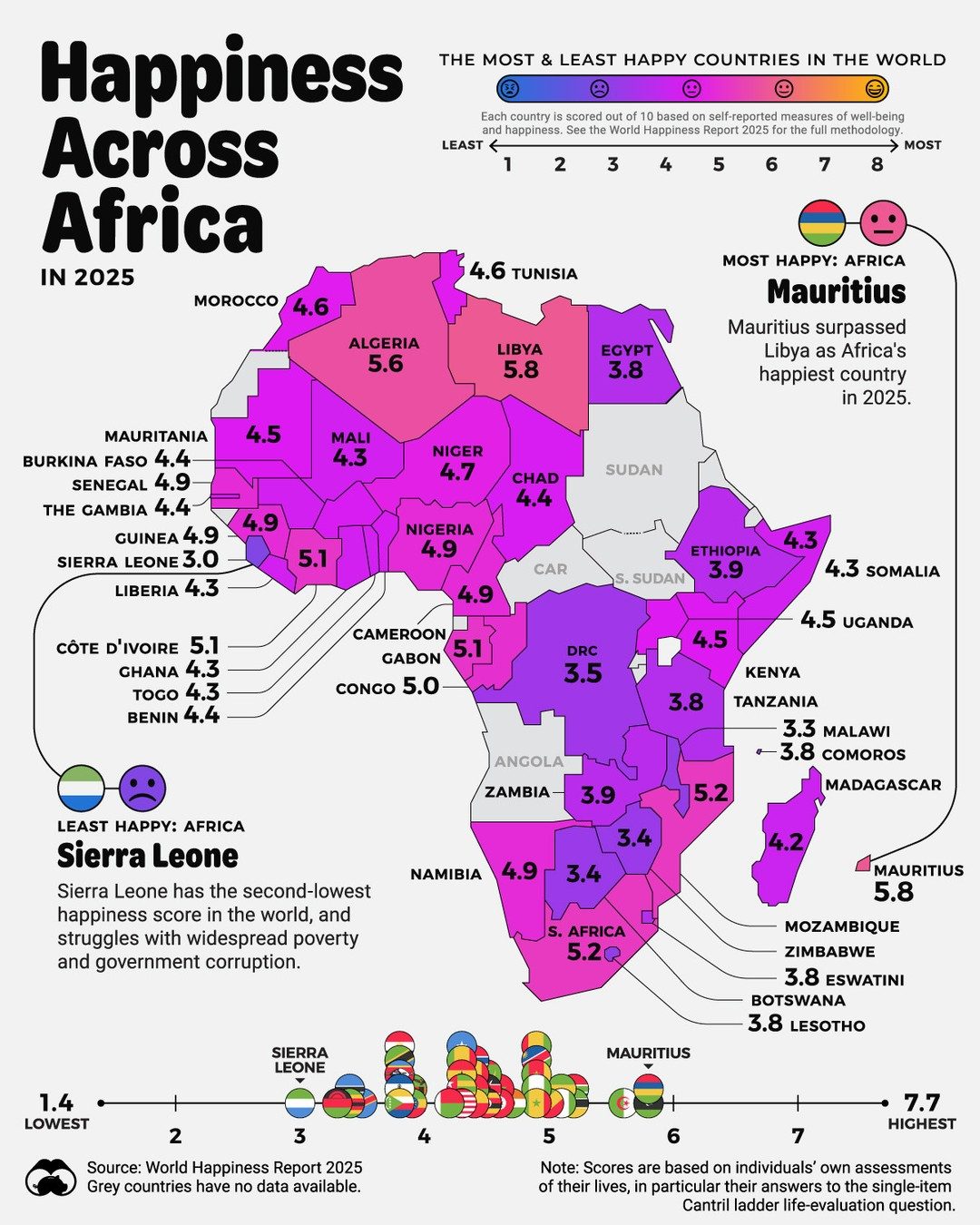
In 2025, Africa has the lowest regional happiness score in the world at 4.4. This stark reality underscores the challenges faced by many African nations, including high poverty rates, ongoing conflicts, political instability, and weak infrastructure. These factors significantly impact the overall happiness and well-being of the continent's populace. The World Happiness Report 2025 provides a comprehensive evaluation of global contentment based on a variety of social, economic, and well-being indicators. Let's delve into the key findings and implications for African countries.
Why This Matters
Despite some economic progress, many African countries continue to grapple with critical issues that affect the happiness of their citizens. Understanding the nuances of these challenges is crucial for policymakers, international aid organizations, and anyone invested in the well-being of the continent. The World Happiness Report 2025 offers a nuanced perspective by evaluating factors such as GDP per capita, social support, healthy life expectancy, freedom to make life choices, generosity, and perceptions of corruption. These indicators provide a holistic view of what influences happiness across different regions.
Main Discussion
The Happiest and Least Happy Countries in Africa
The 2025 report highlights the contrasting levels of happiness across African countries. Mauritius stands out as the happiest country in Africa, with a score of 5.8. This achievement is noteworthy as Mauritius surpassed Libya, which had previously held the top spot. On the other end of the spectrum, Sierra Leone has the lowest happiness score in Africa, at 3.0. Sierra Leone also faces significant challenges, including high levels of government corruption, which exacerbates the overall dissatisfaction among its citizens.
Key Contributing Factors
Several factors contribute to the varying levels of happiness across African countries:
-
Economic Progress: Countries like Mauritius and Namibia have made significant strides in economic growth, which translates to higher happiness scores. Economic stability and prosperity are closely linked to overall well-being.
-
Social Support: Strong social support systems, including family networks and community cohesion, play a crucial role in maintaining high levels of happiness. Countries with robust social support tend to fare better in the happiness rankings.
-
Healthy Life Expectancy: Access to quality healthcare and a longer, healthier life expectancy are significant contributors to happiness. Countries with better healthcare systems often report higher levels of contentment.
-
Freedom to Make Life Choices: The ability to make autonomous decisions about one's life is a key indicator of happiness. Nations that provide more freedom and opportunities for personal growth generally have higher happiness scores.
-
Generosity and Corruption: Generosity and a sense of community are vital for happiness. Conversely, high levels of corruption can severely undermine trust in institutions, leading to lower happiness scores. Sierra Leone's high corruption levels underscore this issue.
Regional Variations
The World Happiness Report 2025 reveals significant regional variations within Africa. While North African countries like Morocco, Algeria, and Tunisia fare relatively well with scores around 4.6, other regions face more pronounced challenges. For instance, Central and West African countries, including Burkina Faso, Mali, and Niger, have scores around 4.3 to 4.7. Meanwhile, Southern African countries like South Africa and Namibia have scores ranging from 3.8 to 5.8, indicating a wide disparity in happiness levels.
The Role of Infrastructure
Weak infrastructure is another significant barrier to happiness in many African countries. Poor road networks, limited access to clean water and electricity, and inadequate public services can severely impact the quality of life. Countries that invest in robust infrastructure tend to see improvements in overall happiness and well-being. For example, Mauritius' strong infrastructure and economic stability contribute to its high happiness score.
Addressing Political Instability
Political instability is a pervasive issue in many African countries, affecting everything from economic growth to social cohesion. Ongoing conflicts and political unrest create an environment of uncertainty and insecurity, which adversely affects happiness levels. Countries that manage to achieve political stability and security often experience higher levels of contentment among their citizens.
Practical Tips
For policymakers and international organizations looking to improve happiness levels in Africa, several practical steps can be taken:
-
Invest in Economic Development: Prioritize economic growth and job creation to improve living standards.
-
Strengthen Social Support Systems: Build strong family and community networks to provide emotional and practical support.
-
Enhance Healthcare Services: Ensure access to quality healthcare and promote healthy lifestyles.
-
Foster Autonomy: Encourage policies that give individuals more freedom and control over their lives.
-
Promote Generosity and Reduce Corruption: Foster a culture of generosity and tackle corruption to build trust and improve social cohesion.
Important Takeaways
The World Happiness Report 2025 provides valuable insights into the factors that influence happiness in African countries. It highlights the critical issues that need to be addressed to improve overall well-being. Some key takeaways include:
- Economic Stability and Growth: Are essential for improving happiness levels.
- Social Support and Community Cohesion: Play a crucial role in maintaining high levels of contentment.
- Healthcare and Life Expectancy: Are vital for overall well-being.
- Freedom and Autonomy: Contribute to a sense of happiness and fulfillment.
- Generosity and Low Corruption Levels: Build a more trusting and cohesive society, which is essential for happiness.
Conclusion
The World Happiness Report 2025 sheds light on the complexities of happiness in Africa. While there are significant challenges, the report also highlights areas of progress and success. By understanding the key factors that influence happiness, policymakers and international organizations can take targeted actions to improve the well-being of African citizens. As we move forward, it is essential to focus on addressing the root causes of unhappiness, such as poverty, conflict, and corruption, and to build stronger, more resilient communities.
Watch the Reel
Questions readers ask
Why does Africa have the lowest happiness scores in the 2025 report?
Africa's low happiness scores in 2025 are primarily due to a combination of high poverty rates, ongoing conflicts, and significant political instability across many nations. Additionally, weak infrastructure exacerbates these issues, making daily life challenging for many.
Which countries are the least happy in 2025?
While the article highlights Africa's lowest regional happiness score, specific countries such as Sierra Leone are mentioned. However, to identify the least happy countries globally, one would need to consult the full World Happiness Report 2025.
What factors contribute to happiness in Africa according to the 2025 report?
The report highlights several key factors, including economic issues, poverty, and infrastructure. Additionally, political instability and conflicts play a significant role in determining happiness in Africa in 2025.
How does poverty impact happiness in Africa, according to the 2025 report?
Poverty is a major contributor to Africa's low happiness scores. High poverty rates limit access to basic needs, healthcare, and opportunities, thereby significantly reducing the overall well-being and happiness of the population.
What is the World Happiness Report 2025, and how does it evaluate happiness?
The World Happiness Report 2025 is a comprehensive evaluation of global happiness based on various indicators. It assesses social, economic, and well-being factors to determine happiness levels across different regions, including Africa.
Which region ranked happiest in 2025, according to the report?
The article specifically highlights Africa's low ranking. Therefore, to determine the happiest region, one would need to consult the complete World Happiness Report 2025, as it provides a global evaluation of happiness scores.
How does political instability affect happiness in Africa?
Political instability in Africa contributes to low happiness scores by creating uncertainty and insecurity. It often leads to social unrest, violence, and disruption of essential services, all of which negatively impact the well-being of the population.
Recent articles
Fresh deep dives from the latest Reels we unpacked.




Comments
Be the first to comment.