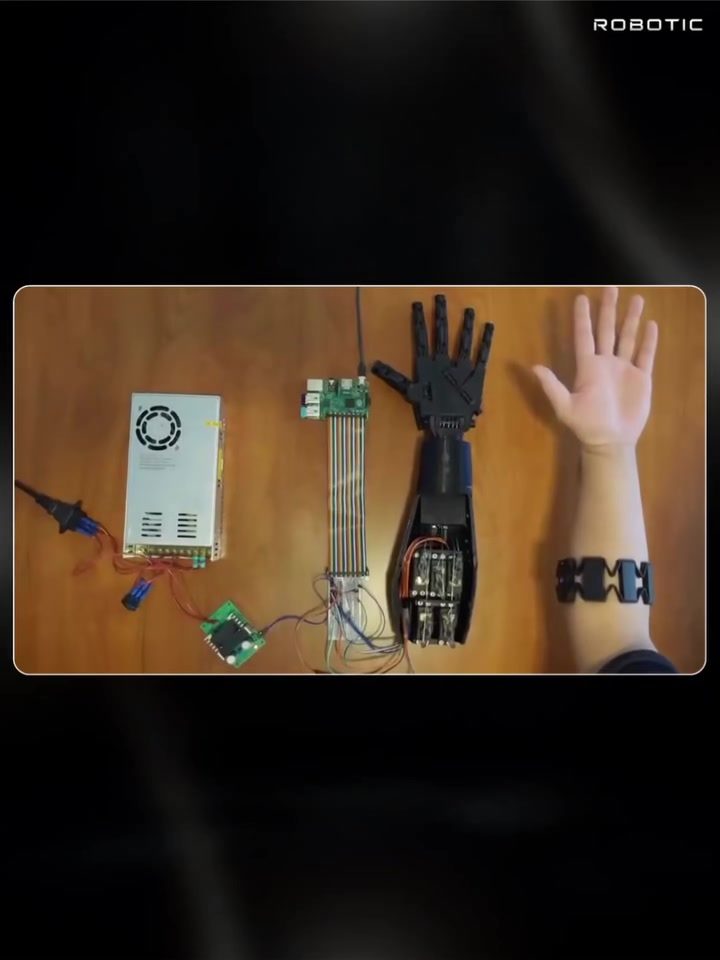
Prosthetic Hands: Turning Muscle Signals into Movement
Prosthetic hands have come a long way, and recent advancements in robotics and electromyography (EMG) are pushing the boundaries of what's possible. These innovative devices translate muscle signals into precise movements, offering a new level of functionality and affordability.
Context / Why this matters
The development of prosthetic hands that can turn muscle signals into movement is a significant advancement in assistive robotics. This technology not only improves the quality of life for individuals with limb differences but also demonstrates the potential of affordable, accessible hardware in creating meaningful assistive devices.
Main Discussion
How It Works
At the heart of this technology lies electromyography (EMG), a method that reads electrical activity from muscles. In this prosthetic hand, EMG sensors are placed on the upper forearm. When the user performs different muscle gestures, these sensors capture the signals and send them over Bluetooth to a small computer, such as a Raspberry Pi.
The Raspberry Pi processes the data and sends commands to servo motors that control the prosthetic hand's fingers. This seamless integration of hardware and software allows for precise and responsive finger movements, mimicking the natural actions of a human hand.
Components and Design
The prosthetic hand prototype is designed with affordability and accessibility in mind. It uses 3D-printed structural parts and widely available electronic components. This approach not only reduces the cost of production but also makes the technology more accessible to a broader range of users.
The hand is connected to various electronic components, including a small computer and circuit boards. Wires connect these components, ensuring that the signals from the EMG sensors are accurately transmitted to the servos that control the hand's movements.
Affordability and Accessibility
One of the most impressive aspects of this project is its commitment to making advanced prosthetic technology more affordable. By using 3D-printed structural parts and widely available electronic components, the project demonstrates how accessible hardware can help lower the barrier to assistive robotics. This approach not only reduces the cost but also makes the technology more widely available, benefiting a larger number of people who need assistive devices.
Practical Tips
For Users
- Customization: Ensure that the EMG sensors are properly placed on the upper forearm for optimal signal capture. Customization may be necessary based on individual muscle patterns.
- Maintenance: Regularly check the connections between the EMG sensors, Raspberry Pi, and servo motors to ensure smooth operation.
- Practice: Spend time practicing different muscle gestures to improve the responsiveness and accuracy of the prosthetic hand.
For Developers
- Software: Continuously refine the software algorithms that process EMG signals to improve the accuracy and responsiveness of the prosthetic hand.
- Hardware: Explore the use of alternative materials and components to further reduce costs and enhance durability.
- User Feedback: Engage with users to gather feedback on the device's functionality and make necessary improvements.
Important Takeaways
- EMG Technology: Electromyography (EMG) sensors are crucial for reading muscle signals and translating them into finger movements.
- Affordability: The use of 3D-printed parts and widely available electronic components makes the technology more accessible and cost-effective.
- Customization: Proper placement of EMG sensors and regular maintenance are essential for optimal performance.
- User Experience: Continuous refinement of both hardware and software, based on user feedback, is key to improving the functionality and usability of the prosthetic hand.
Conclusion
Prosthetic hands that turn muscle signals into movement represent a significant advancement in assistive robotics. By leveraging EMG technology and affordable components, this prototype demonstrates the potential for creating meaningful and accessible assistive devices. As the technology continues to evolve, it promises to improve the quality of life for individuals with limb differences, offering them greater independence and functionality.
Watch the Reel
Questions readers ask
What is electromyography (EMG) and how is it used in prosthetic hands?
Electromyography (EMG) is a technique that records electrical signals produced by muscles. In prosthetic hands, EMG sensors detect these signals and convert them into precise movements, allowing users to control the prosthetic's fingers and achieve improved functionality.
How does the use of 3D-printed parts make prosthetic hands more attainable?
3D-printing enables the creation of customizable and affordable prosthetic components. By using 3D-printed parts, the cost of producing a prosthetic hand is significantly reduced, making it more accessible to a broader range of users.
What types of electronics are commonly used in these affordable prosthetic hands?
Affordable prosthetic hands often utilize readily available electronics such as microcontrollers, EMG sensors, and small motors or actuators. These components are integrated to create a functional and cost-effective robotic hand prototype.
Can I build a DIY prosthetic hand project using EMG technology?
Yes, many innovative projects allow individuals to build their own EMG-controlled prosthetic hands. By using open-source designs, 3D-printed parts, and readily available electronic components, hobbyists and innovators can create custom prosthetic hands tailored to specific needs.
How do EMG sensors in prosthetics improve finger movement control?
EMG sensors in prosthetics capture the electrical signals from the user's muscles and translate them into movements. This allows for more natural and precise control of the prosthetic hand's fingers, enhancing the user's ability to perform daily tasks.
What are the benefits of using EMG-controlled prosthetics?
EMG-controlled prosthetics offer several benefits, including improved functionality, enhanced customization, and a higher level of control over finger movements. These advantages help users regain independence and improve their overall quality of life.
What makes this prosthetic hand technology a significant advancement?
This prosthetic hand technology is a significant advancement because it combines affordability with high functionality. By using EMG sensors and 3D-printed parts, it provides an accessible and customizable solution for individuals with limb differences, pushing the boundaries of assistive robotics.
Recent articles
Fresh deep dives from the latest Reels we unpacked.




Comments
Be the first to comment.