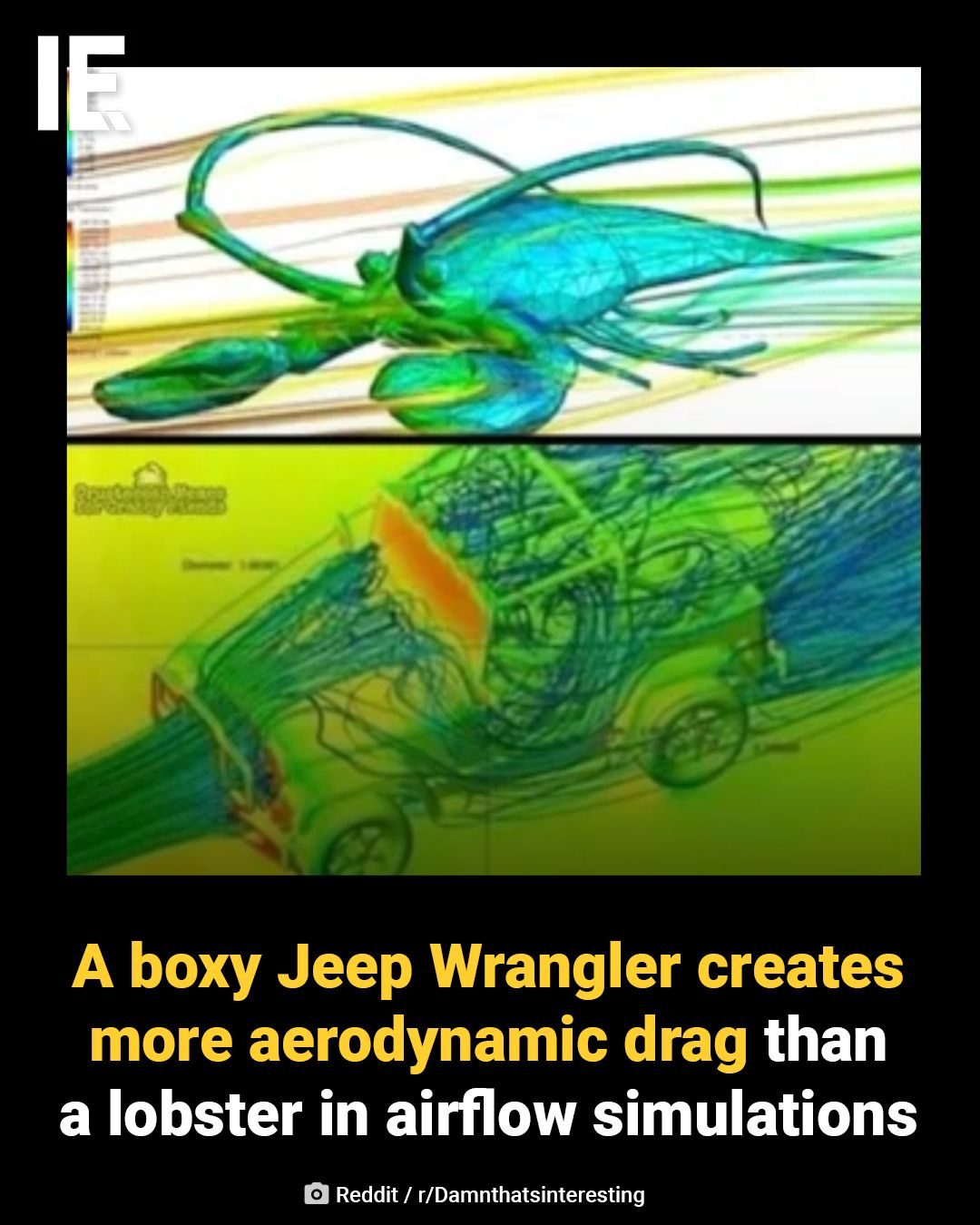
What Computational Fluid Dynamics Reveal About Vehicle Design
In computational fluid dynamics (CFD) tests, a Jeep Wrangler’s upright windshield, flat panels, and exposed wheels generate significant aerodynamic drag. This design is intentional, prioritizing off-road capability and modularity over speed efficiency. The comparison is interesting because even a lobster, a sea creature never intended for flight, can outperform the Wrangler aerodynamically in simulations. This revelation raises questions about the trade-offs in vehicle design and the importance of aerodynamic properties.
Why This Matters
Vehicle design is a delicate balance of various factors, including performance, safety, and aesthetic appeal. Aerodynamics plays a crucial role in determining a vehicle's efficiency and speed. Understanding how different shapes and designs affect airflow can help engineers create more efficient and fuel-efficient vehicles. By comparing a Jeep Wrangler to a lobster, we can gain insights into how streamlined shapes can reduce drag and improve performance.
Understanding Aerodynamics
Aerodynamics is the study of how objects move through the air. In the context of vehicles, aerodynamic drag is the force that opposes the motion of the vehicle through the air. This drag can significantly affect the vehicle's fuel efficiency and speed. Engineers use aerodynamic principles to design vehicles that minimize drag and maximize performance.
The Jeep Wrangler Design
The Jeep Wrangler is renowned for its ruggedness and off-road capabilities. Its upright windshield, flat panels, and exposed wheels are designed to withstand rough terrains and provide exceptional ground clearance. However, these design elements create significant aerodynamic drag. The boxy shape and exposed components disrupt the airflow around the vehicle, increasing resistance and reducing efficiency at high speeds.
The Lobster's Aerial Surprise
On the other hand, a lobster, with its streamlined shape, surprisingly exhibits better aerodynamic properties. Lobsters are not designed for flight, yet their natural shape allows them to move through water with minimal resistance. When simulated in air, the lobster's shape creates less drag compared to the Jeep Wrangler. This comparison highlights the importance of streamlined designs in reducing aerodynamic drag.
Computational Fluid Dynamics (CFD)
CFD is a powerful tool used in engineering to simulate how fluids (including air) interact with objects. By using CFD, engineers can analyze the airflow around vehicles and identify areas of high drag. This information is crucial for optimizing vehicle design and improving performance. The simulations reveal how different shapes and designs affect airflow, providing valuable insights for engineers.
Vehicle Design Trade-Offs
Vehicle design involves numerous trade-offs. While the Jeep Wrangler's design sacrifices aerodynamics for off-road capability, other vehicles prioritize aerodynamic efficiency. For example, sports cars and electric vehicles often feature sleek, streamlined designs to minimize drag and maximize fuel efficiency.
Off-Road vs. High-Speed Performance
The Jeep Wrangler's design is optimized for off-road performance, which includes features like a high ground clearance, rugged suspension, and durable materials. These features are essential for traversing rough terrains but come at the cost of aerodynamic efficiency. In contrast, high-speed vehicles prioritize aerodynamic properties, featuring streamlined shapes and reduced drag.
Modularity and Customization
The Jeep Wrangler's modular design allows for extensive customization, making it a popular choice for off-road enthusiasts. The ability to add or remove components enhances its versatility and adaptability to different terrains. However, this modularity can also contribute to increased drag, as additional components and exposed elements disrupt airflow.
Practical Tips for Improving Aerodynamics
For vehicle owners looking to improve their vehicle's aerodynamic efficiency, there are several practical tips to consider:
Streamlined Exterior Modifications
Adding aerodynamic components such as spoilers, diffusers, and air dams can help reduce drag. These modifications help smooth the airflow around the vehicle, minimizing resistance and improving efficiency. However, it's important to ensure these modifications do not compromise the vehicle's off-road capabilities or structural integrity.
Regular Maintenance
Regular maintenance can also improve a vehicle's aerodynamic efficiency. Keeping the vehicle clean and free of debris helps maintain smooth airflow. Additionally, ensuring that all components are properly aligned and in good condition can reduce drag caused by misaligned parts.
Weight Reduction
Reducing the vehicle's weight can improve its overall efficiency. Removing unnecessary components and using lighter materials can help reduce drag and improve performance. However, it's important to ensure that weight reduction does not compromise the vehicle's safety or structural integrity.
Important Takeaways
The comparison between a Jeep Wrangler and a lobster in aerodynamic simulations provides valuable insights into the importance of streamlined designs in reducing drag. While the Jeep Wrangler's ruggedness and off-road capabilities are unmatched, its boxy design creates significant aerodynamic drag. This trade-off highlights the delicate balance between performance, efficiency, and design in vehicle engineering.
Conclusion
The comparison of aerodynamic drag between a Jeep Wrangler and a lobster underscores the importance of aerodynamic properties in vehicle design. While the Jeep Wrangler prioritizes off-road capability and modularity, its design results in significant drag. In contrast, the lobster's streamlined shape exhibits better aerodynamic properties. By understanding these trade-offs, engineers can create more efficient and versatile vehicles tailored to specific needs. Whether designing for off-road performance or high-speed efficiency, aerodynamic principles play a crucial role in optimizing vehicle design.
Watch the Reel
Questions readers ask
Why does a Jeep Wrangler have such high aerodynamic drag?
A Jeep Wrangler's design includes an upright windshield, flat panels, and exposed wheels, all of which contribute to significant aerodynamic drag. This design is optimized for off-road performance and versatility, rather than minimizing drag for high-speed efficiency.
How does a lobster compare to a Jeep Wrangler in terms of aerodynamics?
In computational fluid dynamics (CFD) tests, a lobster can outperform a Jeep Wrangler aerodynamically. This is because the lobster's streamlined shape is more efficient at reducing drag, even though it is not designed for air travel.
What are the key factors that influence aerodynamic design in vehicles?
Aerodynamic design in vehicles is influenced by factors such as performance needs, safety requirements, and aesthetic considerations. These factors often require compromises, as seen in the Jeep Wrangler's design, which prioritizes off-road capability over aerodynamic efficiency.
What role does computational fluid dynamics (CFD) play in understanding vehicle aerodynamics?
CFD is a powerful tool for simulating and analyzing aerodynamic airflow around vehicles. It helps engineers understand how different design elements contribute to drag and efficiency, allowing for more informed decisions in vehicle design.
What are the benefits of reducing aerodynamic drag in vehicles?
Reducing aerodynamic drag in vehicles can lead to improved fuel efficiency and better performance. By minimizing drag, vehicles can move more smoothly through the air, requiring less energy to maintain speed and reducing overall fuel consumption.
Why is it important to consider aerodynamic principles in vehicle design?
Considering aerodynamic principles in vehicle design is essential for enhancing efficiency and fuel economy. By understanding and optimizing airflow around a vehicle, designers can create vehicles that are more environmentally friendly and cost-effective to operate.
Related deep dives
Similar reads based on topic and creator.

Recent articles
Fresh deep dives from the latest Reels we unpacked.




Comments
Be the first to comment.