Debt-to-GDP Ratio: A Comparative Analysis of Advanced Economies
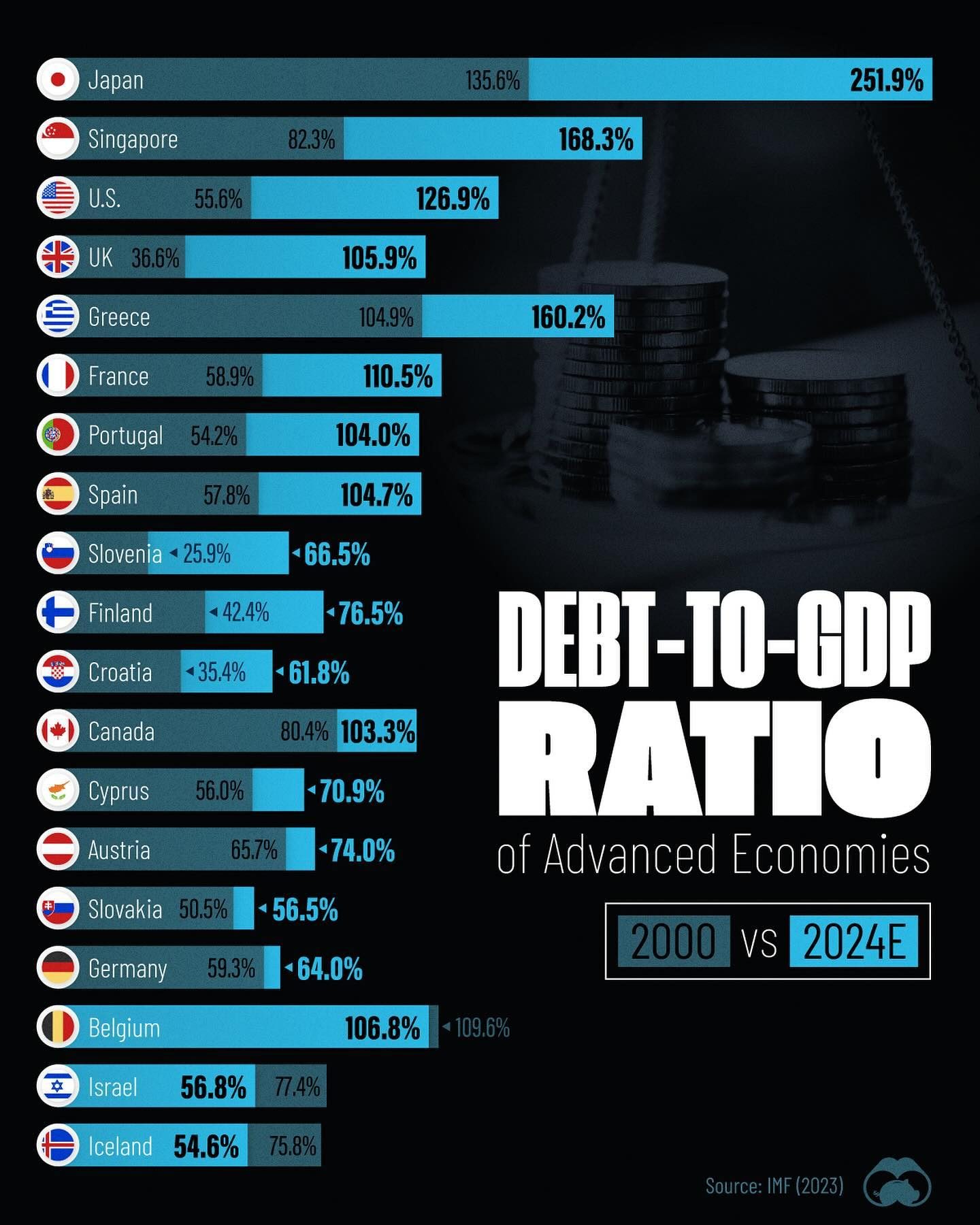
Debt-to-GDP ratio is a critical indicator of a country's economic health, representing the proportion of a country's debt relative to its gross domestic product. Understanding how this ratio has evolved over time provides valuable insights into the economic trajectories of advanced economies. Here, we focus on how these metrics have changed between 2000 and 2024 for a group of 19 advanced economies, with particular attention to Belgium, Iceland, and Israel, who have managed to reduce their debt.
Context: Why This Matters
The debt-to-GDP ratio is a key metric for assessing a country's fiscal sustainability and economic performance. A high ratio might indicate economic instability, while a low ratio can signal fiscal health. The changes in this ratio over two decades reveal how events like the 2008 financial crisis and the COVID-19 pandemic have influenced the financial policies and economic resilience of these nations.
Main Discussion
The Impact of Financial Crises
The years 2000 to 2024 encompass two significant financial crises: the 2008 financial crisis and the COVID-19 pandemic. These events have had a profound impact on the debt-to-GDP ratios of many advanced economies. Countries like the United States, Japan, and the UK experienced substantial increases in their debt-to-GDP ratios, largely due to the economic stimulus packages and bailout measures implemented in response to these crises. The IMF's data from the World Economic Outlook highlights how these measures, while necessary for stabilizing the economy, have led to a significant rise in public debt.
Belgium, Iceland, and Israel: Defying the Trend
Among the advanced economies, Belgium, Iceland, and Israel stand out as the only nations that managed to reduce their government gross debt since 2000. This achievement is noteworthy, especially given the global economic downturns during this period. Belgium, for instance, has historically been known for its prudent fiscal policies and effective public debt management. Iceland, on the other hand, implemented stringent austerity measures post-2008 crisis, which helped in reducing its debt burden. Israel’s consistent economic growth and strong fiscal policies have also contributed to its ability to lower its debt-to-GDP ratio.
The Rising Debt Burden
For the remaining 16 nations, the trend has been one of a significant upsurge in their debt-to-GDP ratios. Countries such as Greece, Portugal, and Spain witnessed some of the most dramatic increases, largely due to the European debt crisis. The graph shows that these nations experienced a steep rise in their debt-to-GDP ratios, reflecting the economic turmoil and the necessity for extensive fiscal interventions. For example, Greece's debt-to-GDP ratio skyrocketed from around 100% in 2000 to over 200% in 2024, largely due to the financial support it received from the European Union and the IMF.
Country-Specific Insights
Japan and the United States have consistently high debt-to-GDP ratios, with Japan's ratio reaching over 250% by 2024. The U.S. also saw a significant increase, largely due to massive stimulus packages and bailout programs. The UK's debt-to-GDP ratio increased from around 40% in 2000 to over 120% in 2024, driven by similar economic measures. France, Germany, and other European countries also witnessed a rise in their debt-to-GDP ratios, though to varying degrees. The graph highlights how financial crises have had a disparate impact on different economies, with some managing to stabilize their debt levels more effectively than others.
Singapore and Croatia are among the nations with relatively stable debt-to-GDP ratios. Singapore's prudent fiscal management and robust economic growth have helped it maintain a low debt-to-GDP ratio. Croatia, despite facing economic challenges, has managed to keep its debt levels relatively stable, reflecting a careful balance of fiscal policies and economic reforms.
The Role of the IMF
The International Monetary Fund (IMF) has played a pivotal role in providing financial support and policy advice to countries facing economic crises. The IMF's World Economic Outlook data is a valuable resource for understanding the debt-to-GDP ratios of these economies. The data shows how different countries have navigated economic challenges, highlighting the importance of fiscal discipline and effective policy interventions.
Practical Tips
For Advanced Economies
-
Fiscal Discipline: Implementing and maintaining fiscal discipline is crucial for managing debt levels. Countries should focus on sustainable spending and revenue generation to reduce their debt burden.
-
Economic Diversification: Diversifying the economy can help in reducing reliance on specific sectors, thereby mitigating the impact of economic shocks.
-
Public Debt Management: Effective public debt management strategies, including timely repayment and refinancing, can help in maintaining stable debt levels.
-
International Cooperation: Engaging in international cooperation and seeking support from institutions like the IMF can provide the necessary financial and policy support during crises.
Important Takeaways
Understanding Economic Health
The debt-to-GDP ratio is a crucial indicator of a country's economic health. High ratios can signal potential fiscal instability, while low ratios often indicate stronger economic resilience. Understanding these metrics can help in assessing the fiscal sustainability and economic performance of advanced economies.
The Role of Crises
Financial crises like the 2008 crisis and the COVID-19 pandemic have had a significant impact on debt levels. These events often necessitate economic interventions, which can lead to an increase in public debt. However, effective policy measures can mitigate the long-term impact of these crises.
Best Practices
Countries like Belgium, Iceland, and Israel serve as examples of effective debt management and economic resilience. Their strategies, including fiscal discipline and prudent financial policies, have helped them reduce their debt levels despite global economic challenges.
Conclusion
The debt-to-GDP ratio provides a comprehensive view of the fiscal health and economic performance of advanced economies. The data from 2000 to 2024 reveals the impact of financial crises and the effectiveness of different economic policies. Countries like Belgium, Iceland, and Israel stand out for their ability to reduce debt, while others face challenges due to economic downturns. Understanding these trends is essential for policymakers and stakeholders to navigate future economic uncertainties and maintain sustainable fiscal policies.
Watch the Reel
Questions readers ask
Which advanced economies have successfully lowered their debt-to-GDP ratios from 2000 to 2024?
Belgium, Iceland, and Israel stand out as examples of advanced economies that have managed to reduce their debt-to-GDP ratios since 2000. This achievement is notable given the significant economic challenges posed by the 2008 financial crisis and the COVID-19 pandemic.
How has the debt-to-GDP ratio of the United States changed between 2000 and 2024?
The United States has experienced a substantial increase in its debt-to-GDP ratio over this period. This increase can be attributed to various factors, including economic policies, responses to crises, and changes in fiscal priorities.
What impact did the 2008 financial crisis have on the debt-to-GDP ratios of advanced economies?
The 2008 financial crisis led to a significant increase in public debt for many advanced economies. Countries had to implement stimulus packages and bailouts, which contributed to higher debt-to-GDP ratios. However, the extent of the increase varied by country, reflecting differences in economic policies and resilience.
Which data source provides comprehensive information on debt-to-GDP ratios for advanced economies?
The International Monetary Fund (IMF) offers detailed and reliable data on debt-to-GDP ratios for advanced economies. This data is crucial for analyzing trends and making informed comparisons over time.
What does a high debt-to-GDP ratio indicate about a country's fiscal sustainability?
A high debt-to-GDP ratio can signal potential fiscal sustainability issues, as it may imply that a country is spending beyond its means. This can lead to increased borrowing costs, reduced investor confidence, and potential economic instability if not managed effectively.
How did the COVID-19 pandemic affect public debt in advanced economies?
The COVID-19 pandemic caused a surge in public debt for many advanced economies. Governments implemented extensive fiscal measures to support their economies, leading to higher debt-to-GDP ratios. The extent of the impact varied, with some countries better equipped to manage the fiscal burden than others.
Why is it important to track changes in the debt-to-GDP ratio over time?
Tracking changes in the debt-to-GDP ratio over time helps policymakers and analysts understand the economic health and policy effectiveness of a country. It provides insights into how economic policies respond to crises and contribute to long-term economic performance and resilience.
Recent articles
Fresh deep dives from the latest Reels we unpacked.




Comments
Be the first to comment.