Anti-lock Braking System (ABS) Warning Light: Causes and Solutions
Seeing the ABS warning light illuminate on your dashboard can be unsettling, but it's crucial to understand that ignoring it could compromise your safety. Here’s a comprehensive guide to understanding the common causes of the ABS warning light and what you can do about it.
Why This Matters
The ABS (Anti-lock Braking System) is a critical safety feature in modern vehicles. It prevents the wheels from locking up during hard braking, allowing the driver to maintain control even on slippery surfaces. When the ABS light comes on, it indicates that there is a problem with this system. While your regular brakes may still function, the ABS might fail to prevent wheel lock, which can be dangerous, especially in emergency situations.
Understanding the ABS Warning Light
Common Causes
Several issues can trigger the ABS warning light. Here are the most frequent causes:
-
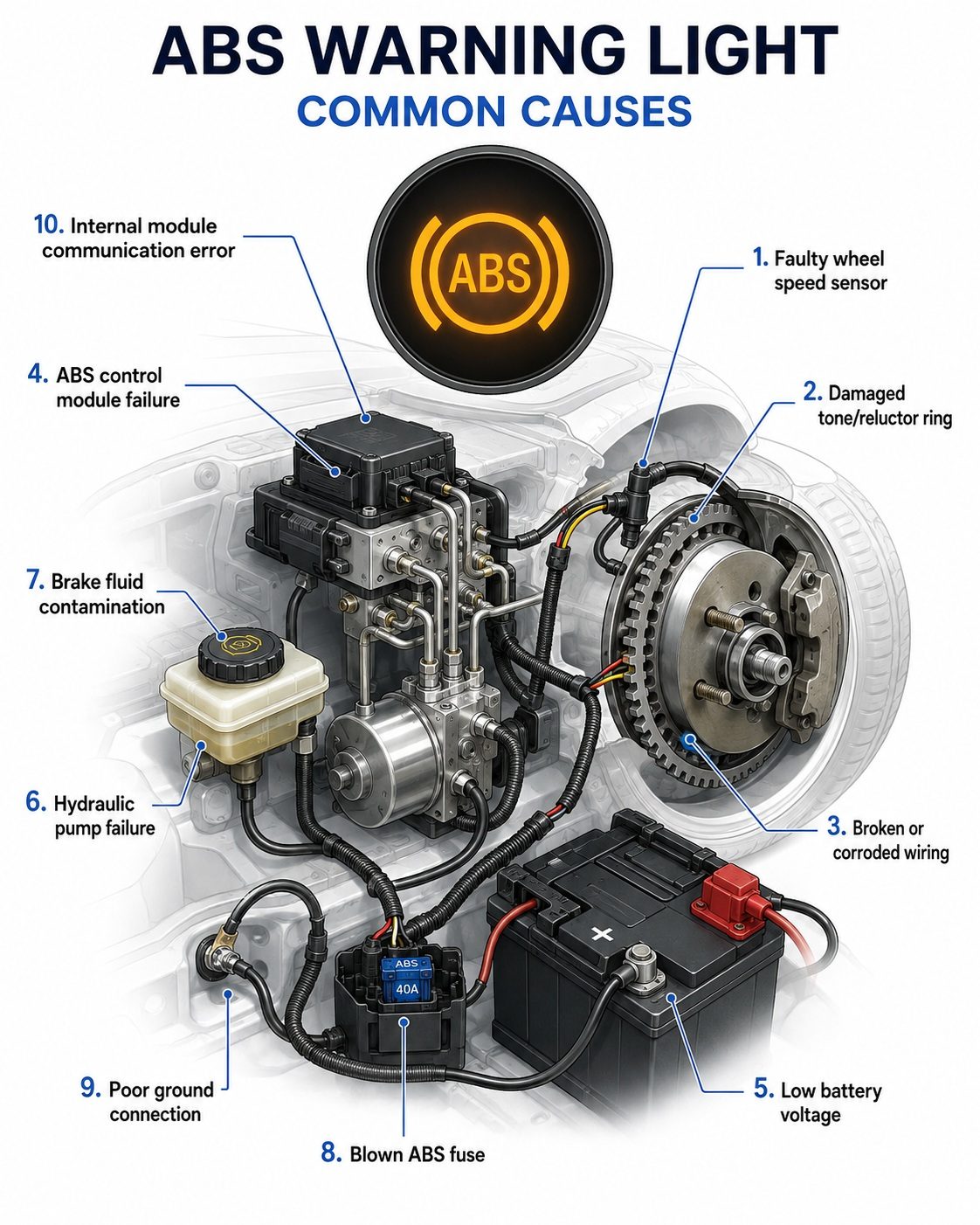
Faulty Wheel-Speed Sensors: These sensors monitor the speed and rotation of each wheel. If one of these sensors malfunctions, it can send incorrect data to the ABS control module, causing the warning light to come on.
-
Damaged Tone or Reluctor Ring: These components work in tandem with the wheel-speed sensors. If the ring is damaged or missing teeth, it can disrupt the sensor's readings, leading to ABS activation.
-
Broken or Corroded Wiring: Wiring issues can interfere with the communication between the sensors and the control module. Corroded or broken wires can cause intermittent or permanent ABS warnings.
-
ABS Control-Module Failure: The control module is the brain of the ABS system. If it fails, the entire system may not function correctly, triggering the warning light.
-
Low Battery Voltage: Inadequate battery voltage can affect the performance of the ABS system. If the battery is weak, it may not supply enough power to the ABS components.
-
Contaminated Brake Fluid: Brake fluid can become contaminated over time, affecting the performance of the ABS system. Contaminated fluid can cause issues with the hydraulic components, leading to ABS activation.
-
Hydraulic-Pump Failure: The hydraulic pump is essential for the operation of the ABS system. If it fails, the system may not be able to modulate brake pressure effectively, causing the warning light to come on.
-
Blown ABS Fuse: A blown fuse can prevent the ABS system from receiving power, leading to a warning light.
-
Poor Ground Connection: Proper grounding is essential for the electrical components of the ABS system. A poor ground connection can cause intermittent or permanent issues, triggering the warning light.
-
Internal Communication Error: Sometimes, the ABS warning light can be triggered by internal communication errors within the system. This can be due to faulty components or wiring issues.
Diagnosing the Problem
Diagnosing the exact cause of the ABS warning light can be complex. Here are some steps to help you identify the issue:
- Check for Obvious Issues: Start by inspecting the wheel-speed sensors, wiring, and brake fluid. Look for visible damage or corrosion.
- Use an OBD-II Scanner: An OBD-II scanner can read diagnostic trouble codes (DTCs) stored in the vehicle's computer. These codes can provide clues about the specific issue causing the ABS warning light.
- Inspect the Control Module: If the control module is suspected to be faulty, it may need to be replaced. This is a job best left to a professional mechanic.
- Professional Diagnosis: If the problem persists, it’s best to take your vehicle to a professional mechanic for a thorough inspection. They have the tools and expertise to diagnose and fix complex issues.
Practical Tips
Regular Maintenance
Regular maintenance can help prevent ABS issues. Here are some practical tips:
- Check Brake Fluid Regularly: Brake fluid should be checked and changed according to the manufacturer's recommendations. Contaminated brake fluid can cause significant problems.
- Inspect Wiring and Sensors: Periodically inspect the wiring and wheel-speed sensors for signs of damage or corrosion. Address any issues promptly.
- Battery Health: Ensure your battery is in good condition and has sufficient voltage. A weak battery can affect the performance of the ABS system.
Addressing the Warning Light
If the ABS warning light comes on, here’s what you should do:
- Do Not Ignore It: Ignoring the warning light can lead to more significant problems and compromise your safety.
- Check for Simple Causes: Inspect the brake fluid, wiring, and sensors for obvious issues.
- Use an OBD-II Scanner: If you have access to an OBD-II scanner, use it to read the DTCs. These codes can help you understand the problem better.
- Consult a Professional: If the issue is complex, consult a professional mechanic for a thorough diagnosis and repair.
Important Takeaways
Understanding the causes of the ABS warning light and taking appropriate actions can help ensure your safety on the road. Regular maintenance, prompt inspection, and professional diagnosis are key to keeping your braking system in top condition.
Conclusion
The ABS system is crucial for maintaining control during sudden braking and slippery conditions. When the ABS warning light illuminates, it's essential to address the issue promptly. By understanding the common causes and taking proactive steps, you can ensure the safety and reliability of your vehicle's braking system.
Watch the Reel
Questions readers ask
What does it mean when the ABS warning light turns on?
The ABS warning light indicates that there is an issue with your vehicle's anti-lock braking system. This could range from a minor problem, like a faulty sensor, to more serious issues, such as problems with the control module or low battery voltage. It's important to address this promptly to ensure your braking system functions correctly.
Can I still drive my car if the ABS light is on?
While your regular brakes may still work, driving with the ABS light on is not recommended. The ABS system is designed to prevent wheel lock-up during hard braking, which is crucial for maintaining control, especially in slippery conditions. It's best to have the issue diagnosed and repaired as soon as possible.
What are the most common causes of the ABS warning light coming on?
Common causes include faulty or damaged brake sensors, issues with the ABS control module, low battery voltage, and damaged wiring within the brake system. Regular brake system maintenance can help prevent some of these issues, but addressing any brake system warning lights promptly will help mitigate the risks.
How can I reset the ABS warning light?
Resetting the ABS warning light typically requires more than just turning the ignition on and off. You may need to use a diagnostic tool to clear the fault codes. However, it's important to note that resetting the light without fixing the underlying issue will not solve the problem and could compromise safety.
Can low brake fluid cause the ABS light to come on?
Low brake fluid itself does not typically cause the ABS light to come on, but it can indicate a larger issue that might affect your braking system. If your brake fluid is low, it's crucial to check for leaks and have the issue addressed promptly.
What should I do if I suspect I need to replace an ABS sensor?
If you suspect an ABS sensor issue, it's best to have a professional mechanic diagnose the problem. They can use diagnostic tools to pinpoint the exact cause and determine if a faulty sensor is the problem. Replacement should be done by a professional to ensure it's done correctly, and that the new sensor is properly calibrated.
Related deep dives
Similar reads based on topic and creator.


Recent articles
Fresh deep dives from the latest Reels we unpacked.




Comments
Be the first to comment.