Political Commentary on Narendra Modi's Forgiveness
Prime Minister Narendra Modi's recent call for compassion towards students involved in the Jantar Mantar protest has sparked a wave of reactions. The controversy began with the release of a selfie-style Instagram video by Narendra Modi. In this video, the Prime Minister extended a message of forgiveness to the students who had been accused of abusing him. The video was a direct response to the protest where students were involved in a heated exchange with the police.
However, the message of compassion and forgiveness from the Prime Minister was met with skepticism from political commentator and Cockroach Janta Party (CJP) founder, Abhijeet Dipke. Dipke questioned whether the Prime Minister's message of forgiveness would extend beyond the video and into concrete actions.
Context: Narendra Modi’s Call for Forgiveness
Narendra Modi’s video was a significant move in his political strategy. It aimed to address the ongoing tensions and show a more compassionate side of his leadership. The video was personal and relatable, intended to bridge the gap between the students and the authorities. However, it also raised questions about the sincerity and effectiveness of such a message in real-world scenarios.
Commentary from Abhijeet Dipke
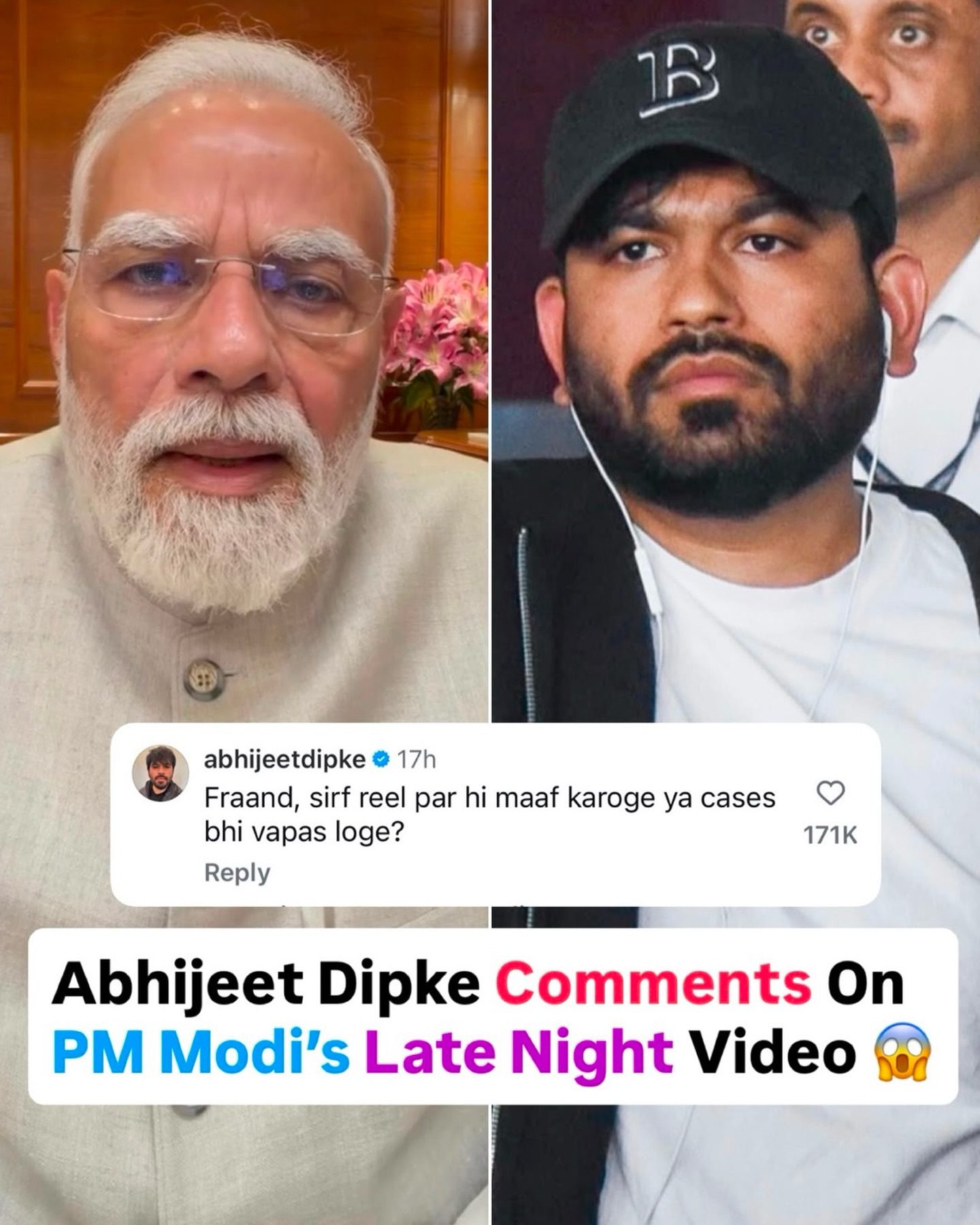
Abhijeet Dipke, a well-known political commentator, took to social media to express his views on Prime Minister Modi’s recent Instagram video. Dipke's comment, "Fraand, sirf reel par hi maaf karoge ya cases bhi vapas loge?" roughly translates to "Friend, will you forgive them only for the reel or will you also take back the cases?" His question cuts to the heart of an issue: Can a video post with a message of forgiveness be enough to resolve the real-world problems that the students are facing?
Dipke's comment is a play on the phrase "reel par," which refers to the video and social media platform. By using the term "reel," he suggests that the Prime Minister’s message may be more performative than meaningful. He questions whether Narendra Modi aims to gain sympathy through the video without taking concrete steps to address the issues raised by the protesting students.
Analysis of the Political Commentary
The split-screen visuals in the video showcase Narendra Modi and Dipke, with the overlay text of Dipke’s comment adding a layer of critique. Politicians often use social media to connect with their audience, but Dipke's question highlights the gap between virtual compassion and tangible actions. Political commentators often critique the sincerity of such gestures to see if they are backed by substantial policy changes or actions.
The Importance of Real-World Actions
Abhijeet Dipke’s comment underscores the importance of aligning rhetorical gestures with concrete actions. In a political landscape where social media plays a pivotal role, the distinction between performative gestures and genuine compassion becomes crucial. Leaders must ensure that their messages of compassion and forgiveness are backed by real-world actions to maintain credibility and trust.
Practical Tips for Political Leadership
Leaders can take several steps to ensure their messages of compassion and forgiveness are aligned with real-world actions:
- Follow through on public statements with tangible actions. Making a statement and then not following through can lead to public frustration and distrust.
- Engage in meaningful dialogue with those affected. Listening to the concerns and grievances of the people can help in understanding the root cause of the issues and taking appropriate measures.
- Ensure transparency in decision-making. Open communication about the steps being taken to address the issues can build trust and credibility.
Important Takeaways
The political commentary on Narendra Modi’s video by Abhijeet Dipke highlights several key points:
- Political leaders need to ensure their messages of compassion and forgiveness are backed by real-world actions.
- There is a significant difference between performative gestures and genuine compassion.
- Public statements and social media posts must be aligned with concrete, meaningful actions to maintain credibility and trust.
Conclusion
The ongoing debate between Narendra Modi and Abhijeet Dipke underscores the importance of aligning political rhetoric with real-world actions. As leaders and politicians use social media to connect with their audience, it is essential to ensure that their messages are not just performative but backed by genuine efforts to address the issues. This real-world alignment can help in building trust and credibility, which are crucial for effective leadership.
Watch the Reel
Questions readers ask
Why did Narendra Modi release an Instagram video addressing protesting students?
Narendra Modi released an Instagram video in response to a protest at Jantar Mantar where students were involved in a heated exchange with the police. In the video, Modi extended a message of forgiveness to the students who had been accused of abusing him, urging compassion and understanding.
What is Abhijeet Dipke's stance on Narendra Modi's forgiveness message?
Abhijeet Dipke, a political commentator and founder of the Cockroach Janta Party (CJP), has expressed skepticism about the sincerity and practical implications of Narendra Modi's forgiveness message. Dipke doubts whether the Prime Minister's message of forgiveness will translate into meaningful action or change.
How did Narendra Modi's message resonate with the public and critics?
Narendra Modi's call for compassion sparked a wave of reactions, ranging from support to skepticism. While some appreciated the message of forgiveness, critics like Abhijeet Dipke questioned its authenticity and potential impact on the broader political and social landscape.
What was the context of the student protests mentioned in Modi's video?
The student protests referenced in Narendra Modi's video took place at Jantar Mantar, where students were involved in a heated exchange with the police. The protests highlighted broader issues and tensions that the students were advocating for, leading to Modi's response.
What is the significance of the 'Maaf Karoge' video in Indian politics?
The 'Maaf Karoge' (Will you forgive) video is significant as it showcases Prime Minister Narendra Modi's attempt to address and defuse a tense political situation. The video highlights the role of social media in political communication and the importance of public perception in shaping political narratives.
What led to Abhijeet Dipke's criticism of Narendra Modi's message?
Abhijeet Dipke's criticism stems from his doubts about the sincerity and practical outcomes of Narendra Modi's message. Dipke has questioned whether the Prime Minister's call for compassion will lead to any tangible changes or if it is merely a strategic move to sway public opinion.
Will Narendra Modi's message have any impact on future student protests in India?
The impact of Narendra Modi's message on future student protests is uncertain. While it may encourage a more compassionate approach, critics like Abhijeet Dipke argue that meaningful change requires more than just words. The actual effects on future protests will depend on how the government's actions align with their rhetoric.
Recent articles
Fresh deep dives from the latest Reels we unpacked.




Comments
Be the first to comment.