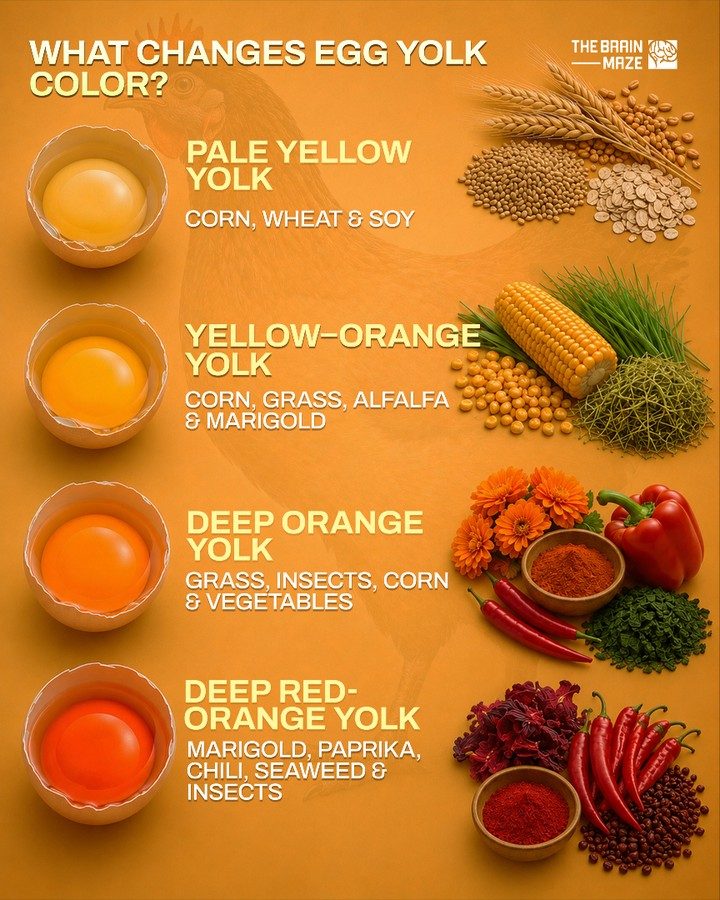
Egg Yolk Color
The color of an egg yolk is a direct result of the hen's diet. It's not determined by the color of the shell or the farming method. Understanding what influences yolk color can provide insights into the nutritional value and quality of the eggs.
The hen's diet, particularly the intake of natural pigments, heavily influences yolk color. Diets low in natural pigments result in pale yellow yolks. On the other hand, feeds rich in carotenoids, which are found in foods like grass, marigold, vegetables, and paprika, produce deeper, more vibrant orange or red-orange yolks. These carotenoids are pigments found in plants and some insects, and they are absorbed by the hens and deposited in the yolks.
Context / Why this matters
The color of an egg yolk is not just an aesthetic factor; it can also indicate the nutritional content of the egg. Diverse natural pigments in a hen’s diet can lead to a range of yolk colors, each with different nutritional implications. By understanding the factors that influence yolk color, consumers can make informed decisions about the eggs they purchase and consume.
Main discussion
Egg yolk color is primarily influenced by the hen's diet. Here’s a breakdown of how different dietary components affect yolk color:
PALE YELLOW Yolks
Pale yellow yolks are a result of a diet rich in grains like corn, wheat, and soy. These staples in a hen's diet provide minimal pigment, leading to a lighter yolk color. While these yolks may not be as visually appealing, they are still nutritious and provide essential nutrients like protein and vitamins.
Yellow-Orange Yolks
Corn, grass, alfalfa, and marigold are the main dietary components that contribute to yellow-orange yolks. These ingredients contain more carotenoids than corn, wheat, and soy, which give the yolks a richer, more vibrant color. This color range is often associated with eggs from hens that have access to a more varied diet, including some pasture or forage.
Deep Orange Yolks
Deep orange yolks are associated with a diet rich in grass, insects, corn, and vegetables. This color range indicates a diet rich in carotenoids, particularly luten and zeaxanthin, which contribute to the deep orange hue. These yolks are often found in eggs from hens that have access to a diverse diet, including a significant amount of pasture or forage.
Deep Red-Orange Yolks
Deep red-orange yolks are influenced by a diet rich in marigold, paprika, chili, seaweed, and insects. These ingredients are rich in natural pigments that contribute to the intense red-orange color. This color range is often associated with eggs from hens that have a highly varied diet, including access to a wide range of natural, pigment-rich foods. These yolks are often found in eggs from hens that have access to a highly varied diet, including a significant amount of pasture or forage.
Practical tips
When selecting eggs, pay attention to the yolk color. While it doesn’t indicate the freshness of the egg, it can provide insights into the hen’s diet and the nutritional content of the egg. Here are some practical tips:
-
Look for a Varied Diet: Eggs with deeper orange or red-orange yolks often come from hens with a more varied diet, which can include access to pasture, vegetation, and insects. These diets are typically richer in natural pigments, which contribute to the vibrant yolk color.
-
Consider the Labeling: Look for labels that indicate the hen's diet, such as “pasture-raised” or “free-range.” These labels often suggest a more varied diet and, consequently, a richer yolk color.
-
Check the Color Consistency: While yolk color can vary, a consistent color across multiple eggs is a good indicator of a uniform diet for the hens.
Important takeaways
Egg yolk color is a direct result of the hen's diet, particularly the intake of natural pigments. Diverse natural pigments in a hen’s diet can lead to a range of yolk colors, each with different nutritional implications. By understanding the factors that influence yolk color, consumers can make informed decisions about the eggs they purchase and consume.
Conclusion
The color of an egg yolk is more than just a visual cue; it reflects the nutritional value and dietary diversity of the hen’s diet. Whether you prefer pale yellow yolks or deep red-orange yolks, understanding the factors that influence yolk color can help you make more informed choices when selecting eggs. Next time you reach for a carton of eggs, consider the color of the yolks and the dietary implications behind them.
Watch the Reel
Questions readers ask
What role do natural pigments play in determining egg yolk color?
Natural pigments, specifically carotenoids, are crucial in determining egg yolk color. These pigments are found in various plants and are consumed by hens. The more carotenoids a hen eats, the deeper and more vibrant the orange or red-orange color of the yolk will be. Conversely, a lack of these pigments results in paler, almost yellow yolks.
Which foods can help produce deep orange egg yolks in hens?
To produce deep orange egg yolks, hens should have a diet rich in carotenoids. This includes foods like grass, marigold, vegetables, and even paprika. These foods are high in natural pigments that, once consumed, are deposited in the yolks, resulting in a more vibrant color.
Why do some egg yolks appear pale yellow, while others are orange or red-orange?
The color of egg yolk is determined by the hen's diet. Hens that feed on diets rich in natural pigments like carotenoids develop yolk that are orange or red-orange. In contrast, those that consume fewer of these pigments end up with paler, almost yellow yolks. Therefore, the variation in color is entirely due to the hen's diet.
Does the color of an egg shell have any impact on the yolk color?
No, the color of an egg yolk is determined by the hen's diet and not the shell color. The shell color is determined by the breed of the hen and has nothing to do with the yolk color. For example, hens that lay brown eggs can also produce either pale yellow or orange yolks, depending on their diet.
How does a hen's diet affect the overall quality of the egg?
A hen's diet not only affects the yolk color but also the overall quality of the egg. A diet rich in natural pigments and nutrients can lead to more vibrant yolk and can also potentially improve the health and nutritional content of the egg. Free-range hens who have a diverse diet tend to produce eggs with more vibrant yolks.
Recent articles
Fresh deep dives from the latest Reels we unpacked.




Comments
Be the first to comment.