Service Area Landing Pages: Enhancing Your Local SEO Strategy
Service area businesses (SABs) often struggle with local SEO, but crafting exceptional service area landing pages can significantly improve your chances of ranking higher in search results. These pages are crucial for capturing local leads and converting them into customers. However, common mistakes such as duplicate content, lack of unique local content, and incomplete sections can hinder your efforts. To address these issues and provide a comprehensive guide, Miriam Ellis of WhiteSpark has compiled an ultimate guide to service area landing pages.
Why This Matters
Service area businesses, such as plumbers, electricians, and cleaning services, operate within specific geographical areas. Effective local SEO strategies are vital for these businesses to attract customers who are searching for services in their local vicinity. Service area landing pages play a pivotal role in this strategy by providing tailored, locally relevant content that matches the intent of searchers in each specific area. This not only improves your rankings but also enhances user experience, leading to higher conversion rates.
Building Effective Service Area Landing Pages
Common Mistakes to Avoid
Before diving into the advanced elements, it's important to recognize and avoid common mistakes that can hurt your rankings. These include:
- Duplicate Content: Copying the same content across all service area pages with only the city name changed.
- Lack of Local Relevance: Failing to include unique, locally relevant content that speaks to the specific needs and interests of customers in each area.
- Incomplete Content: Missing key sections or half-assing the content, which can lead to a poor user experience and lower rankings.
- Mismatched Intent: Not aligning the content with the search intent of users in the given service area.
Eight Advanced Elements for Your Service Area Landing Pages
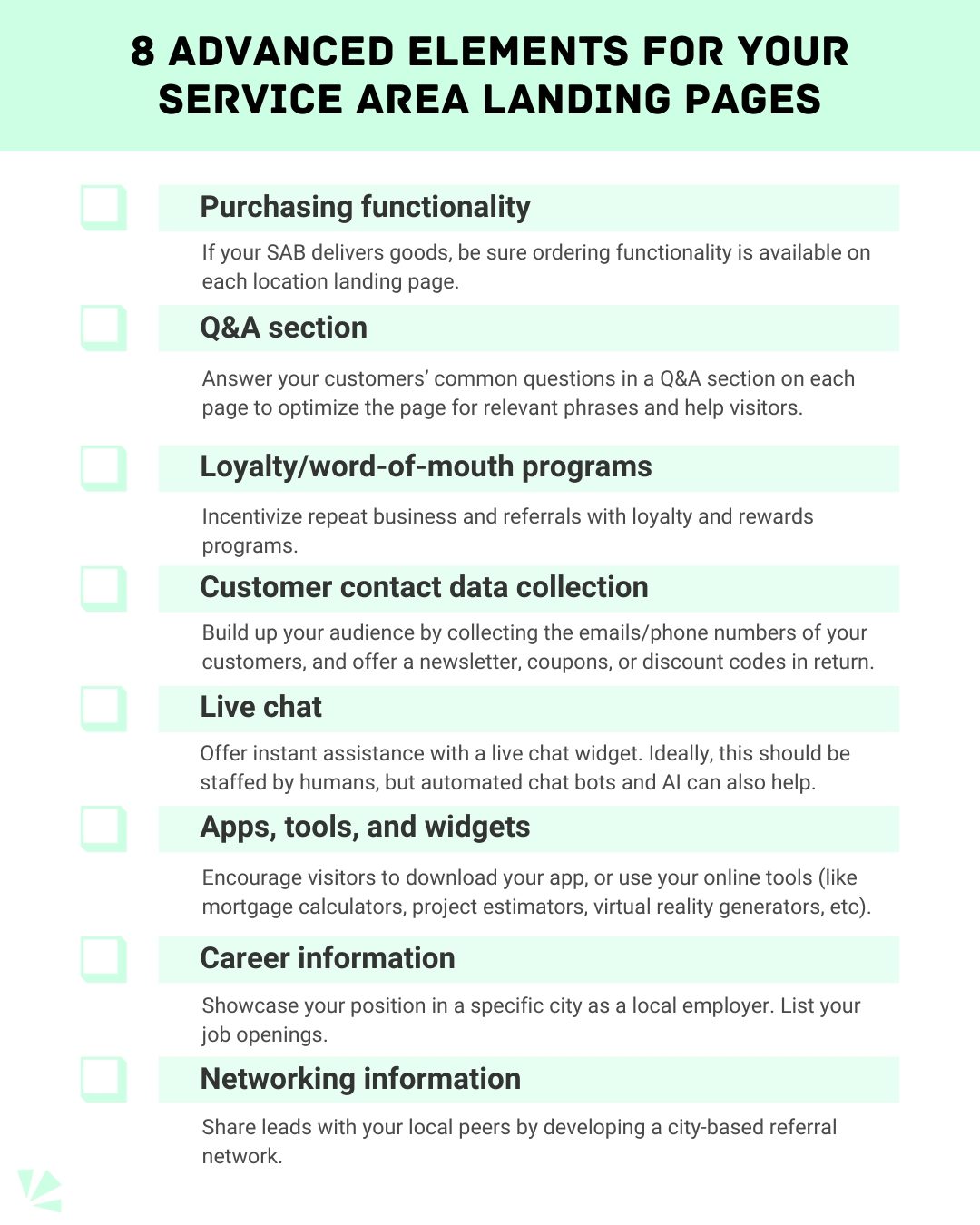
To create a compelling and effective landing page, integrate these eight advanced elements:
1. Q&A Section
Incorporating a Q&A section allows you to address common questions and concerns that potential customers might have. This not only provides valuable information but also helps in optimizing the page for long-tail keywords, which can improve search engine rankings.
2. Purchasing Functionality
If your SAB delivers goods, ensure that purchasing functionality is available on each location landing page. This includes clear call-to-action (CTA) buttons, easy-to-navigate checkout processes, and secure payment options. Offering a seamless purchasing experience can significantly enhance customer satisfaction and conversion rates.
3. Loyalty and Word-of-Mouth Programs
Incentivize repeat business by implementing loyalty and word-of-mouth programs. These programs can include discounts for repeat customers, referral bonuses, and rewards for leaving reviews. Such initiatives encourage customer retention and attract new leads through positive word-of-mouth.
4. Customer Contact Data Collection
Collecting customer emails and phone numbers through opt-in forms and lead magnets is crucial. Offer incentives such as exclusive discounts, free consultations, or valuable content in exchange for contact information. This builds your email list and allows for targeted marketing campaigns.
5. Live Chat Support
Offering live chat support on your landing pages can greatly enhance user experience. It provides instant assistance to potential customers, addresses their queries in real-time, and helps in capturing leads who may otherwise leave the page due to unanswered questions.
6. Apps, Tools, and Widgets
Encourage app downloads or the use of online tools and widgets that can benefit your customers. For example, a plumber could offer a tool for estimating water usage or a cleaning service could provide a widget for scheduling appointments. These tools add value to your landing page and engage users more effectively.
7. Career Information
Showcasing career opportunities on your landing pages can attract potential employees and strengthen your brand image. Highlight job openings, company culture, and benefits to position your business as an attractive employer in the local community.
8. Networking Information
Sharing leads and networking information can help build a strong local network. Partner with local businesses, offer referral programs, and share resources that can benefit both your business and your clients. This collaborative approach can lead to mutual growth and increased visibility.
Practical Tips for Optimizing Service Area Landing Pages
Conduct Thorough Keyword Research
Identify and incorporate local keywords that your target audience is searching for. Use tools like Google Keyword Planner, SEMrush, and Ahrefs to find relevant keywords and long-tail phrases. This helps in optimizing your content for local search queries.
Create Unique, Locally Relevant Content
Tailor the content on each landing page to the specific needs and interests of customers in that area. Include local landmarks, community events, and area-specific language to make the content more relatable and engaging.
Optimize for Mobile
Ensure that your landing pages are mobile-friendly, as a significant portion of local searches are conducted on mobile devices. Use responsive design to provide a seamless experience across different devices and screen sizes.
Use High-Quality Images and Videos
Incorporate high-quality images and videos that showcase your services, team, and local projects. Visual content not only enhances the user experience but also makes your landing pages more shareable and engaging.
Implement Local Schema Markup
Use local schema markup to provide search engines with structured data about your business, such as location, hours of operation, and customer reviews. This can enhance your visibility in local search results and improve click-through rates.
Encourage and Showcase Customer Reviews
Encourage customers to leave reviews on platforms like Google, Yelp, and Facebook. Display these reviews prominently on your landing pages to build trust and credibility. Highlight positive feedback and address negative reviews promptly and professionally.
Important Takeaways
Crafting effective service area landing pages is essential for SABs to improve their local SEO and capture more leads. By avoiding common mistakes and incorporating advanced elements, you can create pages that are not only optimized for search engines but also provide a valuable experience for your users. Remember to:
- Address common questions with a Q&A section.
- Offer purchasing functionality for goods delivery.
- Implement loyalty and word-of-mouth programs.
- Collect customer contact data and offer incentives.
- Provide live chat support for instant assistance.
- Encourage the use of apps, tools, and widgets.
- Showcase career opportunities and networking information.
Conclusion
Creating exceptional service area landing pages is a strategic investment for SABs. By focusing on unique, locally relevant content, optimizing for search intent, and incorporating advanced elements, you can significantly improve your local SEO rankings and capture more leads. With the ultimate guide provided by Miriam Ellis, you have a comprehensive roadmap to build and optimize your service area pages, setting the stage for a successful new year.
Watch the Reel
Questions readers ask
What are service area pages and why are they important for local businesses?
Service area pages are specific web pages designed to target and provide information about the services a business offers in particular geographical areas. They are important for local businesses as they help improve local SEO, attract nearby customers, and enhance the chances of ranking higher in search results, making it easier for potential customers to find services in their area.
How can I optimize my service area pages for better local SEO performance?
To optimize your service area pages, focus on creating unique, locally relevant content for each area you serve. Include specific details about the services offered in those locations, use local keywords, and ensure the information is tailored to the residents of each area. Avoid duplicating content across multiple pages, and make sure each page is complete with relevant information.
What are some common mistakes to avoid when creating service area landing pages?
Common mistakes include using duplicate content across multiple pages, lacking unique local content, and having incomplete sections on the pages. To avoid these, ensure each page is distinct with specific details about the area and the services offered, and double-check that all necessary information is included.
How can tailored landing pages help improve local business leads?
Tailored landing pages help improve local business leads by providing specific, relevant information that addresses the needs and interests of potential customers in a particular area. This makes the content more engaging and useful, increasing the likelihood that visitors will convert into leads and, ultimately, customers.
What advanced elements should I include in my service area pages to enhance their functionality?
Including advanced elements like customer testimonials, local case studies, FAQs, and clear calls-to-action can enhance the functionality of your service area pages. These elements make the pages more informative, engaging, and user-friendly, helping to build trust and encourage potential customers to take the next step.
How can local SEO for plumbers and cleaners benefit from well-crafted service area pages?
Well-crafted service area pages can significantly benefit local SEO for plumbers and cleaners by providing detailed, area-specific information that helps these businesses rank higher in local search results. This makes it easier for residents in those areas to find and contact these services, increasing the likelihood of attracting and converting local leads.
What steps should I follow to create effective service area landing pages?
To create effective service area landing pages, follow these steps: conduct thorough research to identify the specific needs and keywords for each service area, create unique content for each page, include local keywords, and provide clear calls-to-action. Regularly update the pages to ensure the information remains accurate and relevant, and monitor their performance to make necessary adjustments.
Recent articles
Fresh deep dives from the latest Reels we unpacked.




Comments
Be the first to comment.