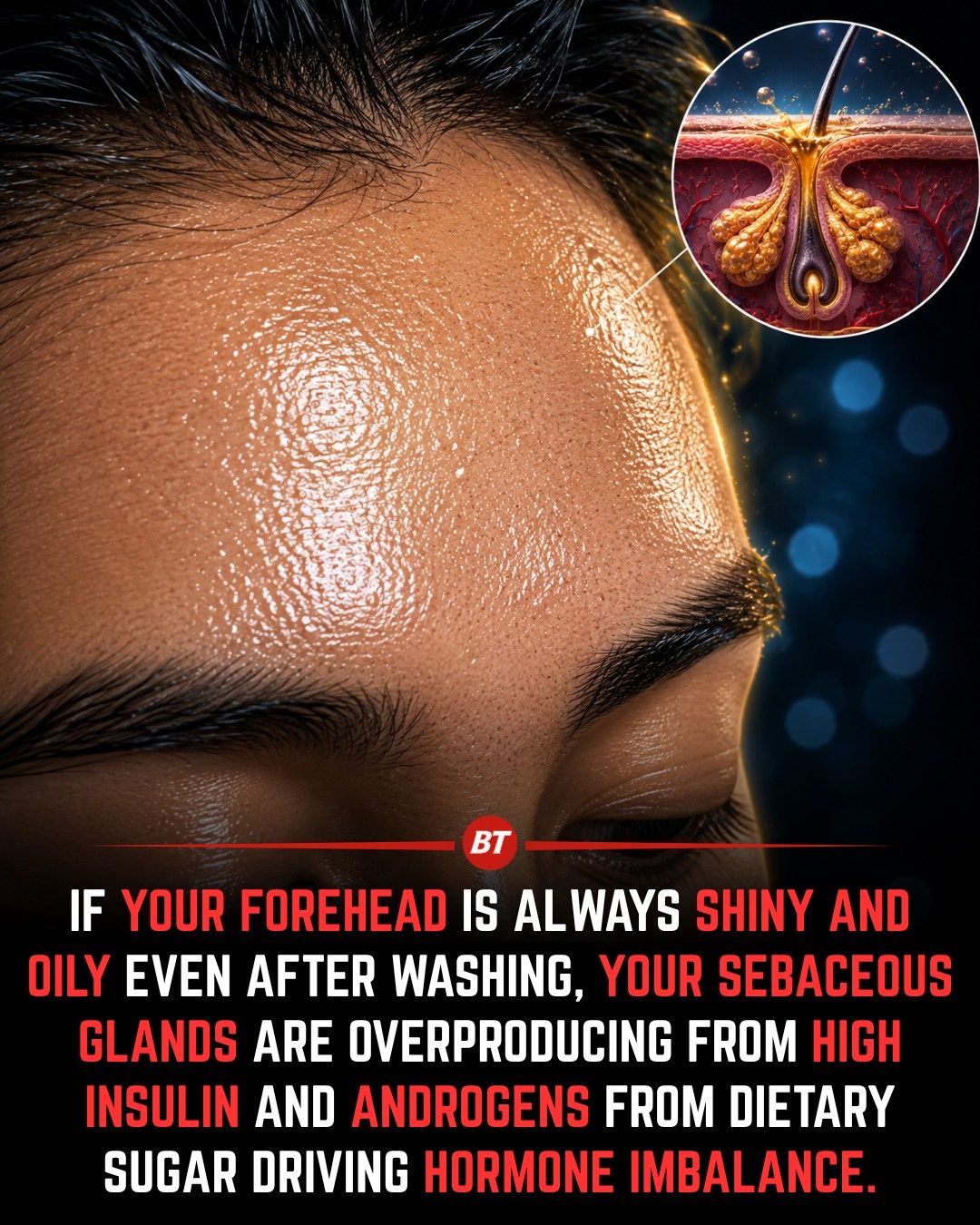
Forehead Oiliness
A shiny forehead, even after washing, may indicate more than just a need for better cleansing. It could be a sign of overactive sebaceous glands, influenced by diet, hormones, and blood sugar regulation.
Context
Understanding the causes of forehead oiliness can help manage this common skin concern. Sebaceous glands, which produce sebum—an oil that moisturizes and protects the skin—are highly sensitive to androgens, hormones that stimulate oil production. While genetics play a significant role, recent research highlights the impact of diet and blood sugar regulation on sebaceous gland activity. High insulin and androgen levels, often driven by dietary sugar, can lead to hormone imbalances that contribute to excess oil production.
Main discussion
The Role of Diet and Blood Sugar
The skin's oil production is influenced by various factors, including diet. Researchers have found that diets high in refined sugars and rapidly digested carbohydrates can increase insulin and insulin-like growth factor-1 (IGF-1). These hormones stimulate sebaceous glands, leading to excess oil production in susceptible individuals. This is particularly relevant for those with persistently oily skin, as it suggests that diet can play a crucial role in managing oiliness.
The Impact of Hormones
Androgens are the primary hormones responsible for stimulating oil production in the skin. These hormones are sensitive to fluctuations in insulin and IGF-1 levels. Elevated insulin and IGF-1, often resulting from high-glycemic diets, can increase androgen activity. This, in turn, stimulates skin cells and oil glands, creating an environment conducive to clogged pores and breakouts. Hormonal imbalances can make managing oily skin more challenging, as the body may produce excess sebum even after washing.
Dietary Factors and Sebum Production
Studies published in the Journal of the American Academy of Dermatology and Nutrients have linked high-glycemic diets with increased sebum production and a greater risk of acne. High-glycemic foods, such as refined sugars and rapidly digested carbohydrates, can cause a spike in blood sugar levels and increase insulin production. This insulin surge can lead to elevated IGF-1 levels, which further stimulate sebaceous glands. Balanced diets rich in whole foods, vegetables, lean protein, healthy fats, and high-fiber carbohydrates can help maintain healthy blood sugar levels and reduce insulin spikes, potentially mitigating the risk of excess oil production.
The connection between diet and sebum production underscores the importance of a balanced diet for maintaining healthy skin. By focusing on whole foods and limiting sugary drinks and heavily refined snacks, individuals can support their skin's natural oil production and potentially reduce the risk of acne and other skin concerns.
The Role of Genetics and Other Factors
While diet plays a significant role, genetics, puberty, stress, climate, medications, and skincare habits can also affect how much oil the skin naturally produces. For instance, genetics can influence the size and activity of sebaceous glands, contributing to oilier or drier skin. During puberty, hormone fluctuations can lead to increased sebum production, resulting in oilier skin. Additionally, stress can trigger the release of cortisol, a hormone that can stimulate oil glands and exacerbate oiliness. Environmental factors, such as humidity and climate, can also affect sebum production, with warmer, more humid conditions often leading to oilier skin.
A comprehensive approach to managing forehead oiliness involves addressing multiple factors, including diet, hormone balance, genetics, stress, and skincare. By understanding and addressing these factors, individuals can support their skin's natural oil production and maintain a healthy balance.
Practical tips
To manage forehead oiliness effectively, consider the following tips:
- Diet: Focus on a balanced diet rich in whole foods, vegetables, lean protein, healthy fats, and high-fiber carbohydrates. Limit sugary drinks and heavily refined snacks to help maintain healthy blood sugar levels and reduce insulin spikes.
- Skincare: Use a gentle cleanser and non-comedogenic moisturizer to support healthy skin from both the inside and outside. Avoiding harsh cleansers that can strip the skin of natural oils or excessively dry it and stimulate more oil production.
- Hydration: Stay hydrated by drinking plenty of water throughout the day. Proper hydration can help regulate sebum production and maintain the skin's natural moisture balance.
- Stress Management: Manage stress through techniques such as meditation, yoga, or deep breathing exercises. Reducing stress can help minimize cortisol levels, which can stimulate oil glands.
- Professional Guidance: Consult a dermatologist or healthcare provider for personalized advice tailored to your specific skin concerns and overall health.
Important takeaways
- Diet Influences Oil Production: High-glycemic diets can increase insulin and IGF-1 levels, stimulating sebaceous glands and contributing to excess oil production.
- Hormonal Balance: Androgens, stimulated by elevated insulin and IGF-1, play a crucial role in regulating oil production. Hormonal imbalances can exacerbate oiliness.
- Multiple Factors at Play: Genetics, puberty, stress, climate, medications, and skincare habits can also affect sebum production.
- Balanced Approach: Managing forehead oiliness involves addressing diet, hormones, stress, and skincare. A holistic approach can help maintain a healthy balance.
Conclusion
Managing forehead oiliness requires a multifaceted approach that addresses diet, hormones, and skincare. By focusing on a balanced diet, managing stress, and using gentle skincare products, individuals can support their skin's natural oil production and maintain a healthy balance. Understanding the interplay between diet, hormones, and sebum production is key to effectively managing forehead oiliness and promoting overall skin health. Embracing a holistic approach can lead to healthier, more balanced skin.
Watch the Reel
Questions readers ask
How does sugar in the diet contribute to an oily forehead?
High sugar intake can increase insulin levels, which in turn boosts androgen levels. These androgens stimulate the sebaceous glands to produce more oil, leading to a shinier forehead.
Can changing my diet help reduce oiliness on my forehead?
Yes, managing your diet to include more balanced meals can help regulate blood sugar levels, which will reduce insulin and androgen levels, thereby decreasing oil production.
What types of foods should I avoid to manage excess oil on my forehead?
To manage excess oil, try to avoid foods high in sugar and refined carbohydrates. These foods can cause spikes in insulin and androgen levels, leading to increased oil production.
How does insulin affect the sebaceous glands?
Insulin can stimulate the production of androgens, which are hormones that signal the sebaceous glands to produce more sebum, resulting in a shinier, oilier forehead.
Are there specific diet tips to help manage forehead oiliness?
To manage forehead oiliness, focus on a balanced diet rich in whole foods, lean proteins, and healthy fats. Reduce your intake of processed foods and sugars to help regulate your blood sugar levels.
Does genetics play a role in how diet affects forehead oiliness?
Genetics can influence the sensitivity of your sebaceous glands to hormones, but diet still plays a significant role in managing oil production. Maintaining a healthy, balanced diet can help manage oiliness, even if you are genetically predisposed to oily skin.
How can I manage oils on my forehead effectively?
To effectively manage oils on your forehead, consider reducing your sugar and carb intake to help control insulin and androgen levels, which stimulate oil production. Additionally, maintain a consistent skincare routine that includes gentle cleansing and moisturizing.
Related deep dives
Similar reads based on topic and creator.




Recent articles
Fresh deep dives from the latest Reels we unpacked.




Comments
Be the first to comment.