Financial Crime Losses in 2023: A Breakdown
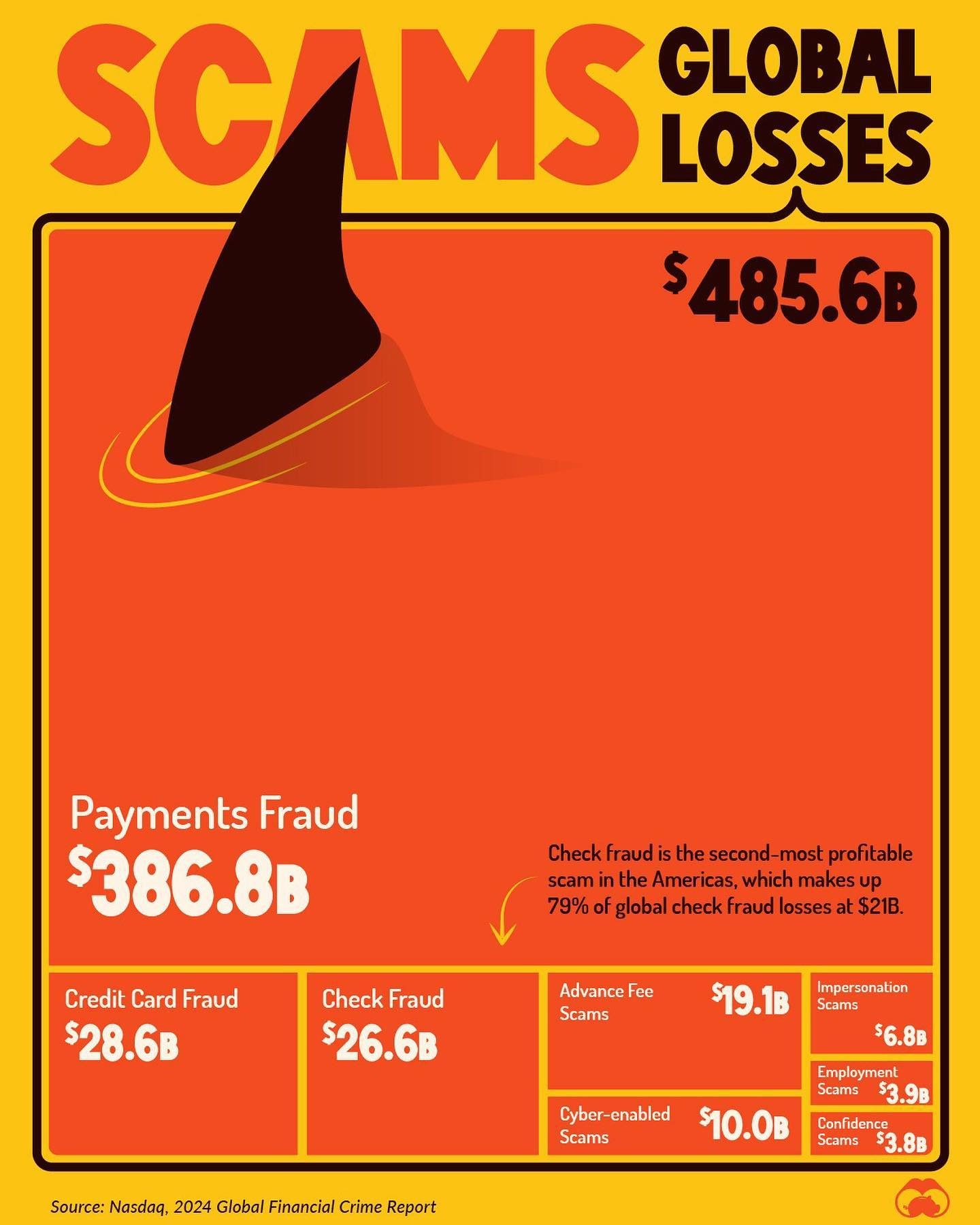
Financial crime losses reached an astronomical $485.6 billion globally in 2023. This staggering figure underscores the pervasive and insidious nature of financial fraud, affecting both individuals and businesses worldwide. The data presented here is sourced from Nasdaq’s 2024 Global Financial Crime Report, offering a comprehensive overview of the various scams and their associated losses.
Why This Matters
The significance of understanding financial crime trends cannot be overstated. By examining the types and extent of financial fraud, individuals and organizations can better protect themselves and mitigate potential risks. The financial impact of these crimes is not just a statistic; it represents real losses for real people and businesses. Whether it's through payment fraud, credit card fraud, or other schemes, the implications are far-reaching and deeply concerning.
Types of Financial Fraud
Financial crimes come in various forms, each with its own mechanisms and impacts. The breakdown of the $485.6 billion in losses reveals the distribution of fraud across different categories.
Payment Fraud
Payment fraud is the most pervasive form of financial crime, accounting for an overwhelming 80% of the total losses. This translates to approximately $386.8 billion in 2023. Payment fraud encompasses a range of illicit activities where payment methods are manipulated to steal from individuals or businesses. This includes unauthorized transactions, account takeovers, and manipulations of the payment process.
Credit Card Fraud
Credit card fraud resulted in losses of $28.6 billion. This type of fraud involves unauthorized use of credit card information to make purchases or withdraw funds. Common tactics include phishing, skimming, and account takeovers.
Check Fraud
Check fraud is a particularly lucrative area for criminals, making it the second-most profitable type of scam. With losses totaling $26.6 billion, check fraud involves the illegal use of checks to steal money from accounts. This can include forging checks, altering check amounts, and creating counterfeit checks.
Cyber-Enabled Scams
Cyber-enabled scams caused $10.0 billion in losses. These scams leverage digital platforms and technologies to deceive victims. Examples include phishing, malware, and other online deception tactics.
Advance Fee Scams
Advance fee scams, which involve convincing victims to pay upfront fees for promised future benefits, led to $19.1 billion in losses. These scams are particularly pernicious because they often target vulnerable individuals who are seeking financial assistance or opportunities.
Impersonation Scams
Impersonation scams, where fraudsters pose as legitimate entities to steal money, resulted in $6.8 billion in losses. These scams can involve impersonating family members, law enforcement, or business executives to gain the victim's trust and extract money.
Confidence Scams
Confidence scams, also known as "con games," are more specialized and less frequent. They accounted for $3.8 billion in losses. These scams involve building trust with the victim over time before executing the fraud. The schemes can be complex and highly personalized.
Practical Tips to Protect Yourself
Given the widespread nature of financial fraud, it's crucial to be vigilant and proactive in protecting yourself. Here are some practical tips to help minimize your risk:
Monitor Your Accounts
Regularly review your financial statements and account activity for any unauthorized transactions. Set up alerts for any unusual activity to catch potential fraud early.
Use Strong, Unique Passwords
Create strong, unique passwords for all your financial accounts. Consider using a password manager to keep track of your credentials securely.
Be Cautious Online
Avoid clicking on unfamiliar links or downloading attachments from unknown sources. Be wary of phishing attempts that try to trick you into revealing personal information.
Verify Requests for Personal Information
Never share personal or financial information unless you are certain of the recipient's legitimacy. If in doubt, contact the entity directly to confirm the request.
Use Secure Payment Methods
Opt for secure payment methods and avoid sharing payment information over unsecured channels. Utilize encrypted payment platforms and services.
Stay Informed
Keep up-to-date with the latest scams and fraud tactics. Being informed can help you recognize potential threats and take appropriate precautions.
Important Takeaways
Financial crime is a growing and evolving threat, with significant losses impacting individuals and businesses globally. Understanding the types of fraud and their associated losses is crucial for developing effective protection strategies. By staying informed, being vigilant, and adhering to best practices, you can mitigate the risks and safeguard your financial well-being.
Conclusion
The $485.6 billion lost to financial crime in 2023 is a stark reminder of the pervasive nature of these crimes. Whether through payment fraud, credit card fraud, or other schemes, the impact is profound. By recognizing the types of scams and implementing practical protection measures, individuals and businesses can better safeguard themselves against these threats. Stay informed, stay vigilant, and take proactive steps to protect your financial security.
Watch the Reel
Questions readers ask
What were the most common types of financial crimes reported in 2023?
The 2023 financial crime report highlights several prevalent types, including payment scams, identity theft, and investment fraud. Payment scams, in particular, were noted as a major contributor to the overall losses, emphasizing the need for vigilance in financial transactions.
What is the significance of the $485.6 billion figure in global financial crime losses?
The $485.6 billion figure represents the total amount lost due to financial crimes in 2023, illustrating the vast and growing scale of this global issue. This figure is a stark reminder of the impact of financial fraud on both individuals and businesses, and underscores the importance of preventive measures and awareness.
How can individuals protect themselves from financial fraud in 2023 and beyond?
Prevention begins with awareness. Individuals can protect themselves by staying informed about the latest scam techniques, implementing robust security measures for their financial accounts, and being cautious with their personal and financial information. Regularly checking financial statements and using fraud detection tools can also help prevent losses.
What are some effective methods for detecting financial fraud?
Effective fraud detection involves monitoring financial activities for unusual patterns. Use of advanced analytics, machine learning, and real-time transaction monitoring can help identify suspicious activities. Additionally, setting up alerts for unusual account activities and regularly reviewing financial statements can aid in early detection.
What types of businesses are most vulnerable to financial fraud in 2023?
All businesses are potentially vulnerable, but small and medium-sized enterprises (SMEs) often face higher risks due to limited resources for fraud prevention. Industries with high transaction volumes, such as finance, e-commerce, and retail, are also particularly targeted. Robust internal controls and employee training can mitigate these risks.
What steps should businesses take to prevent financial fraud in 2023?
Businesses should implement comprehensive fraud prevention strategies, including regular employee training, stringent internal controls, and advanced fraud detection technologies. Conducting regular audits and fostering a culture of transparency and accountability can also help reduce the risk of financial fraud.
How do financial crime trends influence the development of new fraud detection methods?
Financial crime trends drive the development of new fraud detection methods by highlighting emerging scam techniques and vulnerabilities. As scammers adapt their tactics, the need for more sophisticated and adaptive detection methods grows. This ongoing evolution ensures that detection methods remain effective against the latest threats, helping to protect against future losses.
Recent articles
Fresh deep dives from the latest Reels we unpacked.




Comments
Be the first to comment.