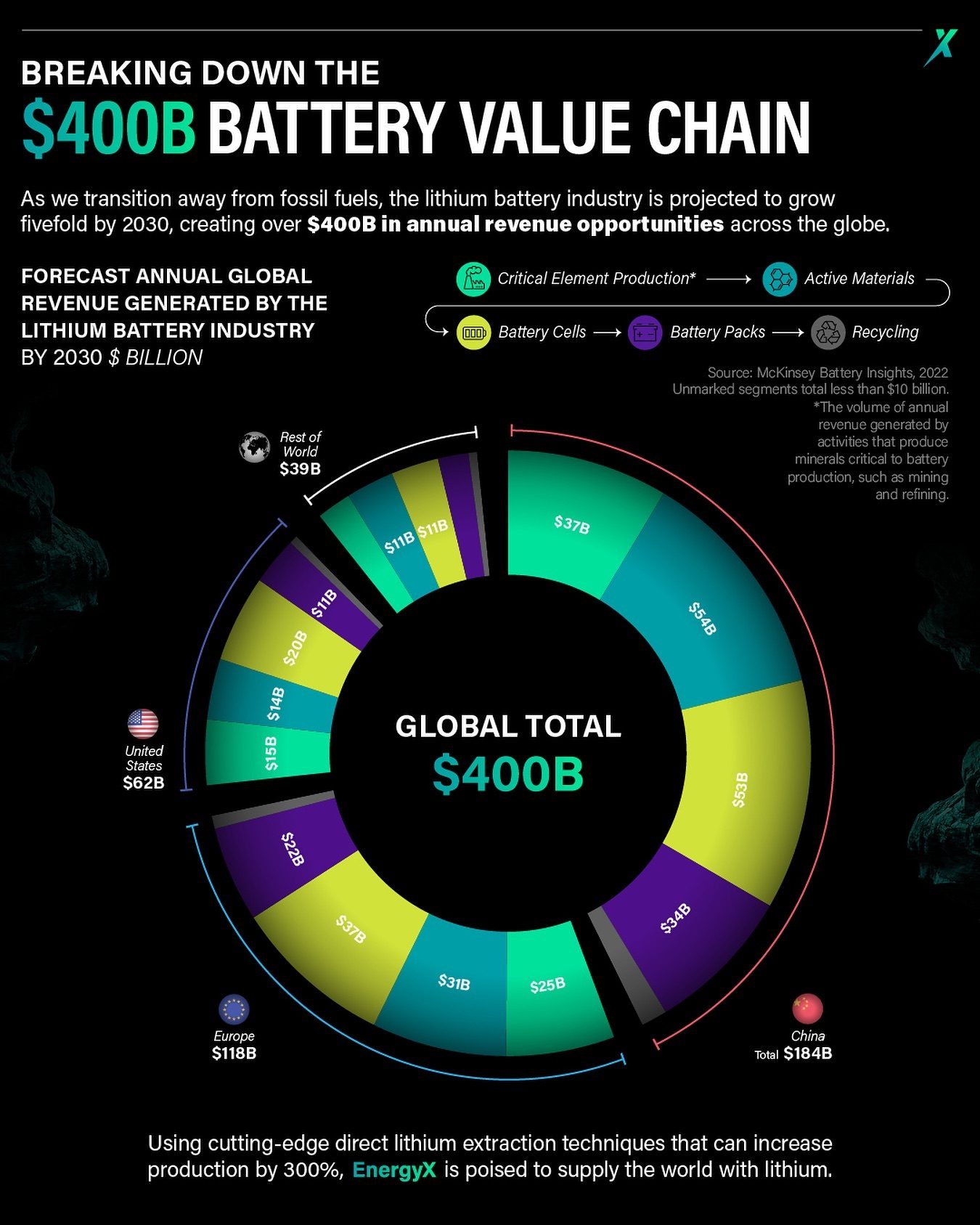
The Lithium Battery Value Chain: A $400 Billion Opportunity by 2030
As the global community shifts away from fossil fuels, the lithium battery industry stands at the forefront of this transition, poised to grow fivefold by 2030. This shift is expected to create over $400 billion in annual revenue opportunities worldwide. The lithium battery value chain encompasses various stages, from critical element production to recycling, each contributing significantly to this projected growth.
Why This Matters
The transition to renewable energy sources is accelerating, driven by concerns over climate change and the desire for energy independence. Lithium batteries are crucial to this shift, powering electric vehicles (EVs), energy storage systems, and a wide range of consumer electronics. Understanding the lithium battery value chain and its potential revenue streams is essential for investors, policymakers, and industry stakeholders.
The Lithium Battery Value Chain: Key Segments
The lithium battery value chain can be broken down into several key segments, each playing a vital role in the overall production and revenue generation process.
Critical Element Production
Critical element production is the foundational stage of the lithium battery value chain. It involves the extraction and processing of raw materials such as lithium, cobalt, and nickel, which are essential for battery production. This stage is capital-intensive and often subject to supply chain disruptions.
Active Materials
Active materials, including cathodes and anodes, are the next stage in the value chain. These materials are produced from the critical elements extracted in the previous stage. The quality and performance of active materials significantly impact the overall battery performance.
Battery Cells
Battery cells are the core components of lithium batteries. They are assembled from active materials and other essential components. The manufacturing of battery cells requires advanced technology and precision engineering.
Battery Packs
Battery packs are assembled from multiple battery cells and include additional components such as a battery management system (BMS) and thermal management systems. These packs are designed to meet the specific energy and power requirements of various applications, from consumer electronics to electric vehicles.
Recycling
Recycling is the final stage of the lithium battery value chain. It involves the recovery of valuable materials from end-of-life batteries. Efficient recycling processes can help reduce the environmental impact of battery production and provide a stable supply of raw materials.
Regional Revenue Projections
The global lithium battery industry is projected to generate over $400 billion in annual revenue by 2030. This revenue will be distributed across different regions, with China, the United States, Europe, and the Rest of the World playing significant roles.
China: The Leader in Lithium Battery Production
China is poised to generate the largest share of revenue, approximately $184 billion, by 2030. This dominance is driven by China's extensive manufacturing capabilities, robust supply chain, and substantial investments in research and development.
The United States: A Growing Market
The United States is expected to generate around $62 billion in revenue from the lithium battery industry by 2030. The U.S. market is characterized by strong demand for electric vehicles and energy storage systems, supported by favorable policies and significant investments in battery technology.
Europe: Innovation and Sustainability
Europe is projected to contribute approximately $53 billion to the global lithium battery revenue by 2030. European companies are known for their innovation and focus on sustainability. The region is investing heavily in advanced battery technologies and recycling solutions.
The Rest of the World: Emerging Opportunities
The Rest of the World, which includes regions such as South America, Africa, and Southeast Asia, is expected to generate around $39 billion in revenue by 2030. These emerging markets present significant opportunities for growth, driven by increasing demand for electric vehicles and energy storage solutions.
EnergyX: Pioneering Lithium Extraction
EnergyX is at the forefront of lithium extraction, utilizing advanced direct lithium extraction techniques. These cutting-edge methods can increase production by up to 300%, positioning EnergyX as a key supplier in the global lithium market. Their role in the value chain is pivotal, ensuring a stable and efficient supply of critical elements for battery production.
Practical Tips for Navigating the Lithium Battery Value Chain
Investing in the Lithium Battery Industry
Investors looking to capitalize on the growing lithium battery industry should consider diversifying their portfolios across the value chain. This includes investing in companies involved in critical element production, active material manufacturing, battery cell assembly, and recycling. Additionally, keeping an eye on technological advancements and market trends can provide valuable insights for informed investment decisions.
Governmental Policies and Regulations
Governments play a crucial role in shaping the lithium battery industry. Policies that promote renewable energy, electric vehicles, and sustainable practices can drive demand and support the growth of the industry. Staying informed about governmental initiatives and regulations can help businesses and investors make strategic decisions.
Technological Innovations
Innovations in battery technology, such as improved active materials and more efficient recycling processes, can significantly impact the value chain. Keeping up with the latest technological advancements and industry trends is essential for staying competitive and maximizing opportunities in the lithium battery market.
Important Takeaways
The lithium battery industry is on the verge of exponential growth, driven by the global shift towards renewable energy. By 2030, the industry is projected to generate over $400 billion in annual revenue, with significant contributions from regions like China, the United States, Europe, and the Rest of the World. Understanding the value chain, from critical element production to recycling, is essential for leveraging the opportunities in this rapidly evolving market.
Conclusion
The lithium battery value chain presents a vast and lucrative opportunity for stakeholders worldwide. As we transition away from fossil fuels, the demand for lithium batteries will continue to rise, driving significant revenue growth. By staying informed about the key segments of the value chain, regional projections, and technological advancements, investors, policymakers, and industry players can position themselves to capitalize on this transformative shift towards a greener future.
Watch the Reel
Questions readers ask
What drives the projected growth of the lithium battery industry by 2030?
The primary drivers are the global shift towards renewable energy sources and the increasing demand for electric vehicles (EVs). As countries and companies strive to reduce carbon emissions, the need for efficient and reliable energy storage solutions, like lithium batteries, is growing rapidly.
Which stages of the lithium battery value chain will see significant growth?
Every stage of the lithium battery value chain is expected to grow, from the extraction of raw materials like lithium and cobalt to the production of battery cells and packs. Additionally, the recycling sector will be crucial as the demand for sustainable practices increases.
How will the electric vehicle market impact the lithium battery industry?
The electric vehicle (EV) market will be a major contributor to the growth of the lithium battery industry. As more consumers switch to EVs, the demand for lithium batteries will surge, driving significant revenue growth in the industry.
What opportunities exist in the recycling of lithium batteries?
The recycling of lithium batteries presents a substantial opportunity. As the use of lithium batteries increases, so will the need for recycling to recover valuable materials and reduce environmental impact. This creates business opportunities for recycling companies and contributes to a more sustainable lithium battery ecosystem.
Which regions are likely to see the most significant growth in the lithium battery industry?
Regions with strong commitments to renewable energy and electric vehicle adoption are likely to see the most significant growth. This includes countries in Europe, North America, and parts of Asia, where governments are investing heavily in green technologies and infrastructure.
How does the global shift towards renewable energy impact the lithium battery industry?
The global shift towards renewable energy sources directly benefits the lithium battery industry by increasing the demand for energy storage solutions. Lithium batteries are essential for storing energy generated from renewable sources like solar and wind, making them a critical component in the transition to a greener economy.
What are the key components of the lithium battery value chain?
The lithium battery value chain includes several key components: lithium mining and processing, battery cell and pack manufacturing, assembly, and recycling. Each of these stages offers unique opportunities for investment and growth as the demand for lithium batteries continues to rise.
Related deep dives
Similar reads based on topic and creator.


Recent articles
Fresh deep dives from the latest Reels we unpacked.




Comments
Be the first to comment.