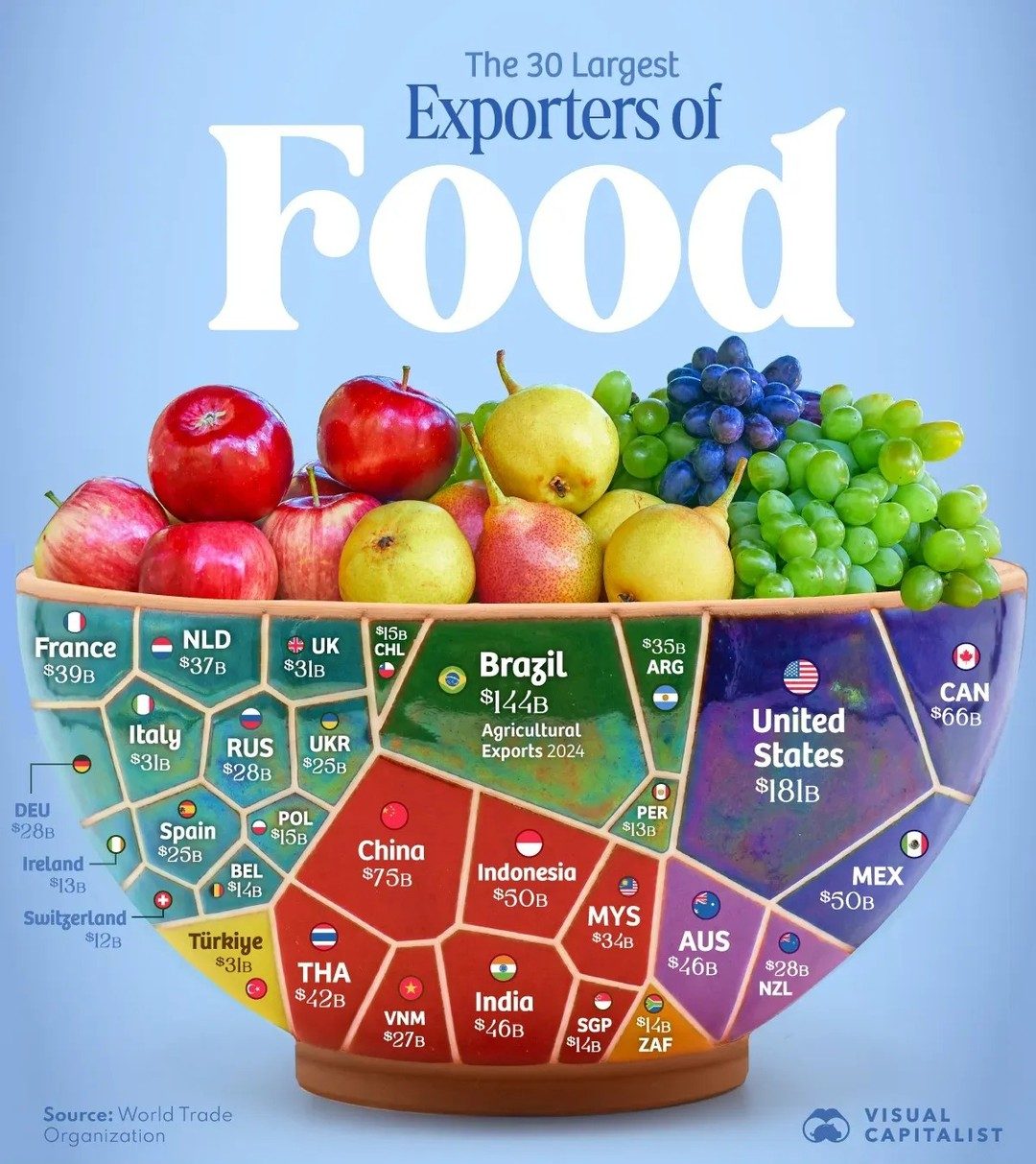
The Top 30 Food Exporting Countries: A Global Perspective
The global food export market is a complex and dynamic landscape, with a handful of countries dominating the trade. Just 10 countries account for nearly half of global food exports, while others play significant roles in various agricultural sectors. Let’s delve into the world’s top 30 food exporting countries, as visualized through an infographic.
Why This Matters
Understanding the distribution of global food exports is crucial for several reasons. It provides insights into the economic power of certain countries, highlights the most competitive agricultural sectors, and helps identify potential trade partners for import and export activities. Additionally, it offers a glimpse into the global food supply chain, which is essential for ensuring food security and sustainability.
Top 30 Food Exporting Countries
United States
The United States leads the global food export market with an impressive $144 billion, showcasing its dominance in agricultural trade. This leadership is supported by advanced farming technologies, vast expanses of arable land, and a diverse range of agricultural products, from grains and soybeans to beef and poultry.
Brazil
Brazil follows closely behind the United States, exporting $144 billion worth of food products. The country is a major player in the global soy and coffee markets, as well as in the production of sugar and beef. Brazil’s agricultural sector is known for its efficiency and sustainability, making it a key player in the global food trade.
Canada
Canada, the third-largest exporter, contributes $66 billion to the global agricultural trade. The country is renowned for its production of wheat, canola, and beef, as well as its extensive fisheries. Canada’s strategic location and robust trade agreements with various countries further bolster its position in the global food export market.
China
China, with $75 billion in food exports, is another major player in the global market. The country’s agricultural sector is diverse, producing a wide range of products, including rice, wheat, poultry, and seafood. China’s large population and growing demand for high-quality agricultural products drive its export activities.
India
India is also a significant food exporter, contributing $46 billion to the global market. The country is renowned for its production of rice, wheat, and spices, as well as its extensive dairy and poultry industries. India’s agricultural sector is characterized by its labor-intensive methods and a diverse range of products.
Other Key Players
Other notable countries in the top 30 food exporting list include:
- Mexico ($66B) — Known for its production of corn, coffee, and beef.
- Australia ($46B) — A major exporter of wheat, beef, and wine.
- Indonesia ($50B) — Specializes in palm oil, coffee, and rubber.
- Argentina ($35B) — A significant player in the soy and wheat markets.
- Switzerland ($31B) — Known for its high-quality dairy products and chocolate.
- Italy ($37B) — Renowned for its wine, olive oil, and pasta.
- Ireland ($25B) — A major exporter of beef and dairy products.
- Turkey ($31B) — Specializes in hazelnuts, figs, and dried fruits.
- Germany ($31B) — Known for its beer, wine, and meat products.
Practical Tips for Understanding Food Exports
1. Analyze Trade Data
To gain a better understanding of the global food export market, start by analyzing trade data from organizations like the World Trade Organization (WTO). This data provides detailed information on the volume and value of food exports from different countries, as well as the types of products being traded.
2. Study Market Trends
Stay updated on the latest market trends and developments in the agricultural sector. This includes monitoring changes in global demand, shifts in consumer preferences, and emerging trade patterns. Keeping track of these trends can help identify new opportunities and potential challenges in the food export market.
3. Explore Trade Agreements
Understanding the impact of trade agreements on the food export market is crucial. These agreements can open new markets, reduce tariffs, and create new opportunities for food exporters. By exploring these agreements, you can gain insights into the regulatory and economic frameworks that govern global food trade.
4. Diversify Agricultural Products
To remain competitive in the global food export market, countries should focus on diversifying their agricultural products. This not only helps in mitigating risks associated with reliance on a single product but also allows countries to capitalize on emerging market opportunities.
Important Takeaways
- The global food export market is highly concentrated, with a few countries dominating the trade.
- The top 30 food exporting countries showcase diverse agricultural sectors, each with its unique strengths and contributions to the global market.
- Analyzing trade data, staying updated on market trends, and exploring trade agreements are essential for understanding the global food export market.
- Diversifying agricultural products and enhancing agricultural practices can help countries remain competitive in the global food export market.
Conclusion
The global food export market is a complex and dynamic landscape, with a handful of countries leading the way. The top 30 food exporting countries, as highlighted in the infographic, offer a comprehensive view of the global agricultural sector. Understanding the distribution of food exports, the key players, and the underlying factors driving the market is crucial for anyone involved in the global food trade. Whether you are a producer, trader, or policy-maker, this information can help you navigate the complexities of the global food export market and make informed decisions.
Watch the Reel
Questions readers ask
Which countries are the largest contributors to the global food export market?
The largest food exporting countries include the United States, Brazil, and Germany, among others. Together, just 10 countries account for nearly half of all global food exports, making them key players in the international agricultural trade.
How can the global food trade map benefit businesses?
The global food trade map helps businesses identify potential import and export partners. By understanding which countries lead in specific food exports, businesses can make informed decisions about where to source products or expand their markets.
What are the top agricultural exports from Brazil and the United States?
Brazil is renowned for its exports of soybeans, coffee, and beef, while the United States leads in exports of soybeans, corn, and wheat. Both countries are significant players in the global agricultural trade, each with their unique strengths.
Where can I find detailed food export statistics?
Detailed food export statistics can be found through various international trade databases and reports. These resources often provide comprehensive data on the top 30 food exporting countries, including specific products and export volumes.
How does understanding global agricultural trade benefit economies?
Understanding global agricultural trade provides insights into the economic power of different countries. It highlights competitive advantages in various agricultural sectors, such as the dominance of certain crops or products, which can inform economic strategies and policies.
What is the significance of the top 30 food exporters?
The top 30 food exporters shape the world's agricultural trade landscape. By analyzing the export data of these countries, stakeholders can gain a better understanding of global food supply chains, identify key players, and anticipate market trends.
Recent articles
Fresh deep dives from the latest Reels we unpacked.




Comments
Be the first to comment.