Wealth Distribution in the U.S.
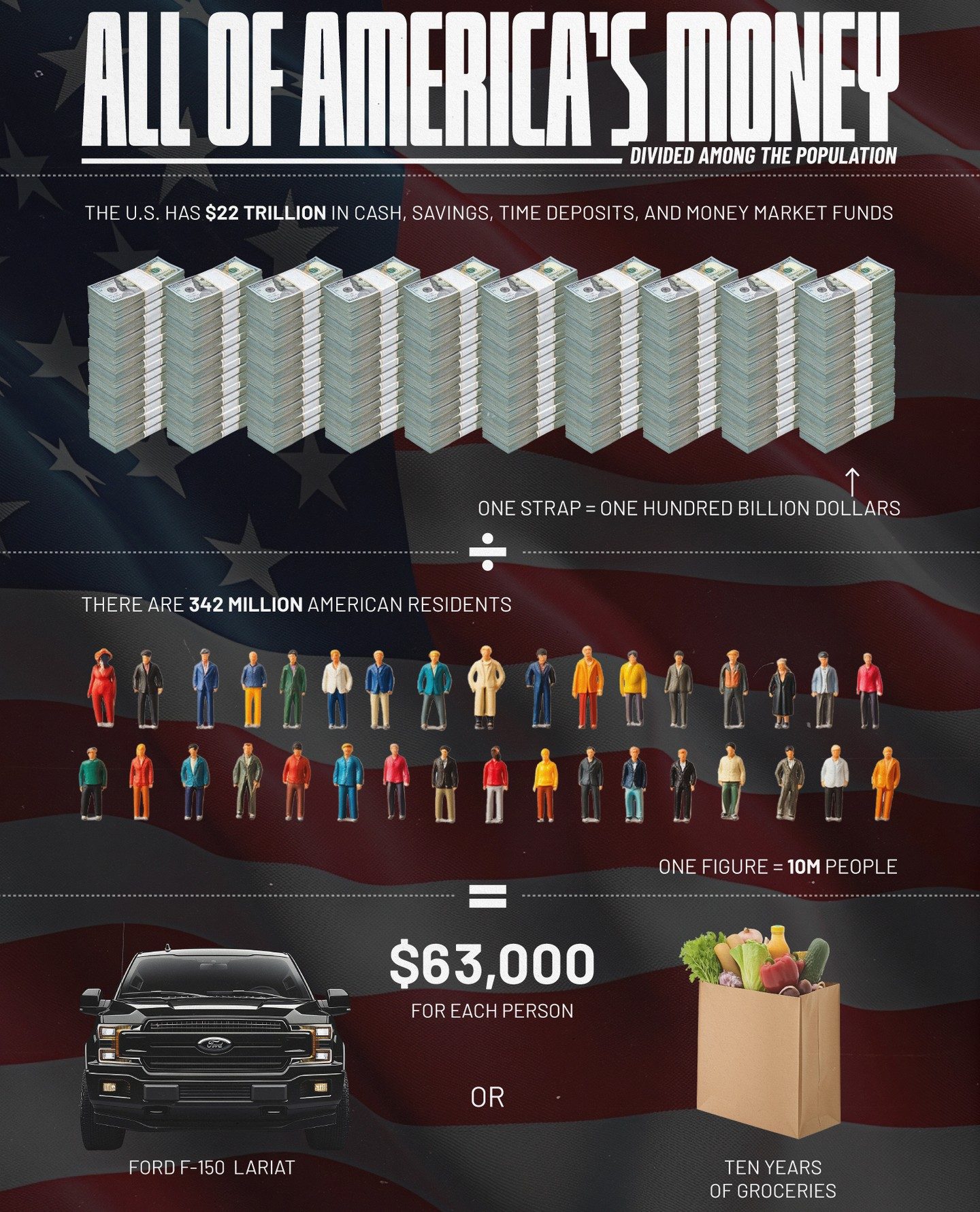
The United States has a total money supply of $22 trillion, consisting of cash, savings, time deposits, and money market funds. If this entire amount were distributed evenly among the 342 million American residents, each person would receive $63,000. This figure provides a fascinating perspective on the nation's wealth and what it could mean for individuals.
Why This Matters
Understanding the distribution of wealth in the U.S. is crucial for several reasons. It gives insight into economic disparities, helps in policy-making, and allows individuals to compare their financial standing against national averages. This hypothetical scenario offers a unique lens to view how wealth could be allocated and what it could mean for everyday expenses and significant investments.
Main Discussion
The Total Money Supply
The U.S. money supply, as reported by the Federal Reserve, includes cash, savings, time deposits, and money market funds. Together, these components total $22 trillion. This figure is a broad measure of the liquidity in the economy, encompassing various forms of money that individuals and businesses can use for transactions.
Population and Per-Capita Wealth
With a population of 342 million, dividing the total money supply by the number of residents yields a per-capita figure of $63,000. This amount is significant as it represents a substantial portion of an individual's financial resources. Understanding this figure helps in comparing personal wealth to the national average and in planning for major financial goals.
What $63,000 Could Buy
Receiving $63,000 could cover several major expenses:
- New 2025 Ford F-150 Lariat: This pickup truck is a popular choice for many Americans, offering durability and versatility.
- Ten Years of Groceries: This amount could cover the cost of food for a decade, providing a sense of financial security.
- Tuition for a Four-Year State University Degree: This covers the cost of higher education, which is a significant investment in many people's lives.
- Down Payment on a $300,000 House: This amount could serve as a down payment for a house, helping individuals achieve homeownership.
Visualizing the Distribution
To make the concept of wealth distribution more tangible, the visualization uses stacks of cash, figurines representing people, and comparisons to a Ford F-150 Lariat truck and ten years of groceries. This approach effectively illustrates the distribution of wealth and its potential impact on individuals' lives.
Practical Tips
Assessing Your Financial Standing
Comparing your financial situation to the national average can provide valuable insights. Knowing that the average per-capita wealth is $63,000 can help you gauge where you stand. If your assets are below this figure, you might consider strategies to increase your savings, such as budgeting, investing, or increasing your income. Conversely, if your assets exceed this amount, you might explore ways to grow your wealth further or plan for significant expenses like homeownership or education.
Setting Financial Goals
Use the $63,000 figure as a reference point for setting financial goals. Whether you aim to buy a new car, plan for ten years of groceries, save for a college degree, or make a down payment on a house, knowing the national average can help you create a realistic and achievable plan.
Understanding Economic Policies
Government policies often aim to address wealth distribution. Staying informed about economic policies and how they might affect your financial situation can help you make better decisions. For example, policies that promote savings, investment, or homeownership can impact your wealth and financial stability.
Investing Wisely
Investing is a key strategy for growing your wealth. Whether you invest in stocks, bonds, real estate, or other assets, understanding the risks and returns can help you make informed decisions. Aim for a diversified portfolio that aligns with your risk tolerance and financial goals.
Important Takeaways
The Importance of Wealth Distribution
Wealth distribution is a critical aspect of the economy. Understanding how wealth is allocated can provide insights into economic disparities and help in policy-making. The hypothetical scenario of evenly distributing the $22 trillion money supply highlights the potential impact on individuals' lives.
The Significance of $63,000
The $63,000 figure represents a substantial amount of wealth that could cover major expenses. Whether you use it for a car, groceries, education, or a down payment on a house, this amount is significant in planning for your financial future.
The Role of Visualization
Visual aids, such as stacks of cash and figurines, can make abstract concepts like wealth distribution more understandable. They help in grasping the scale of the money supply and its potential impact on individuals.
Conclusion
Wealth distribution in the U.S. is a complex and multifaceted topic. The hypothetical scenario of dividing the $22 trillion money supply evenly among 342 million residents provides a unique perspective on the potential impact of wealth on individuals' lives. By understanding the total money supply, the per-capita wealth, and what this amount could buy, you can gain valuable insights into your financial standing and set achievable goals. Whether you aim to save for a car, plan for groceries, invest in education, or buy a house, knowing the national average can help you make informed decisions and plan for a secure financial future.
Watch the Reel
Questions readers ask
What is the total money supply in the United States?
The total money supply in the United States is approximately $22 trillion. This includes cash, savings, time deposits, and money market funds.
How much money would each American receive if the $22 trillion were distributed evenly?
If the $22 trillion were evenly distributed among the 342 million American residents, each person would receive roughly $63,000.
What is the US population wealth per person?
The US population wealth per person would be $63,000 if the total money supply of $22 trillion were evenly distributed among all Americans.
What does understanding the distribution of wealth in the U.S. reveal?
Understanding the distribution of wealth in the U.S. provides insights into economic disparities, aids in policy-making, and allows individuals to compare their financial standing against national averages.
What are the components of the U.S. money supply?
The U.S. money supply comprises cash, savings, time deposits, and money market funds. These components together make up the total $22 trillion.
How does knowing the average wealth per American help individuals?
Knowing the average wealth per American, in this case, $63,000, helps individuals to understand their financial standing and gain a clearer picture of the nation's wealth distribution.
Recent articles
Fresh deep dives from the latest Reels we unpacked.




Comments
Be the first to comment.