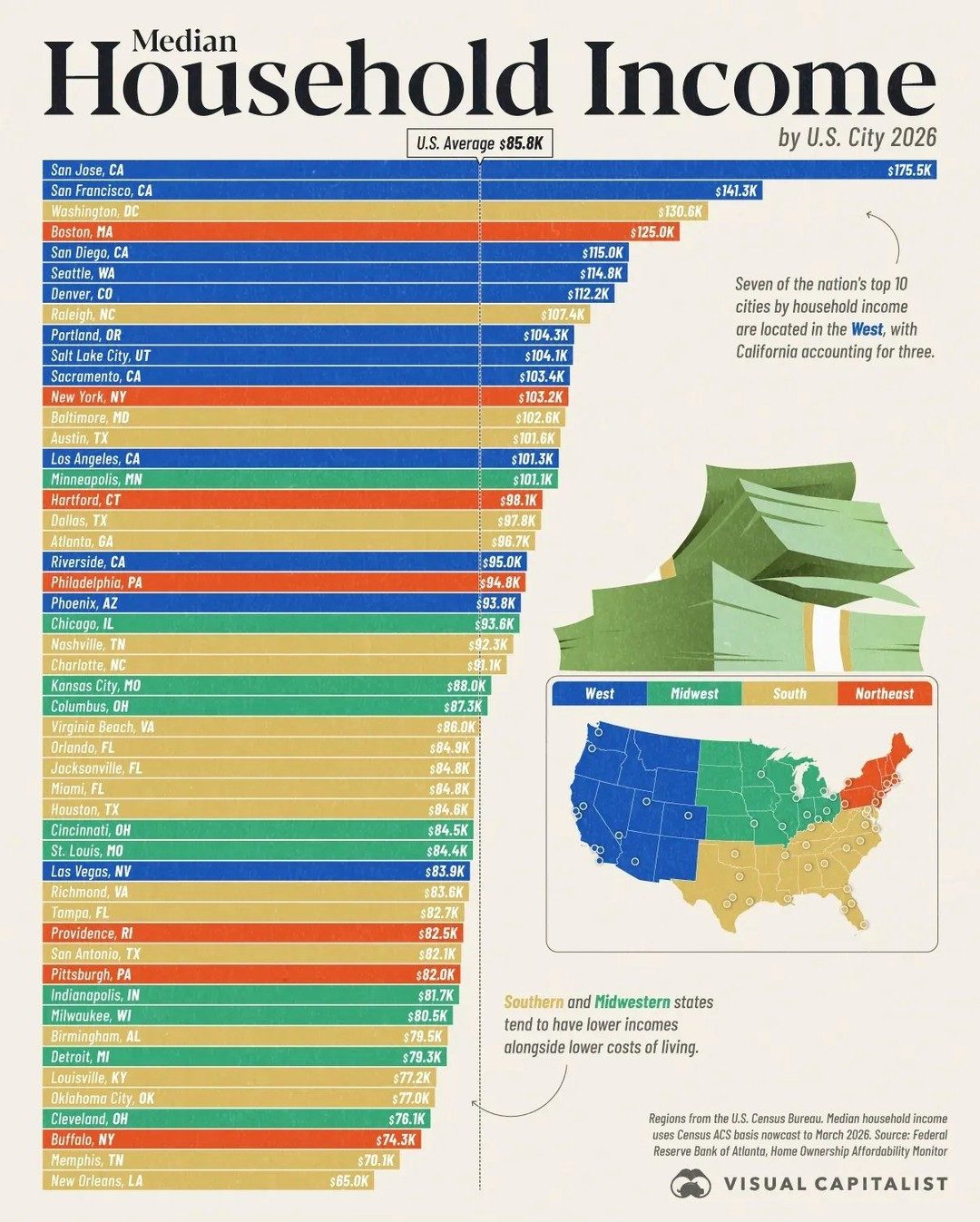
Household Income Comparison: Ranking U.S. Metro Areas in 2026
In 2026, San Jose and San Francisco are projected to have the highest median household incomes among America's 50 largest metro areas. This ranking sheds light on the economic landscape of the United States, highlighting regional disparities and economic trends.
Why This Matters
Understanding the distribution of household income across different metro areas is crucial for various reasons. It provides insights into economic disparities, helps in urban planning, and influences policy decisions. For instance, knowing which cities have the highest incomes can guide investments in infrastructure, education, and healthcare. It also offers a perspective on the cost of living and job opportunities in different regions.
Ranking the Top Metro Areas
The data, sourced from the Federal Reserve Bank of Atlanta's Home Ownership Affordability Monitor (HOAM), ranks the 50 largest U.S. metro areas by median household income. Here are the top 10 cities with the highest median household incomes:
- San Jose, CA: $103.4K
- San Francisco, CA: $102.0K
- Los Angeles, CA: $101.1K
- Washington, DC: $101.6K
- Boston, MA: $98.1K
- Seattle, WA: $97.8K
- Denver, CO: $95.0K
- Portland, OR: $94.8K
- Raleigh, NC: $93.6K
- Salt Lake City, UT: $93.3K
Regional Trends
The data reveals significant regional trends. Seven of the top 10 highest-income metros are located in the West, with three of these in California. This concentration of high-income areas in the West suggests a strong economic presence in the region, likely driven by technology, finance, and other high-paying industries.
The West
The Western region, particularly California, dominates the list. Cities like San Jose, San Francisco, and Los Angeles are known for their tech hubs, such as Silicon Valley, which attract high-paying jobs in technology and innovation. The presence of major corporations and startups in these areas contributes to the high median household incomes.
The Northeast
The Northeast also has a strong presence, with Boston and Washington, D.C., ranking high on the list. These cities are centers for finance, government, and education, offering well-paying jobs in sectors like healthcare, education, and government services.
The South
Although the South has fewer cities in the top 10, areas like Raleigh, NC, are emerging as tech and education hubs. The presence of Research Triangle Park in Raleigh, which hosts numerous tech companies and research institutions, contributes to the region's economic growth and higher median incomes.
The Midwest
The Midwest is less represented in the top-income metros. However, cities like Denver, CO, and Salt Lake City, UT, are notable for their growing tech and healthcare sectors.
Income Distribution and Cost of Living
The U.S. average household income is projected to be $85.8K in 2026. Comparing this to the top metros, it’s clear that cities with higher median incomes generally have a higher cost of living. For example, San Jose and San Francisco are known for their high housing costs, which can offset the benefits of higher incomes.
Key Factors Influencing Income
Several factors contribute to the high median incomes in these metro areas:
- Industry Presence: The presence of high-paying industries like technology, finance, and healthcare.
- Education and Skills: Higher levels of education and specialized skills in these regions.
- Urban Infrastructure: Well-developed infrastructure and amenities that attract high-skilled workers.
- Government and Policy: Policies that support economic growth, such as tax incentives for businesses and investments in education and infrastructure.
Practical Tips for Understanding Income Data
- Research Local Job Markets: If you're considering a move, research the local job market and the types of industries that are thriving in the area.
- Assess the Cost of Living: High incomes often come with a high cost of living. Consider factors like housing, transportation, and day-to-day expenses.
- Evaluate Education and Healthcare: Look into the quality of education and healthcare services in the area, as these can significantly impact your overall well-being.
- Consider Long-Term Growth: Look for cities with strong economic growth potential, as this can lead to better job opportunities and higher incomes over time.
Important Takeaways
- Regional Disparities: There are significant regional differences in household incomes, with the West and Northeast leading the way.
- Industry Influence: The presence of high-paying industries like technology and finance is a key factor in higher household incomes.
- Cost of Living: Higher incomes often come with a higher cost of living, particularly in terms of housing.
- Economic Growth: Cities with strong economic growth potential are likely to see higher incomes and more job opportunities.
Conclusion
The ranking of the 50 largest U.S. metro areas by median household income in 2026 provides valuable insights into the economic landscape of the country. With San Jose and San Francisco leading the way, it's clear that the West, particularly California, is a powerhouse of economic activity. Understanding these trends can help individuals make informed decisions about where to live and work, and can guide policymakers in supporting economic growth and development in various regions.
Watch the Reel
Questions readers ask
Which U.S. metro areas are expected to have the highest median household incomes in 2026?
San Jose and San Francisco are projected to lead the United States in median household income in 2026. This is followed by other major metro areas, with the top 10 being concentrated in the West.
What drives the high median household incomes in the top metro areas of 2026?
The strong economic trends in technology and finance are key drivers. These industries are thriving in the West, particularly in cities like San Jose and San Francisco, contributing to their high median household incomes.
Why is it important to know about the distribution of household income across different metro areas?
This information is vital for understanding economic disparities, aiding in urban planning, and influencing policy decisions. It can guide investments in infrastructure, housing, and other key areas, and provide insights into the cost of living and job opportunities in different regions.
Which region is expected to have the highest concentration of high-income metro areas in 2026?
The West is anticipated to have the highest concentration of top income metro areas, with a significant number of cities in California leading the way. This reflects the region's economic strength, particularly in technology and finance.
How can the ranking of the highest income cities in 2026 influence policy decisions?
The ranking can inform policy decisions by highlighting areas that may need targeted investments or interventions. For instance, cities with high median household incomes might require different infrastructure or housing solutions compared to those with lower incomes.
What are the wealthiest cities in California expected to be in 2026?
San Jose and San Francisco are projected to be the wealthiest cities in California in 2026, leading the nation in median household income. These cities are followed by other major metro areas in the state, reflecting California's strong economic trends.
What insights can be gained from comparing the median household income of different metro areas in 2026?
Comparing median household incomes provides a clear picture of the economic landscape of the United States. It highlights regional disparities, identifies areas with strong economic growth, and offers a perspective on the cost of living and job opportunities across different regions.
Recent articles
Fresh deep dives from the latest Reels we unpacked.




Comments
Be the first to comment.