### The Ring of Fire Strikes Again
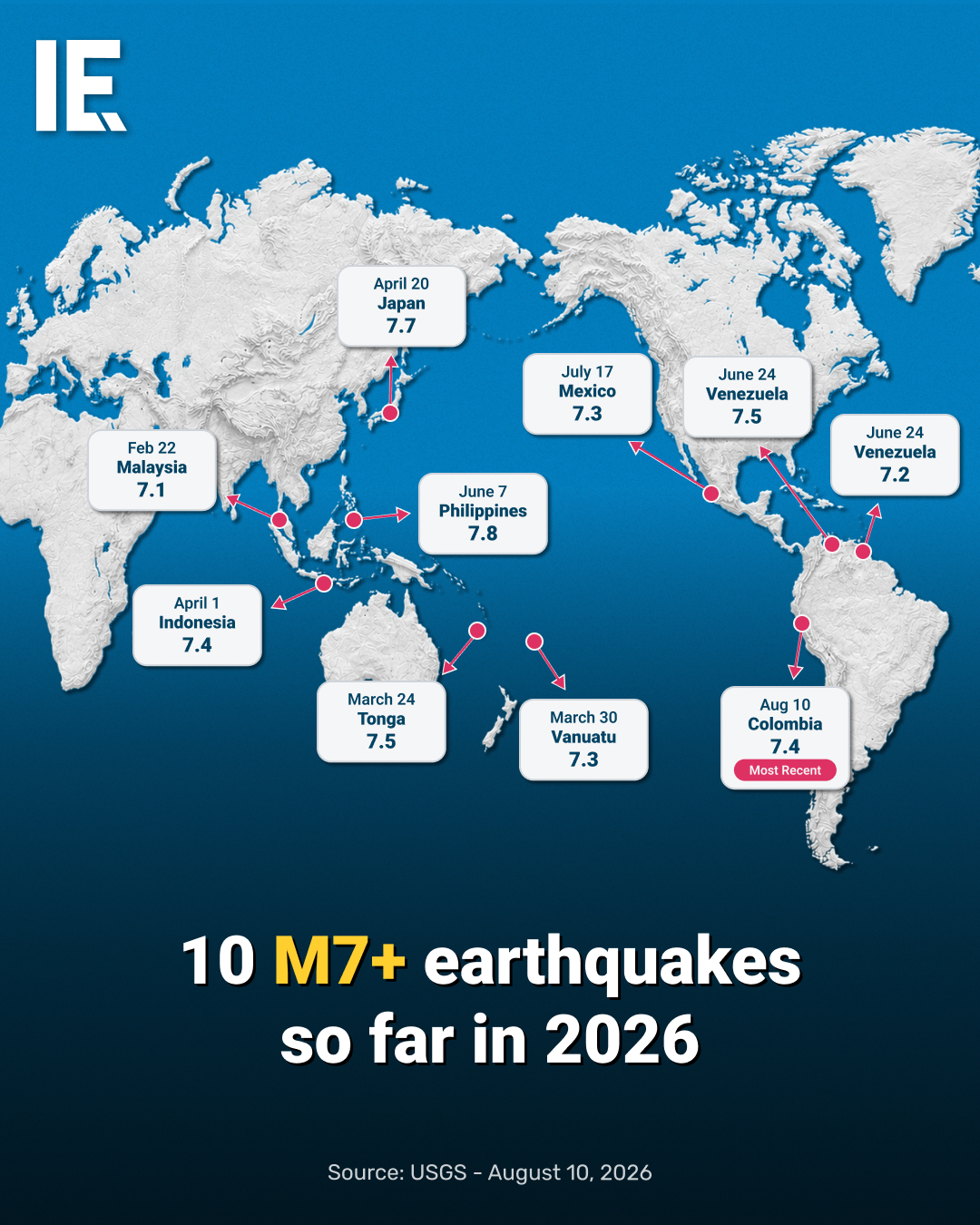
In 2026, the Earth shook with unprecedented force. Ten earthquakes of magnitude 7.0 or greater rocked the globe, from the Pacific Ring of Fire to the Caribbean. The United States Geological Survey (USGS) logged these seismic events, charting a year of intense geological activity. The sheer number of high-magnitude earthquakes in 2026 raises questions about emerging trends and preparedness in earthquake-prone regions. The lack of recorded disasters suggest that modern engineering and emergency responses are effectively saving lives, but new risks may still challenge disaster management experts.
### Anatomy of the Quakes+
A magnitude 7.0 earthquake releases an immense amount of energy. twenty two times greater than a 6.0 and nearly 1,000 times greater than a 5.0. These catastrophic events originate from tectonic plate movements, often along the Pacific Ring of Fire. 2026’s sequence of earthquakes includes key areas like Japan, Indonesia and Mexico. This region alone accounts for around 90 percent of the world’s earthquakes. Understanding the distinctive features of these earthquakes involves examining both their causes and consequences.
The extent of seismic activity varies depending on location. Depth (how far beneath the surface the earthquake occurs) can significantly affect the impact, with shallow quakes generally causing more surface damage, and deeper quakes less so. Aftershocks (secondary earthquakes following the initial event) are another critical factor.
### 2026 Dates in Depth
In 2026, the first significant quake of the year occurred in February. Malaysia's 7.1 magnitude quake on the 22nd startled the Southeast Asian country. More than four months later, the Indonesian earthquake, registering at 7.4, again tested the seismic resilience of the Pacific region. A month later, ** Japan** suffered a major shockwave of 7.7. The quake season continued through the summer. A 7.4 magnitude quake struck Colombia, and just days later, M7+ strikes Venezuela with a powerful 7.2 intensity. Other major quake events included a 7.8 in the Philippines and a 7.4 in Mexico, all on the list of the worst earthquakes in recent years. Each of these events contributed to the alarming total of ten M7+ earthquakes in 2026, making it a year of extreme tectonic activity.
The distribution of these quakes shows the influence of key fault lines, particularly the Pacific Ring of Fire, and highlights the importance of global seismic monitoring. USGS provided crucial data on these events, highlighting the regions where seismic activity is most concentrated. Two events on June 24 in Venezuela display a very rare seismic double feature.
The devastating nature of 2026’s earthquakes underscores the importance of early warning systems and emergency preparedness. These systems rely on data from seismic networks and look to provide timely alerts to vulnerable communities.
### The Role of the USGS
The USGS acts as the United States' principal agency for providing scientific information about the health of the nation's ecosystems and environment. In 2026, the USGS marshalled their expertise and equipment to monitor and report these seismic events. Their role is also critical in issuing alerts and warnings to affected regions, which often prove crucial in minimizing casualties.
### The Ripple Effect
The seismic activity in 2026 underscores the need for preparedness in regions prone to earthquakes. Infrastructure must withstand significant shaking. Building codes and regulations, especially in tremor-prone zones, are paramount. Public awareness and education programs help communities understand their risks and respond appropriately in the event of a quake. Youth programs can be an effective way to reach wide audiences. The 2026 earthquakes additionally made headlines due to their intensity and global spread. However, the lack of recorded disasters suggests that the world's preparedness was effective. This disaster management efforts are likely going a long way towards saving lives. They reflect extensive preparedness and the development of better systems for providing rapid relief to affected areas.
With current technology, the prediction of earthquakes remains elusive. Yet, ongoing advancements in this field hold promise for future risk mitigation.
### Knowing What To Do If The Ground Start Shaking
If you live in a region prone to earthquakes, knowing how to react when the ground starts shaking can save your life. The USGS recommends the "drop, cover, and hold on" protocol:
- Drop: Immediately drop to the ground before the quake knocks you down. Avoid windows and outside walls.
- Cover: Cover your head and neck with your arms to protect yourself from falling debris.
- Hold On: Hold onto something sturdy, like a table or desk, until the shaking stops.
In minutes, earthquakes can transform the landscape. Their effects remain long after the shaking stops. In the face of this destructive force, preparedness, education, and advanced seismic monitoring remain vital for mitigating these risks. What this means for the world is not yet clear, but the world will be ready in 2027.
Watch the Reel
Questions readers ask
What exactly is the Ring of Fire and why is it significant in the context of 2026’s earthquakes?
The Ring of Fire is a major area in the Pacific Ocean where a large number of earthquakes and volcanic eruptions occur. It's significant because it's where most of 2026's magnitude 7.0+ earthquakes happened. This region is particularly active due to the movement of tectonic plates, making it a hotspot for seismic activity.
How does the magnitude of an earthquake relate to the amount of energy released?
The magnitude of an earthquake is a measure of the energy released at the source. A magnitude 7.0 earthquake releases an immense amount of energy—about twenty two times greater than a 6.0 and nearly 1,000 times greater than a 5.0. This energy is what causes the ground to shake and can lead to significant damage.
Why did the 2026 earthquakes not result in more disasters, despite their high magnitudes?
Despite the high magnitudes, the lack of recorded disasters in 2026 can be attributed to modern engineering practices and effective emergency responses. These advancements have significantly improved the ability to withstand and respond to major earthquakes, which helps in saving lives and minimizing damage.
What role do aftershocks play in the overall impact of an earthquake?
Aftershocks are secondary earthquakes that follow the initial event and can continue for weeks, months, or even years. They are crucial to consider because they can cause additional damage and pose risks to rescue and recovery efforts, especially in areas already weakened by the main quake.
What makes the USGS so important in monitoring and responding to earthquakes?
The USGS is the principal agency in the United States for providing scientific information about the health of the nation's ecosystems and environment. In 2026, the USGS played a critical role in monitoring seismic activity, providing data on earthquakes, and offering timely alerts to vulnerable communities, which is essential for preparedness and response efforts.
What was unique about the earthquakes in Venezuela in 2026?
The earthquakes in Venezuela in June 2026 were particularly notable because they occurred as a rare seismic double feature—two significant earthquakes happening in close succession. This unusual pattern adds to the complexity of understanding and responding to seismic activity in the region.
Recent articles
Fresh deep dives from the latest Reels we unpacked.




Comments
Be the first to comment.