Local Search Ranking Factors
Local search ranking factors are crucial for businesses aiming to dominate local markets and attract nearby customers. The 2026 Local Search Ranking Factors, released by Whitespark, provide a comprehensive guide to understanding these factors and how they influence search visibility. Let's dive into the key insights and takeaways from this invaluable resource.
Context / Why This Matters
Local search optimization is essential for businesses that rely on local customers, such as restaurants, retail stores, and service providers. Understanding the factors that influence local search rankings can help businesses improve their online presence, attract more customers, and ultimately drive growth. The 2026 Local Search Ranking Factors report from Whitespark offers a detailed breakdown of the key signals that impact local search rankings, helping businesses to prioritize their SEO efforts effectively.
Main Discussion
Local Pack/Maps Ranking Factors
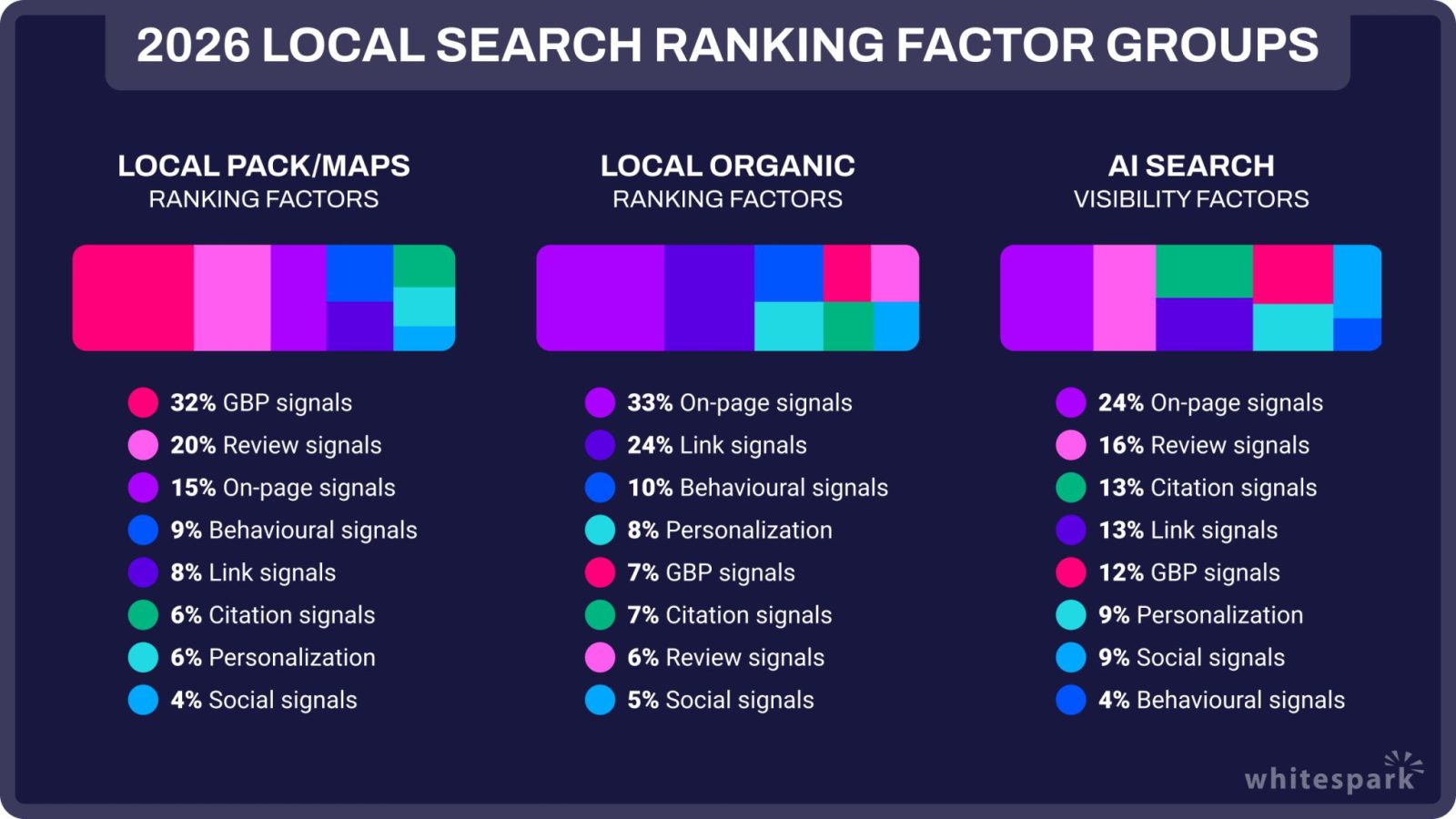
The Local Pack, also known as the Map Pack, is a critical component of local search results. It appears at the top of search engine results pages (SERPs) and shows a map with three local business listings. The ranking factors for the Local Pack/Maps are as follows:
-
GBP (Google Business Profile) Signals (32%): GBP signals are the most significant factor, emphasizing the importance of maintaining an optimized and up-to-date Google Business Profile. This includes accurate NAP (Name, Address, Phone number) information, business hours, and categories.
-
Review Signals (20%): The quantity, quality, and velocity of reviews significantly impact local rankings. Encouraging customers to leave reviews and responding to them can boost your local search visibility.
-
On-Page Signals (15%): This includes factors like title tags, meta descriptions, header tags, and URL structure. Ensuring that your website is optimized for local keywords and provides relevant information is crucial.
-
Behavioral Signals (9%): User behavior, such as click-through rates, time spent on the website, and bounce rates, plays a role in local rankings. Positive user behavior can signal to search engines that your business is relevant and valuable.
-
Link Signals (8%): The quality and quantity of backlinks to your website can influence local rankings. Building high-quality, locally relevant backlinks can improve your search visibility.
-
Personalization (6%): Search results can be personalized based on the user's location and search history. Ensuring your business is optimized for local searches can help you appear in personalized results.
-
Social Signals (4%): Social media activity, such as likes, shares, and follows, can indirectly impact local search rankings. Engaging with your audience on social media can drive traffic to your website and improve your local search visibility.
Local Organic Ranking Factors
Local organic rankings refer to the traditional organic search results that appear below the Local Pack. The ranking factors for local organic searches include:
-
On-Page Signals (33%): On-page signals have the most significant impact on local organic rankings. This includes optimizing your website for local keywords, ensuring your NAP information is consistent, and creating high-quality, locally relevant content.
-
Link Signals (24%): High-quality backlinks from authoritative websites can significantly boost your local organic rankings. Building a strong backlink profile is essential for improving your search visibility.
-
Behavioral Signals (10%): User behavior, such as click-through rates and time spent on the website, can influence local organic rankings. Ensuring your website provides a positive user experience can improve your search visibility.
-
Personalization (8%): Personalized search results can impact local organic rankings. Optimizing your website for local searches and ensuring your business information is accurate and up-to-date can help you appear in personalized results.
-
GBP Signals (7%): While GBP signals are more critical for the Local Pack, they still play a role in local organic rankings. Ensuring your Google Business Profile is optimized can improve your search visibility.
-
Review Signals (6%): The quantity, quality, and velocity of reviews can influence local organic rankings. Encouraging customers to leave reviews and responding to them can boost your local search visibility.
-
Social Signals (5%): Social media activity can indirectly impact local organic rankings. Engaging with your audience on social media can drive traffic to your website and improve your search visibility.
AI Search Visibility Factors
AI search visibility factors refer to the signals that influence search visibility in AI-driven search engines. While traditional ranking factors still apply, AI-driven search engines may place more emphasis on certain signals. The ranking factors for AI search visibility include:
-
On-Page Signals (24%): Ensuring your website is optimized for local keywords and provides relevant information is crucial for AI search visibility.
-
Review Signals (16%): The quantity, quality, and velocity of reviews can significantly impact AI search visibility. Encouraging customers to leave reviews and responding to them can boost your search visibility.
-
Citation Signals (13%): Citations, or mentions of your business name, address, and phone number on other websites, can influence AI search visibility. Ensuring your citations are accurate and consistent is essential.
-
GBP Signals (12%): An optimized Google Business Profile can improve AI search visibility. Ensuring your NAP information is accurate and up-to-date is crucial.
-
Personalization (9%): Personalized search results can impact AI search visibility. Optimizing your website for local searches and ensuring your business information is accurate and up-to-date can help you appear in personalized results.
-
Social Signals (9%): Social media activity can indirectly impact AI search visibility. Engaging with your audience on social media can drive traffic to your website and improve your search visibility.
-
Behavioral Signals (4%): User behavior, such as click-through rates and time spent on the website, can influence AI search visibility. Ensuring your website provides a positive user experience can improve your search visibility.
Practical Tips
-
Optimize Your Google Business Profile: Ensure your NAP information is accurate and up-to-date, and include relevant categories, business hours, and descriptions.
-
Encourage and Respond to Reviews: Encourage customers to leave reviews and respond to them promptly. This can improve your local search visibility and build trust with potential customers.
-
Optimize Your Website for Local Keywords: Ensure your website is optimized for local keywords and provides relevant information. This includes optimizing title tags, meta descriptions, header tags, and URL structure.
-
Build High-Quality Backlinks: Build a strong backlink profile by earning high-quality, locally relevant backlinks. This can improve your local search visibility and drive traffic to your website.
-
Ensure Consistent Citations: Ensure your business name, address, and phone number are consistent across all online platforms. This can improve your local search visibility and build trust with potential customers.
-
Engage with Your Audience on Social Media: Engaging with your audience on social media can drive traffic to your website and improve your local search visibility.
Important Takeaways
Understanding local search ranking factors is crucial for businesses aiming to dominate local markets and attract nearby customers. The 2026 Local Search Ranking Factors report from Whitespark provides a comprehensive guide to understanding these factors and how they influence search visibility. By optimizing your Google Business Profile, encouraging and responding to reviews, optimizing your website for local keywords, building high-quality backlinks, ensuring consistent citations, and engaging with your audience on social media, you can improve your local search visibility and drive growth.
Conclusion
Local search ranking factors are vital for businesses that rely on local customers. By understanding and optimizing for these factors, businesses can improve their online presence, attract more customers, and ultimately drive growth. The 2026 Local Search Ranking Factors report from Whitespark offers a detailed breakdown of the key signals that impact local search rankings, helping businesses to prioritize their SEO efforts effectively.
Watch the Reel
Questions readers ask
What are the top Google Business Profile signals for 2026 local search ranking?
The top Google Business Profile signals include ensuring your profile is claimed and verified, having accurate and complete information, responding to reviews, and using relevant keywords in your business description. Regular updates and posts on your Google Business Profile can also boost your local search visibility.
How important are local SEO citation building and local search link building in 2026?
Citation building and link building remain crucial for local SEO in 2026. Consistent and accurate citations across various directories help search engines validate your business information. High-quality backlinks from local and industry-relevant websites can significantly enhance your local search rankings. Whitespark recommends focusing on both quantity and quality for effective citation and link building strategies.
Why do local search behavioral signals matter in 2026?
Local search behavioral signals, such as click-through rates, time spent on site, and bounce rates, provide insights into user engagement. High engagement indicates to search engines that your business is relevant and valuable to users, which can positively impact your local search rankings. Monitoring and improving these signals can help enhance your local visibility.
What role does local search personalization play in 2026?
Local search personalization tailors search results based on a user's location, search history, and preferences. In 2026, personalization will continue to be a significant factor, making it essential for businesses to optimize their local SEO strategies for diverse user segments. This includes targeting location-specific keywords and ensuring consistency across all online platforms.
How can on-page SEO improve local search rankings in 2026?
On-page SEO for local search involves optimizing your website with location-specific keywords, meta tags, and content. Ensuring your website is mobile-friendly and has fast loading speeds also contributes to better local search rankings. Regularly updating your website with local content can further enhance your visibility in local search results.
What are the most effective strategies for leveraging local search review signals in 2026?
Encouraging and responding to customer reviews is essential for leveraging local search review signals. Positive reviews and high star ratings can significantly improve your local search rankings. Additionally, responding to negative reviews professionally can mitigate their impact and demonstrate your commitment to customer satisfaction.
What are some key insights from the 2026 Whitespark local search ranking factors report?
The 2026 Whitespark local search ranking factors report highlights the importance of a comprehensive local SEO strategy that includes optimizing Google Business Profiles, building high-quality citations and links, and focusing on on-page SEO. It also emphasizes the role of behavioral signals, personalization, and social signals in driving local search visibility and growth.
Recent articles
Fresh deep dives from the latest Reels we unpacked.




Comments
Be the first to comment.